South America05 January, 20263 min read
Trump Backs Delcy Rodríguez to Lead Interim Maduro Loyalist Government After CIA Assessment
U.S. forces captured Venezuelan President Nicolás Maduro during a pre‑dawn military operation. Delcy Rodríguez was sworn in as acting president by pro‑Maduro authorities in Caracas.
69 outlets told this the same way.
Outlets did split on Alexandre de Moraes Orders Eduardo Bolsonaro Arrest, Cancels Passport, Enforces Four-Year Sentence →
Venezuela leadership after capture
A classified CIA assessment briefed to President Trump and senior advisers concluded that senior figures from Nicolás Maduro’s regime — most notably Vice President Delcy Rodríguez — were best positioned to lead a temporary government and preserve short-term stability in Venezuela after the U.S.-led capture of Maduro. That analysis reportedly steered the administration toward engaging Rodríguez rather than opposition leader María Corina Machado, whom Trump publicly dismissed as lacking sufficient domestic support. The move followed U.S. forces’ pre-dawn operation in Caracas that U.S. officials say captured Maduro.
“A classified CIA assessment, briefed to President Trump and senior advisers, concluded that senior figures from Nicolás Maduro’s regime—most notably Vice President Delcy Rodríguez—are best positioned to lead a temporary government and preserve short-term stability in Venezuela after the U.S.-led capture of Maduro, sources told the Wall Street Journal.”
After the capture, Rodríguez was sworn in as acting president and the regime declared a state of emergency. Trump and his team framed Rodríguez’s appointment as a pragmatic, stability-focused choice even as it drew debate about democratic legitimacy and who should lead any transition.

CIA assessment on Venezuela
Sources describe the CIA assessment's reasoning: intelligence officials warned a rapid handover to opposition leaders risked chaos because the Maduro regime still controlled the military and key institutions. They argued that installing a senior Chavista like Rodríguez was the least disruptive path to short-term stability. VINnews explicitly attributes those warnings to the classified analysis briefed to Trump.
Other reporting notes the assessment's practical implications for U.S. planning and the marginalization of hardline opposition figures. Opposition politicians and some international commentators countered that this choice entrenches regime elements and sidesteps democratic mandates, underscoring a sharp split in how actors interpret the intelligence findings.

Global reaction to U.S. operation
International reaction has been fractious, with several countries and blocs condemning the U.S. operation and warning about its legality and the risk to regional stability. Others in Washington hailed the outcome as a blow against criminal networks. Reports indicate Russia and China condemned the capture.
“At a UN Security Council emergency session Venezuela, Russia and China demanded Maduro’s release and condemned U.S. actions as violations of international law...”
UN emergency sessions featured calls for Maduro's release and criticism of U.S. actions. European and regional governments raised concerns about sovereignty and the precedent set by a U.S. operation inside Venezuela. At the same time, some U.S. politicians and commentators praised the operation and urged cooperation with the interim authorities.
Crackdown on Venezuelan media
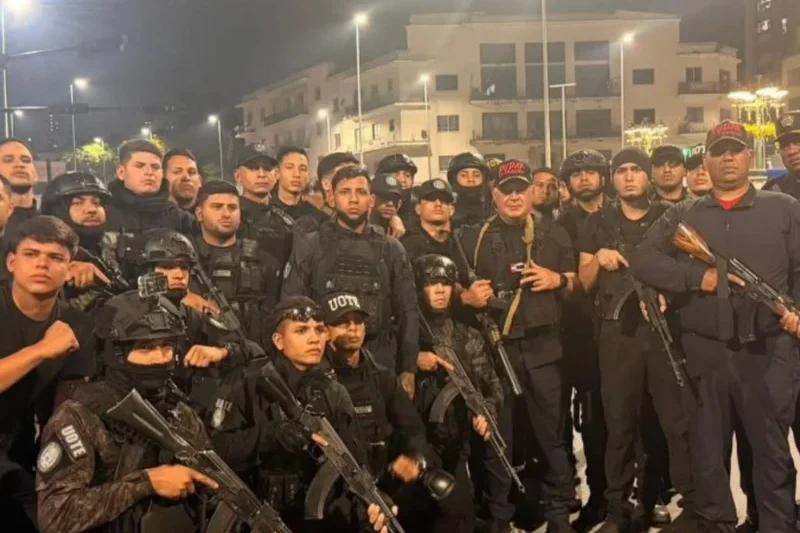
Human-rights and press-freedom reporting highlight a swift crackdown inside Venezuela. Multiple outlets cite detentions of journalists, state decrees banning celebrations of the U.S. action, checkpoints and phone searches, and deployments of armed colectivos and security forces across Caracas.
Media unions and independent outlets reported at least 14 journalists and media workers detained, many from foreign outlets, with most later released and one or more deported or held by intelligence services. Rights groups warn the emergency measures and searches of phones and devices have been used to detect and punish supporters of the U.S. operation, intensifying an already repressive environment.

Venezuela political stakes and casualties
The wider political and strategic stakes are contested: some U.S. officials and President Trump framed Rodríguez’s appointment as a means to secure assets and order, and NBC and Newsweek reported Trump promoting the transfer of 30–50 million barrels of sanctioned Venezuelan oil to the U.S. Critics warn the appointment risks legitimizing elements of the Maduro regime and sidestepping democratic transition processes.
“Former President Donald Trump posted on Truth Social that ‘Interim Authorities in Venezuela’ will hand over 30–50 million barrels of ‘high quality, sanctioned oil’ to the United States.”
Casualty and operational details remain contested in open reporting, with CBS noting "dozens" of Venezuelans killed, Cuba reporting 32 Cuban members of Maduro’s security detail killed, and Newsweek citing Cuba and Venezuela reporting 55 service members killed (32 Cuban, 23 Venezuelan), illustrating unresolved and conflicting accounts in the public record. Given these divergences and the reliance on intelligence briefings, the long-term outcome will depend on domestic negotiations among Venezuelan actors and on international diplomatic responses.