Syria10 July, 20262 min read
Trump Begins Procedures To Delist Syria From State Sponsors Of Terrorism List
US begins procedures to delist Syria from the State Sponsors of Terrorism list. Finalization hinges on a 45-day congressional review to finalize the decision.
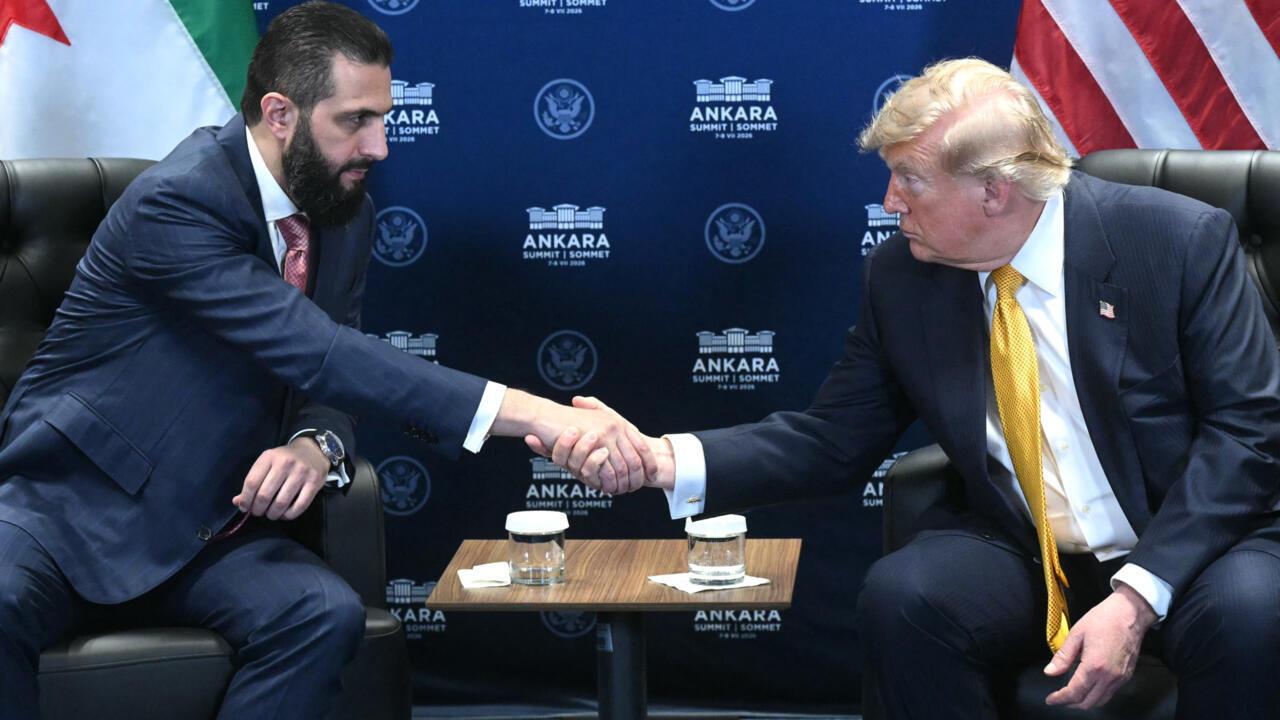
US starts delisting process
The United States began procedures to remove Syria from its State Sponsors of Terrorism list after a meeting between President Donald Trump and Syrian counterpart Ahmad al-Sharaa on Wednesday, July 8, on the margins of the NATO summit in Ankara.
U.S. Secretary of State Marco Rubio formally informed Congress of the start of these procedures, explaining that delisting would take effect within 45 days unless lawmakers object, an outcome described as unlikely.

Rubio said, "This is another historic step by President Trump to give the Syrian people the opportunity to achieve greatness," and added that lifting sanctions on Syria "will open the door to international trade and investment, give the country a chance to rebuild, and open a new chapter for the Syrian people."
The designation had been imposed in 1979, and the move was described as a boost to the transitional phase led by the Syrian interim president Ahmad al-Sharaa, as Syria seeks foreign investment and support reconstruction projects.
Regional welcomes and conditions
The UAE and Bahrain welcomed the U.S. decision to remove Syria from the state sponsors of terrorism list, with Abu Dhabi and Manama saying the step would support reconstruction efforts, attract investment, and help reintegrate Syria into the global economy.
The UAE Foreign Ministry said the decision announced by U.S. President Donald Trump represented a positive development that would contribute to Syria’s recovery and reconstruction, and it said removing Syria from the list would create broader opportunities for economic revitalization and strengthen Syria’s integration into international financial and economic systems.

Bahrain also welcomed the U.S. move, saying it would support reconstruction efforts, increase opportunities for investment and foreign assistance, and help restore Syria’s connection with global financial and economic institutions.
Even with American openness, the sources said some companies, especially Western ones, remain cautious about entering the Syrian market due to ongoing security challenges and the new authorities' inability so far to assert full control over all areas of the country.
UN delisting and reconstruction stakes
Separately, a February 27, 2026 decision by the 1267 Sanctions Committee removed Hay’at Tahrir al-Sham from the UN anti-terrorist list, lifting the asset freeze, travel ban, and arms embargo that had weighed on UN member states with respect to the group. The Le Monde du Droit analysis said the withdrawal constituted the last UN hurdle in an unprecedented process of legal normalization since the fall of Bashar al-Assad’s regime on December 8, 2024, and it said the World Bank estimates the cost of Syria’s reconstruction at $216 billion.
It also emphasized that the formal disappearance of the restrictive framework does not erase all legal and operational obstacles to rebuilding, noting that the 1267/1989/2253 sanctions regime imposes asset freezes, travel bans, and arms embargoes on UN member states as long as the entity remains listed. In Washington’s case, the sources framed the delisting as a step that would unlock international trade and investment and support reconstruction efforts, while also pointing to a 45-day congressional review period before the decision can take effect.