Full Analysis Summary
U.S. strike options on Iran
Hum News English reported that The New York Times says the Pentagon presented former president Donald Trump with plans for a broader set of strikes on Iran that could include attacks on nuclear and ballistic missile facilities and could be authorized within days.
The report says non-kinetic options such as cyberattacks or operations against Iran’s internal security institutions are under consideration, while U.S. officials warn any action may prompt severe Iranian retaliation and risk a wider regional conflict.
Fox News outlines concrete U.S. targeting options and notes a recent B-2 strike focused on nuclear enrichment and weapons-design facilities, implying additional strike packages could be shaped to hit other categories of sites.
Haaretz provided no substantive content in the supplied snippet and requested the original article text, highlighting that its coverage did not report on the options presented to Trump.
Coverage Differences
Focus and framing
Hum News English emphasizes the New York Times’ report about the Pentagon presenting plans and the diplomatic tension, including warnings of severe retaliation and the consideration of non‑kinetic options. Fox News focuses on specific military targeting options, recent strike history, and technical gaps in prior strikes (e.g., many underground missile and fuel sites not hit). Haaretz provided no substantive coverage in the supplied snippet and instead requested the original article, which is a notable omission compared with the other two sources.
Media coverage of Iran
Hum News English reports planners are weighing non-kinetic measures such as cyberattacks and operations against Iran’s internal security institutions.
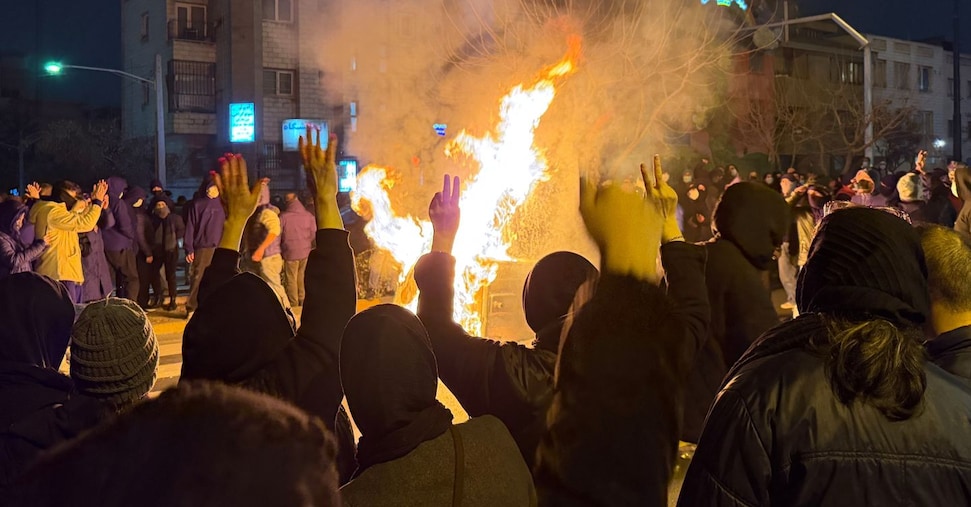
It says Iran is keeping communication channels with Washington open amid nationwide protests, with Foreign Minister Abbas Araghchi continuing contacts with U.S. envoy Steve Witkoff, while Tehran also says U.S. threats are hard to reconcile with dialogue.
Fox News emphasizes kinetic deterrence and President Trump’s stated red line, quoting his vow to strike Iran "at levels that they’ve never been hit before" if U.S. forces are attacked, and stresses recent hostile incidents against U.S. personnel as part of the rationale for stronger military options.
Haaretz supplied no usable article text in the snippet provided.
Coverage Differences
Narrative emphasis
Hum News English highlights diplomatic engagement and the inclusion of non‑kinetic options in planners' portfolios and reports Iran’s stated willingness to maintain communication channels; Fox News foregrounds kinetic deterrence, a presidential red line, and prior attacks on U.S. personnel as justification for military options. Haaretz’s supplied content is missing, so it neither affirms nor contests these narratives.
Iran military and space overview
Fox News provides the most detailed account of Iran’s missile, drone, and space capabilities, warning that Tehran continues developing ballistic missiles, including importing solid-fuel precursors, operates about two dozen missile-related sites, is rebuilding missile stocks and air defenses, and maintains a drone industry tied to the IRGC.
Fox News also highlights Iran’s growing space program, noting more than 30 satellites, recent Russian launches, and space-launch vehicles that could be repurposed as missiles, points that shape the list of potential military targets.
Hum News English reports the U.S. concern over severe retaliation and regional escalation if strikes proceed but does not detail Iran’s technical programs in the same way.
Haaretz’s supplied snippet does not contribute factual detail on Iran’s capabilities.
Coverage Differences
Technical detail vs. strategic warning
Fox News supplies technical and programmatic details about Iran’s missile, drone, and space capabilities and frames those as justification for specific targeting options. Hum News English concentrates on the diplomatic and strategic implications (risk of severe Iranian retaliation and regional escalation) and omits the granular technical inventory. Haaretz again lacks substantive reporting in the supplied snippet.
Military and political options
Fox News outlines U.S. force options that could execute further strikes, naming CENTCOM and U.S. air and naval platforms such as F-15E, F-35, F-16, B-2, B-1, and destroyers or submarines armed with Tomahawks.
The report also stresses allied concern from France, Germany and the U.K., and notes European missile-defense steps such as Aegis Ashore in Poland and Romania.
Hum News English highlights a parallel political and economic lever in President Trump’s threat to impose a 25% tariff on exports to the U.S. from countries that continue doing business with Iran.
Hum News adds that Trump 'gave no legal basis or details' for the threat, and the White House did not clarify the measure.
Haaretz’s snippet contains no operational detail in the supplied text.
Coverage Differences
Military options vs. economic/coercive measures
Fox News focuses on specific military platforms and allied defensive measures as central to the response calculus, while Hum News English highlights that the Trump political team is also threatening economic coercion (a 25% tariff) without providing legal detail — a domestic/political instrument rather than a military one. Haaretz again did not supply the article text, so it contributes no operational or political detail here.
Reporting gaps and risks
Available reporting contains clear ambiguities and risks.
Hum News English echoes New York Times warnings that strikes could prompt severe Iranian retaliation and widen the conflict.
Fox News provides granular target lists and capability claims that support robust military options.
Haaretz's lack of substantive text highlights a gap among the selected sources.
These differences create an incomplete and sometimes contrasting picture.
Diplomatic channels and non-kinetic options are reported alongside explicit military threat assessments and operational targeting lists.
The sources leave key legal, operational, and escalation questions unclear, such as the legal basis for Trump's tariff threat or the scale and timing of any strikes.
Because of these conflicts and omissions, the available snippets do not allow a definitive conclusion about authorization, timing, or intended scope without consulting the full original reporting.
Coverage Differences
Ambiguity and omissions
Hum News English emphasizes warnings about retaliation and reports Iran’s claims of continued dialogue; Fox News presents detailed military rationale and targeting options; Haaretz supplied no substantive reporting in the snippet, creating an information gap. The differing emphases leave legal and escalation questions unresolved in the provided material.