Full story
Trump weighs bigger Iran strike
President Donald Trump said he was “considering a massive attack, bigger than ever before” against Iran, telling Axios: “I am considering a massive attack. Bigger than ever before. I am close to making a decision. We are all set for it.”
“Trump threatens to target Iran's bridges and power plants if Hormuz attacks persist President Donald Trump has threatened that the US would destroy an Iranian bridge or power plant any time its forces attack a ship in the Strait of Hormuz”
The escalation followed the US launching strikes for a 13th consecutive night, with US Central Command saying the attacks were “aimed to hold Iran accountable and diminish threats from the Islamic Revolutionary Guard Corps to commercial shipping”.
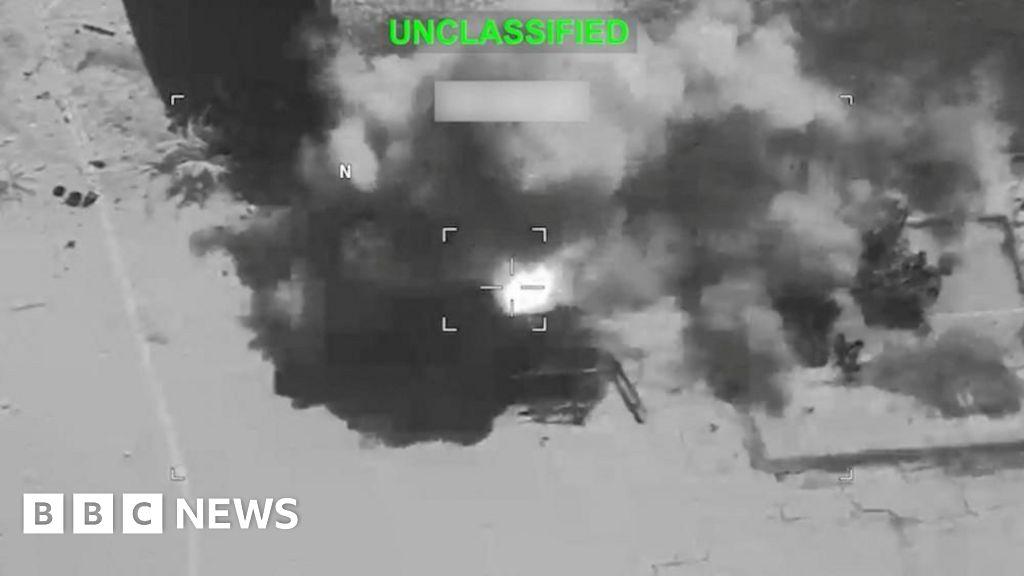
Trump also warned that if the Iran-backed militants in Yemen fired on another ship, he would inflict “major military punishment” on Iran and the Houthis themselves, as oil prices rose above $US100 a barrel again.
In parallel, the US House of Representatives again passed a resolution calling on the president to stop the war against Iran unless it was specifically authorised by Congress, after four Republicans crossed the floor, while the resolution stalled in the Senate.
Iran’s parliamentary speaker Mohammad Bagher Ghalibaf seized on the rapidly rising oil price to declare victory, writing on X: “They wanted to punish Iran. Punished themselves with triple-digit oil instead,” as two supertankers carrying an estimated 4 million barrels of Saudi oil exited the Red Sea through the Bab el-Mandeb Strait on Thursday.
Threats, votes, and competing narratives
Trump told Axios that Tehran “hasn’t received enough pain yet,” and the Independent reported he repeated that Iran has “evil intentions,” adding: “They need more of the same. They're not ready yet. They got some evil intentions.”
The BBC reported that Trump threatened to target Iran’s bridges and power plants if Hormuz attacks persist, saying the US would destroy an Iranian bridge or power plant any time its forces attack a ship in the Strait of Hormuz.

In Congress, the Independent said the Republican-led US House backed a war powers resolution directing Trump to halt military action against Iran unless he obtained Congress' approval, with the House vote 214-208 in favour while the Senate voted 49 to 47 to block its own war powers measure.
The BBC also quoted Iran’s top negotiator Mohammad Bagher Ghalibaf warning: “the equation of this war is clear: either all or none!” as Iranian state media reported air defences activated in Tehran and explosions in Tabriz, Chabahar and Konarak, and Bushehr.
Meanwhile, Sky News said there was “no sign of de-escalation in the Middle East,” and it cited Mohsen Rezaee, a senior Iranian military advisor, posting on X that Trump had gone from the “Madman Game” to the “Desperate Man Game” with “deadly mistakes,” while also describing Trump’s Truth Social position that damage to ships and cargo would be paid for with Iranian money the US “has in its possession, and controls”.
What comes next for shipping
The Guardian reported that Houthi attacks threatened a second major maritime route connecting the Suez canal to the Red Sea and Gulf of Aden, and it said the Houthi threat “raises questions on the viability of this route”.
“President Donald Trump on Wednesday vowed that the U”
It also reported that Reuters, quoting four sources including two Iranians, said Iran transferred Islamic Revolutionary Guard Corps personnel and military-related equipment on a flight from Tehran to Yemen on 13 July, as Tehran called for the Houthis to blockade the Bab el-Mandeb strait.
In the Red Sea, the New Republic said the Houthis claimed responsibility for overnight drone and missile strikes against Saudi oil tankers in the Red Sea, and it named the vessels Encelia and Layla while adding that the Houthis claimed the attacks forced about 10 other ships to retreat.
The BBC said two tankers that had loaded Saudi crude bound for China and India at Saudi Arabia's Red Sea port of Yanbu made U-turns on Tuesday heading instead towards the Suez Canal, after the Houthis announced a blockade of Saudi ports.
Looking further ahead, the Guardian said Trump clarified that the US help for Saudi Arabia’s civilian nuclear programme would require the kingdom to normalise relations with Israel through the Abraham Accords, while Sky News reported Trump’s administration nuclear cooperation agreement would only go ahead if Saudi Arabia joined the “respected and successful Abraham Accords”.