
Trump Decides on War With Iran; Envoy Blames Tehran, Critics Call U.S. Diplomacy a Ruse
Key Takeaways
- U.S. Middle East envoy Steve Witkof said Iran did not negotiate in good faith in Geneva.
- President Donald Trump decided on war after the Geneva negotiations.
- Iran claimed it was ready to make concessions during the nuclear negotiations.
Witkof frames breakdown
U.S. Middle East envoy Steve Witkof told media that the most recent round of nuclear negotiations in Geneva convinced Washington that Tehran was not negotiating in good faith, a judgment he said directly contributed to U.S. President Donald Trump’s decision to go to war.
Witkof said Iran “claimed during the nuclear negotiations that they were ready to make concessions, but without concrete evidence,” and framed the breakdown as proof that Tehran “did not negotiate in good faith and was not actually seeking an agreement on its nuclear file, adding that this led U.S. President Donald Trump to decide on war.”
The talks in Geneva—three rounds mediated by Oman—ended without an agreement and preceded the outbreak of wider conflict, according to the reporting.
Authority questioned
Witkof also argued that Tehran’s negotiating team lacked genuine authority to make binding decisions, singling out Iranian Foreign Minister Abbas Iraqji as someone Washington never believed could exercise decision-making power.
He said the United States “never felt that Iranian Foreign Minister Abbas Iraqji possessed decision-making authority, stressing that he ‘did not show a willingness to exercise that authority.’”
Witkof further described a tense final session in Geneva during which Iraqji “began shouting,” after which the U.S. team offered a break to allow for “coordination with our team.”
Conflicting narratives
Iran’s public account, as reported in the same coverage, directly contradicts Witkof’s depiction: Iranian Foreign Minister Abbas Iraqji told reporters that the February 26 meeting with Washington “was the best among the rounds.”
That statement came two days before what the article describes as a joint surprise attack by the United States and Israel that killed Supreme Leader Ali Khamenei and several senior military commanders.
The source therefore documents a sharp divergence between U.S. and Iranian official narratives about the same talks.
Diplomatic travel plans
Witkof’s movements and diplomacy also feature in the reporting: he had canceled a trip planned for that week to Israel that would have included Jared Kushner,
and said that final arrangements were incomplete for an anticipated coordination trip to Israel the following week.
Witkof told CNBC that “We will most likely make this trip next week,” while cautioning that the timing “is not certain yet,” and emphasized that the United States has “much to discuss, including the dossiers of Iran and Lebanon.”
Limits of evidence
The provided article does not include independent critics labeling U.S. diplomacy a deliberate ruse, so that characterization cannot be directly substantiated from this material.
What the reporting does document is a clear contradiction: a U.S. envoy says Tehran negotiated in bad faith and that assessment influenced a decision for war, while Iran’s foreign minister describes the same round as “the best among the rounds.”
Given only this source, the degree to which U.S. diplomacy was a strategic pretext or an earnest negotiation remains unresolved in the record provided.
More on Iran
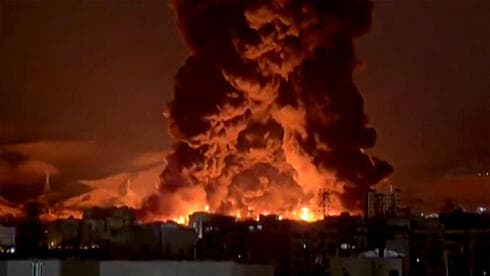
US obliterates military targets on Iran’s Kharg Island, Trump warns
13 sources compared
US Deploys About 2,500 Marines to Middle East After Iran Attacks Gulf Shipping
33 sources compared
FBI Warns of Iranian Drone Plot Based on Unverified Tip; California Says No Credible Threat
10 sources compared

White House Demands ABC Retract Report Claiming Iran Sought To Launch Drone Attacks On California
11 sources compared