
Trump Delays Iran Strikes; Stocks Rise and Oil Falls
Key Takeaways
- Trump postponed strikes on Iran's energy infrastructure for five days amid talks.
- Markets rallied as stocks rose and oil prices fell after the pause.
- Iran denies or does not acknowledge negotiations despite Trump's claims of productive talks.
Market Surge
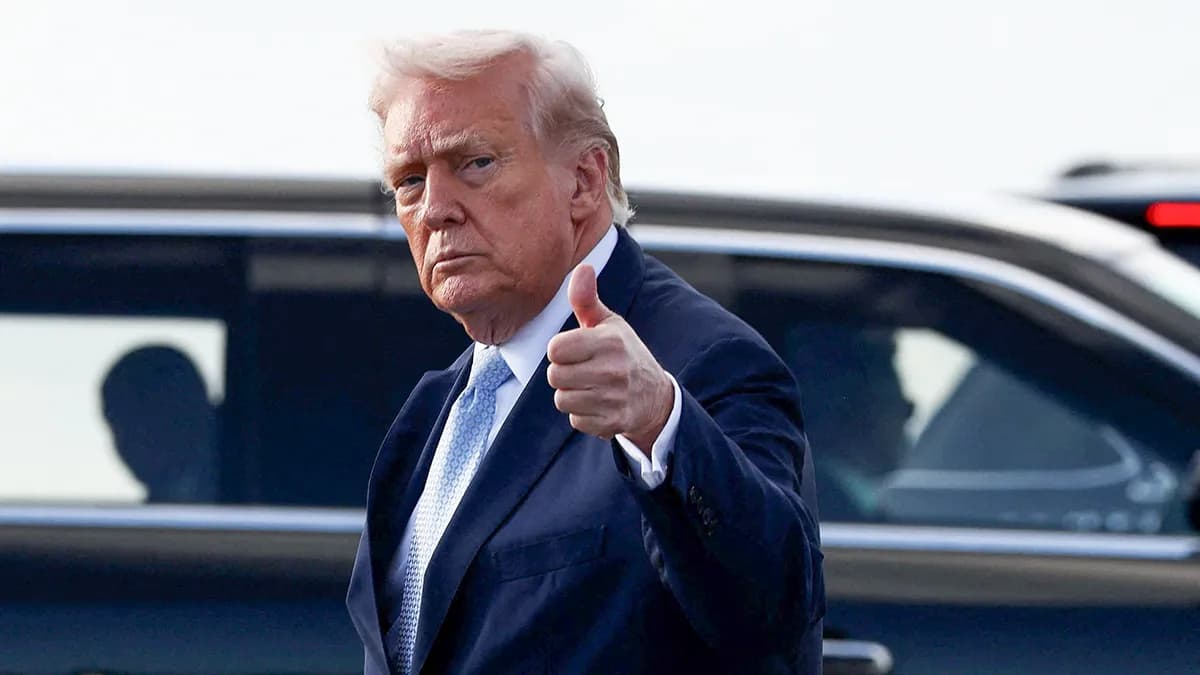
US President Donald Trump dramatically shifted the geopolitical landscape on Monday by announcing a five-day postponement of planned military strikes against Iranian energy infrastructure, triggering an immediate surge in global stock markets.
“The US Presidentannounced on his social media platformTruth Socialthat his country and Iran have held“very good and productive talks”over the last two days regarding a“complete and total resolution”of their hostilities and confrontation in the Middle East”
In a Truth Social post, Trump claimed the United States and Iran had engaged in 'very good and productive conversations regarding a complete and total resolution of our hostilities in the Middle East' and ordered the Department of War to postpone strikes targeting Iranian power plants and energy infrastructure.
The Dow Jones Industrial Average responded by jumping as much as 1,076 points, or 2.4%, to 46,654, while the S&P 500 rose 138 points (2.1%) and the Nasdaq Composite gained 2.4%, according to CBS News.
This market optimism came after weeks of sustained weakness with major indexes logging multiple weeks of losses amid escalating geopolitical tensions and surging oil prices, as reported by Invezz.
The European markets also followed suit, with Germany's DAX gaining 1.2% and the Stoxx 600 rising 0.6%, reflecting widespread relief among investors that an immediate supply shock had been averted, according to CNN.
Oil Price Collapse
Global oil prices plummeted sharply following Trump's announcement, with Brent crude falling 7-9% to around $103 per barrel and West Texas Intermediate dropping 9% to approximately $89 per barrel, according to multiple sources.
The dramatic reversal came as traders priced in reduced immediate threats to global energy supplies through the Strait of Hormuz, a critical waterway carrying 20% of the world's oil supply that Iran had effectively closed.

Finimize reported that the market reaction was swift, with crude repricing in a hurry as investors perceived lower odds of an immediate supply shock.
The decline in oil prices eased inflation anxieties and benefited rate-sensitive sectors, with airline stocks rallying strongly as American Airlines and United Airlines rose more than 4% each, while banks like JPMorgan Chase and Goldman Sachs gained 1.6% to 2%, according to Invezz.
However, energy stocks declined as oil prices retreated, with Exxon Mobil and Chevron both slipping over 1%, and Occidental Petroleum falling 2%, reflecting the sector-specific impact of the price drop.
Negotiation Contradictions
Contradictory statements emerged from Tehran regarding the claimed negotiations, creating uncertainty about the actual state of diplomatic efforts.
Iranian state media and officials firmly denied any direct negotiations with the United States, with the Foreign Ministry spokesperson Esmaeil Baghaei stating 'there has been no direct or indirect communication with the United States' and dismissing Trump's claims as an attempt to 'retreat from his deadline out of fear of Iran's response,' according to CBS News.
Iran's state-run Islamic Republic News Agency (IRNA) quoted Baghaei as saying Iran has held no negotiations with the United States, rejecting claims by Trump that Washington and Tehran have made significant progress in talks.
However, Iran acknowledged receiving messages through 'friendly countries' indicating that the U.S. sought negotiations to end the war, though Tehran insisted it would only accept proposals directly from Washington, not through intermediaries, as reported by Folha de S.Paulo.
Meanwhile, Trump claimed there had been direct communications with an unidentified 'top' Iranian official whom he described as 'very reasonable, very solid, the people within know who they are, they're very respected,' while also suggesting that whoever takes power next in Iran would represent a 'regime change,' according to The US Sun.
Humanitarian Crisis
The ongoing conflict has created a severe humanitarian crisis with escalating civilian casualties and growing international concern about the destruction of critical infrastructure.
Iran has demonstrated an ability to keep hitting back despite 24 days of U.S.-Israeli strikes that a rights group says have killed more than 3,200 people in Iran, including at least 214 children, according to CBS News.

The Red Cross president warned against attacks on civilian infrastructure, stating that 'war on essential infrastructure is war on civilians' and noting that 'what we have seen in recent days in the Middle East risks reaching a point of no return' with potential 'irreversible consequences' if nuclear facilities are harmed, whether deliberately or incidental.
The war has also severely damaged at least 40 energy facilities across nine countries, with the International Energy Agency head Fatih Birol warning that 'no country will be immune to the effects of this crisis if it continues to go in this direction,' according to NPR.
The situation is described as worse than the combined oil crises of 1973 and 1979, with Birol noting that 'only as of today, we lost 11 million barrels per day – so more than two major oil shocks put together.' Meanwhile, Iran's Defense Council escalated threats warning that Tehran would cut all Gulf routes by laying sea mines if Trump followed through with his strikes, potentially blocking maritime traffic beyond the narrow strait and creating further global energy disruptions.
Global Reactions
International reactions to the crisis have been varied, with multiple nations and organizations expressing concern about the escalating conflict and its global economic implications.
“and Israeli energy and infrastructure across the Middle East”
China called on all parties involved in the Iran war, but particularly the U.S. and Israel, to halt military operations, with Foreign Ministry spokesperson Lin Jian warning that ongoing military action would only contribute to a 'vicious cycle' and saying the war 'shouldn't have been started in the first place,' according to CBS News.

China's special envoy to the Middle East Zhai Jun told reporters that 'the one who tied the bell must be the one to untie it,' emphasizing the need for de-escalation.
The European Union foreign policy chief Kaja Kallas welcomed Trump's halt on striking Iran energy infrastructure as 'very welcome,' stating that 'any attacks on infrastructure are causing chaos in the region and really escalating this war even further,' according to NBC10 Philadelphia.
Meanwhile, the head of TotalEnergies predicted gas prices would be 'very high by summer, and by September' if the Strait of Hormuz remained closed, with Patrick Pouyanné expecting 'a very high price for liquefied natural gas (LNG), the liquefied gas typically shipped by boat through the strait, by summer and September, as we refill Europe's gas storages.'
Despite the temporary market relief, U.S. gasoline prices continued rising, reaching $3.96 in the latest reading from AAA, the highest price since August 2022, with the average price up $1.02, or 34%, in the last month - representing a bigger one-month gain than in the wake of Hurricane Katrina in 2005 and the Russian invasion of Ukraine in 2022.
More on Finance

President Donald Trump Threatens to Obliterate Iran's Power Plants as Oil Prices Rise
12 sources compared

Jury Rules Elon Musk Misled Twitter Investors in $44B Acquisition Case
20 sources compared
Judge Jason Woodbury Blocks Kalshi From Operating in Nevada
24 sources compared

Coinbase Launches Stock Perpetual Futures for Non-U.S. Users
12 sources compared