
Trump Halts U.S. Strikes on Iran Energy Infrastructure for Five Days Amid Talks
Key Takeaways
- U.S. halts strikes on Iran's energy infrastructure for five days.
- Iran denies having any talks with the U.S., contradicting Trump's remarks.
- Brent crude price fell to about $99.94 per barrel after pause.
Trump's Diplomatic Shift
President Donald Trump dramatically reversed course on Monday, March 23, 2026, announcing a five-day postponement of U.S. military strikes against Iranian power plants and energy infrastructure.
He cited what he described as 'very good and productive conversations' aimed at achieving a 'complete and total resolution of our hostilities in the Middle East.'

The unexpected announcement came just hours before a self-imposed deadline that would have triggered attacks on Iran's energy facilities if Tehran failed to fully reopen the Strait of Hormuz.
Trump made the announcement on his Truth Social platform, stating that discussions involving his Middle East envoy Steve Witkoff and son-in-law Jared Kushner had yielded 'major points of agreement.'
The president framed the delay as a diplomatic opportunity, warning that if talks failed, 'we'll just keep bombing our little hearts out.'
Iran's Firm Denial
Iranian officials immediately and forcefully rejected Trump's claims of ongoing negotiations, with multiple sources confirming Tehran's position that no direct or indirect talks with Washington had taken place.
Iranian state media portrayed Trump's announcement as a retreat under pressure, with state television displaying a graphic reading 'U.S. president backs down following Iran's firm warning.'

A senior Iranian security official told Tasnim news agency that 'there has been no negotiation and there are none,' dismissing Trump's claims as 'psychological warfare.'
Foreign Ministry spokesman Esmaeil Baghaei characterized the U.S. decision as an attempt to 'reduce energy prices and buy time to implement his military plans.'
Iranian parliament speaker Mohammad-Bagher Ghalibaf stated that Iran would consider vital infrastructure across the region, including desalination facilities critical for drinking water in Gulf nations, as legitimate targets.
Market Reactions
The global financial markets reacted swiftly and dramatically to Trump's announcement, with oil prices plummeting and stock markets surging as investors interpreted the development as a potential de-escalation of the Middle East conflict.
“Separately, Trump also told reporters that the talks took place on Sunday”
Brent crude futures dropped by approximately 11% to settle at $99.94 per barrel, while U.S. West Texas Intermediate lost 10.3% to settle at $88.13, representing the sharpest single-day decline since the conflict began.
The Dow Jones Industrial Average soared more than 800 points in early trading, with the S&P 500 and Nasdaq both climbing around 1.5% for their best day since the war's onset.
This market response underscored the significant economic stakes of the conflict, as the International Energy Agency's executive director Fatih Birol warned that the current energy crisis was 'worse than the two oil shocks of the 1970s put together.'
The dramatic market swings reflected the precarious balance between military threats and diplomatic possibilities in the region.
International Mediation
International mediation efforts intensified as regional power players attempted to bridge the gap between Washington and Tehran's conflicting narratives.
Turkish Foreign Minister Hakan Fidan engaged in diplomatic shuttle diplomacy, speaking with counterparts from Qatar, Saudi Arabia, Pakistan, Egypt and the European Union, as well as with U.S. officials over the weekend.

Egyptian President Abdel-Fattah el-Sissi confirmed that Cairo had delivered 'clear messages' to Iran focusing on de-escalation.
Oman, which has traditionally served as a mediator between Washington and Tehran, announced it was 'working intensively to put in place safe passage arrangements for the Strait of Hormuz.'
Pakistan also positioned itself as a potential neutral venue, with Prime Minister Shehbaz Sharif agreeing with Iranian President Masoud Pezeshkian on the 'urgent need for de-escalation, dialogue, and diplomacy.'
Continued Military Conflict
Despite diplomatic overtures, the military conflict continued unabated across multiple fronts, with both the U.S.-Israeli coalition and Iran exchanging strikes even as negotiations were supposedly underway.
“Iran denies talks with US following Trump’s remarks on ‘productive conversations’ Iranian source says ‘no dialogue’ with Washington as Trump announces pause in strikes on energy infrastructure ISTANBUL Iran on Monday denied holding any talks with the US, contradicting remarks by US President Donald Trump that recent “productive conversations” had taken place between the two sides”
Shortly after Trump's announcement, the Israeli military confirmed launching 'another wave of strikes targeting infrastructure of the Iranian terror regime across Tehran.'

Iranian media reported that the Islamic Revolutionary Guard Corps had conducted fresh attacks on targets in Israel and U.S. military sites in the region.
The fighting in Lebanon intensified as well, with Israeli forces striking bridges in southern Lebanon that are vital to stopping Hezbollah from transferring weapons south.
Lebanese President Joseph Aoun characterized these attacks as 'a prelude to ground invasion,' while the Israeli military's chief of staff declared that their fight against Hezbollah 'has only just begun.'
Uncertain Future
The conflicting narratives and continued military actions created significant uncertainty about the prospects for a genuine diplomatic resolution to the conflict.
While Trump expressed optimism, stating there was 'a very good chance' of reaching a deal this week and claiming 'major points of agreement' with Iran, his own statements contained contradictions.
The president refused to identify the Iranian officials he claimed to be negotiating with, stating only that they were 'a top person' and not Supreme Leader Mojtaba Khamenei.
Trump also emphasized that any deal would require 'a very serious form of regime change' in Iran and that the U.S. would take control of Iran's enriched uranium materials.
Meanwhile, international observers cautioned that the situation remained precarious, with the International Committee of the Red Cross warning that 'what we have seen in recent days in the Middle East risks reaching a point of no return.'
More on Iran

Iran Collects $2 Million Transit Fees From Some Vessels Crossing Strait of Hormuz
17 sources compared

President Trump delays strikes on Iran power plants for five days amid conflicting reports.
41 sources compared
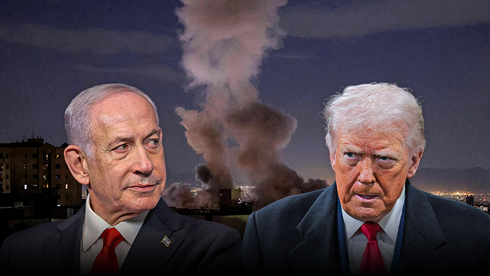
Trump Says U.S.-Iran Talks Ongoing as Iran Denies Negotiations.
10 sources compared
Trump Says Talks With Iran Ongoing; Iran Denies Negotiations.
15 sources compared