Full Analysis Summary
Coverage of US–Venezuela tensions
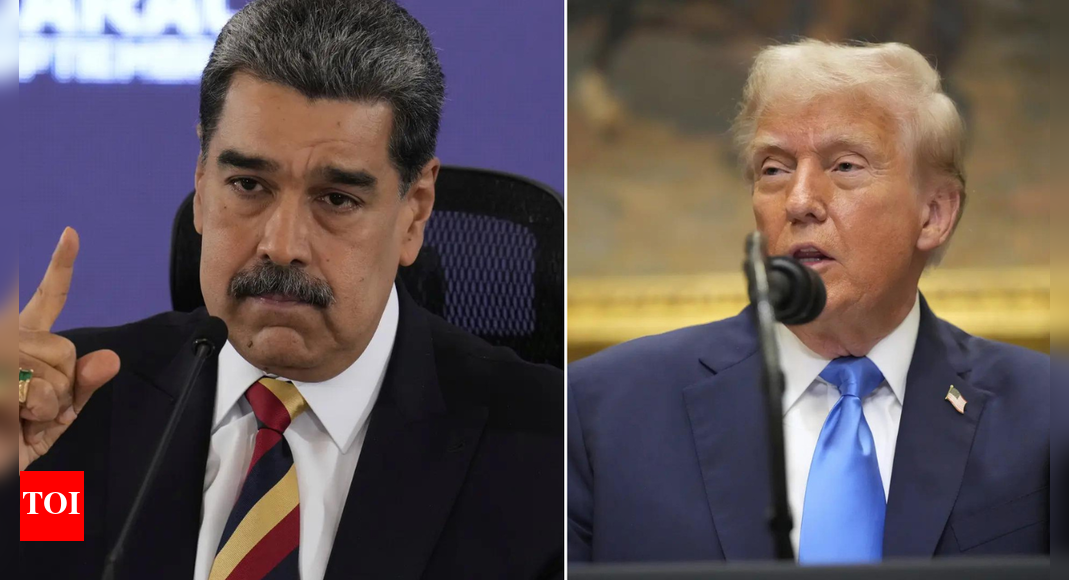
Reports indicate that US President Donald Trump’s actions have escalated tensions with Venezuela.
At least one headline said a US aircraft carrier was being sent to Latin America as war fears rose.
The Times of India ran the headline "Donald Trump sending US carrier to Latin America as war fears rise."
Deutsche Welle documented Trump’s rhetoric, saying he is taking on "the ISIS of the western hemisphere" and accusing Nicolás Maduro of being a drug lord.
DW also noted Pentagon footage it said shows US forces striking vessels allegedly smuggling drugs.
A US Sun snippet in the materials did not report on the deployment itself and instead asked how a reader wanted stories summarized, illustrating limited or entertainment-oriented coverage.
Coverage Differences
Narrative emphasis
DW (Western Mainstream) emphasizes official statements, military actions and regional reactions by quoting Trump’s rhetoric and Pentagon footage; Times of India (Asian) is represented only by a headline stressing a carrier deployment and rising war fears but explicitly notes it lacks full article text; The US Sun (Western Tabloid) does not present reporting on the event in the provided snippet and instead focuses on reader-facing summary choices, highlighting a tabloid/interactivity approach rather than detailed coverage.
U.S. anti-drug posture
DW's reporting places the deployment (or the rhetoric surrounding it) in the context of an intensified anti-drug posture.
It reports that Trump has accused Maduro of being a drug lord - an allegation Venezuela denies - and that the Pentagon released footage it says shows U.S. forces striking vessels in international waters that were smuggling drugs.
DW also records that Trump framed these actions as saving American lives and that his vow to "kill people who bring drugs" alarmed regional governments.
These elements frame U.S. actions as both law enforcement-style strikes and escalatory military posturing, according to the DW account in our set.
Coverage Differences
Tone and severity
DW (Western Mainstream) uses direct, forceful language and records Trump’s own quoted vows and accusations (e.g., "kill people who bring drugs," and calling opponents “the ISIS of the western hemisphere”), portraying a severe, militarized tone; Times of India (Asian) in the available material is cautious and speculative — offering only a headline and asking to wait for full text — and The US Sun (Western Tabloid) provides no substantive reporting here, reflecting less informational depth in the provided snippet.
Venezuelan responses and coverage
DW's account presents Venezuelan and regional responses.
Maduro rejected Trump's characterization.
Venezuela launched coastal military drills.
Maduro warned of a revolutionary backlash if his country is attacked.
DW frames these steps as defensive and as signalling the risk of a wider confrontation in the Caribbean and Latin America.
The Times of India headline signals rising war fears but, as the snippet admits, lacks article detail to confirm such maneuvers.
The US Sun piece again supplies no direct reporting in the excerpts provided.
Coverage Differences
Missed information vs. detailed reporting
DW (Western Mainstream) supplies specifics about Venezuela’s response — quotes of Maduro’s rejection, coastal drills and warnings of backlash — while Times of India (Asian) only presents a headline referencing rising war fears and explicitly requests the full article for accuracy; The US Sun (Western Tabloid) in the provided snippet does not report on these events and instead focuses on audience prompts, indicating uneven coverage depth across sources.
Assessment of coverage
Coverage across the three sources highlights uncertainty and gaps.
Specifics about the carrier deployment — which carrier, the timing, and the mission orders — are not present in the provided snippets.
The Times of India explicitly notes the absence of full text, making definitive conclusions impossible from these materials alone.
DW supplies the most actionable claims about rhetoric, alleged strikes, and the Venezuelan response.
The US Sun content in our set is meta-journalistic, asking how to summarize rather than providing substantive news reporting.
Given those limits, readers should treat the headline and the DW details as indicative but incomplete.
There remains ambiguity about operational facts that would be needed to confirm that U.S. actions represent an imminent move toward war.
Coverage Differences
Ambiguity and source limitations
Times of India (Asian) explicitly concedes it lacks the article text and asks for the link or paste, signaling uncertainty; DW (Western Mainstream) provides substantive claims about rhetoric and alleged strikes but does not answer the operational specifics about the carrier in these snippets; The US Sun (Western Tabloid) in the available excerpt focuses on how to present content to readers rather than offering reporting, highlighting different editorial priorities and clear informational gaps across the set.