USA14 April, 20268 min read
Trump Escalates Feud With Pope Leo XIV Over Iran War, Threatens Bombing Civilian Infrastructure
Trump escalated a public feud with Pope Leo XIV over Iran war stance. Trump posted an AI-generated image of himself as Jesus, provoking widespread backlash.
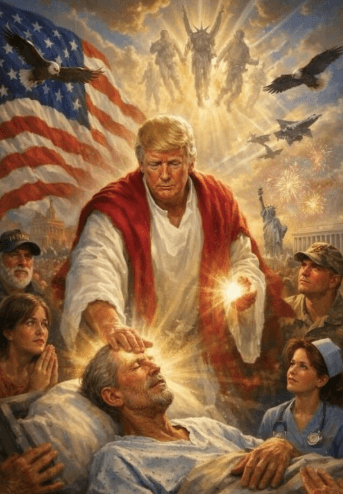
Trump vs Pope Leo XIV
A public feud between President Donald Trump and Pope Leo XIV has escalated over the war in Iran and the pontiff’s appeals for peace, with Trump and Vatican leaders trading increasingly personal attacks. The Guardian described how Trump’s criticism of Pope Leo XIV unfolded alongside mass attendees’ reflections at Catholic churches in the United States, including Duluth, Georgia, where Alex Sullivan said, “No, I will not support the pope any less.” CBS News traced the dispute’s escalation to Operation Epic Fury, noting that “the day after the military operation began, the pontiff expressed ‘deep concern’ and urged the warring parties to ‘stop the spiral of violence before it becomes an irreparable abyss.’”
In the same CBS account, Leo later urged the public to “contact the authorities — political leaders, congressmen,” a line that CBS said was repeated as the war continued. On Easter Sunday, the Guardian reported that Trump threatened to bomb civilian infrastructure in Iran unless the regime opened the strait of Hormuz, and two days later Trump posted on Truth Social, “A whole civilization will die tonight.”
The Guardian also reported that Trump later posted an AI-generated image depicting himself as Christ, then removed it and claimed he thought he was being depicted “as a doctor.” In Georgia, the Guardian reported that Catholics around Atlanta treated Trump’s comments toward the pope with “disdainful resignation,” while other attendees said the tone and the AI image crossed lines.
Escalation timeline and threats
The dispute’s escalation, as laid out by CBS News and the Guardian, moved from criticism of U.S. policy toward sharper rhetorical clashes and threats tied to the Iran conflict. CBS News said Operation Epic Fury, involving “joint U.S. and Israeli airstrikes on Iran,” served as the catalyst for the exchange, and it described the pontiff’s early reaction as “deep concern” followed by an urgent call to “stop the spiral of violence before it becomes an irreparable abyss.” CBS then described how the pope’s language grew sharper as the war continued, including the condemnation of Trump’s threat to destroy Iranian civilization as “unacceptable” and the repeated instruction to “contact the authorities — political leaders, congressmen.”
The Guardian added that Pope Leo advocated for peace “from the moment the US began bombing on 28 February,” and it quoted the pope on Palm Sunday: “Brothers and sisters, this is our God: Jesus, King of Peace, who rejects war, whom no one can use to justify war.” The Guardian also quoted the pope’s scripture-based warning: “Even though you make many prayers, I will not listen: your hands are full of blood,” and it tied that to the pope’s broader stance on the war. The Guardian reported that on Easter Sunday Trump threatened to bomb civilian infrastructure in Iran unless the regime opened the strait of Hormuz, and it said two days later Trump posted another threat on Truth Social: “A whole civilization will die tonight.”

CBS News described Trump’s April 12 social media attack, quoting his Truth Social post that called the pope “WEAK on Crime, and terrible for Foreign Policy,” and it included Trump’s claim that he was elected “IN A LANDSLIDE” and was setting “Record Low Numbers in Crime.” CBS further said Trump doubled down in comments to reporters after arriving at Joint Base Andrews following a weekend in Florida, saying, “I don’t think he’s doing a very good job.”
Catholic voices in Georgia
In the United States, the feud played out not only in official statements but also in church pews, where attendees described how they weighed faith against politics.
The Guardian reported that at the Catholic Church of Saint Monica in Duluth, Georgia, Alex Sullivan, a self-described conservative who “once staffed a libertarian state representative at the Georgia capitol,” said he rejected the idea that Trump’s criticism of Pope Leo XIV would diminish his view of the pope, adding, “No, I will not support the pope any less.”
Sullivan said he saw a “tension between faith and politics” and described how he handles it by prayer, saying, “Usually I have to pray about it, and sometimes I have to be OK with not being OK with what he said and just living in that tension.”
The Guardian also quoted software engineer Alex Aboutanos, who said, “There’s nothing new under the sun here,” and argued that “There can be legitimate political disagreement about what’s the right move.”
Aboutanos criticized Trump’s tone, saying, “I can disagree with my own personal father, but I don’t speak to him like that. I don’t name-call him.”
Another attendee, Nick Dicarlo, an operations manager in Duluth, said the AI depiction of Trump as Jesus was “a pretty major problem” and argued, “Really, what he needs to do is publicly recant it because that’s something that needs some reparation.”
At Atlanta’s Cathedral of Christ the King, Kate Stroth told the Guardian that she strongly opposed the AI image, saying, “I didn’t like it, and it’s one of the first things that he’s ever done that I was just strongly opposed to.”
Stroth also said the harsh words were “typical” and that Trump’s faith posture had not changed her view of him as president, saying, “He’s not a Catholic, so it hasn’t changed my opinion of him.”
Vance and the pope’s response
As the feud intensified, Vice President JD Vance and Pope Leo XIV both publicly addressed how they wanted the dispute framed, with Vance urging the Vatican to focus on theology and the pope insisting he would continue speaking out. CBS News reported that on April 13, Vance entered the fray, telling Fox News that “in some cases, it would be best for the Vatican to stick to matters of morality, to stick to matters of what's going on in the Catholic Church, and let the president of the United States stick to dictating American public policy.” CBS also described Vance’s view that it was acceptable for the pope to comment on issues like abortion, immigration and war because it “invites conversation,” while he challenged Leo’s statement on X that God “is never on the side of those who once wielded the sword and today drop bombs.”
In a separate report, the New York Post said Vance was “grateful” to Pope Leo for easing tensions, quoting Vance’s post on X: “I am grateful to Pope Leo for saying this.” The New York Post also quoted Vance’s message that “Pope Leo preaches the gospel, as he should,” and that “He will be in our prayers, and I hope that we’ll be in his.” The Straits Times reported that Pope Leo said in response to Trump’s attacks that he had “no fear” of the Trump administration and would continue to speak out, while it also described Vance’s defense of Trump’s stance on violence and his call for the pope to be careful when discussing theology.

The Straits Times further said that on the night of April 14, Vance told an audience at the University of Georgia that it was “very, very important for the pope to be careful when he talks about matters of theology.” The New York Post added that Vance’s olive branch came after the pope spoke on a papal plane during his 11-day tour of Africa, saying, “There’s been a certain narrative that has not been accurate in all of its aspects.”
How outlets frame the same fight
The same Trump–Pope conflict is framed differently across outlets, with some emphasizing personal religious tension and others emphasizing political strategy and institutional reactions. USA Today described the clash as dividing Catholics and said it had escalated beyond “president versus pontiff,” pointing to Vice President JD Vance entering the fray and “the nation’s Catholic bishops” rallying around the pope, while it quoted Landon Schnabel saying, “Conservative Catholics who have supported Trump may now feel the need to decide between him and the pope.” USA Today also quoted Mathew Schmalz saying up to “a third of that support may have since withered” and described the dispute as threatening to “scuttle a key constituency heading into the 2026 midterms.”
The Guardian, by contrast, focused on mass attendees’ lived experience of the feud, quoting Alex Sullivan’s insistence that he would not support the pope “any less” and portraying the AI image and Trump’s tone as the flashpoints for some parishioners. CBS News emphasized the escalation mechanics and quoted Trump’s Truth Social language, including “WEAK on Crime, and terrible for Foreign Policy,” and it described how Trump doubled down after arriving at Joint Base Andrews. The Straits Times emphasized the reposting of the Jesus image on April 15, describing the image’s caption and quoting that Trump urged that “someone please tell Pope Leo” about the killings of protesters by Iran and that “for Iran to have a Nuclear Bomb is absolutely unacceptable.”
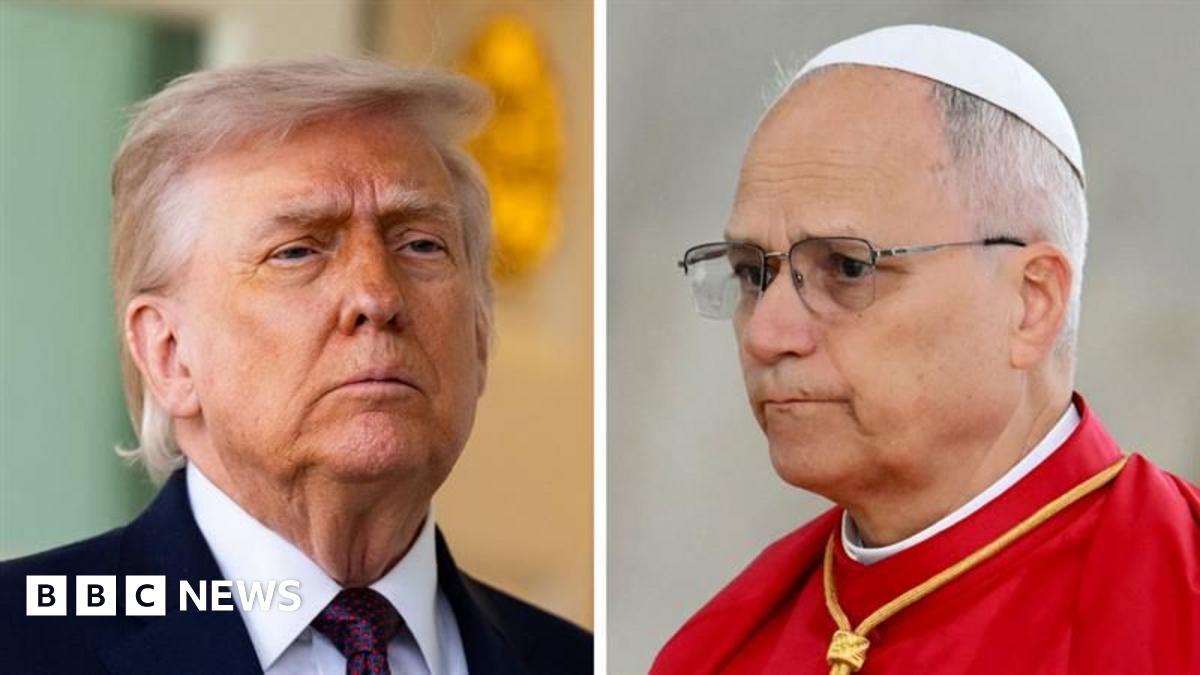
Rolling Stone framed the dispute as a structural contradiction inside American Catholic conservatism, writing that Trump “exposed a structural contradiction at the heart of American Catholic conservatism” and describing “the ancient and unresolved tension between devotion to God and devotion to power.” Rolling Stone also quoted Trump’s Sunday night Truth Social post calling Leo “terrible,” “weak,” and “bad for the Church,” and it described Leo’s response on the papal plane as “I have no fear of the Trump administration, or speaking out loudly of the message of the Gospel.”