USA16 November, 20252 min read
Trump Fuels Wave of Threats Against Marjorie Taylor Greene Over Epstein Files Feud
Donald Trump publicly withdrew his support and denounced Marjorie Taylor Greene online. Greene said Trump's attacks triggered a wave of death threats against her.

22 outlets told this the same way.
Outlets did split on Trump Interrupted by Protesters at San Antonio Rally for Ken Paxton →
Trump-Greene dispute over Epstein
Former president Donald Trump publicly withdrew his endorsement of Rep. Marjorie Taylor Greene and launched a stream of personal attacks after she joined a small group of House Republicans pushing to force a vote to release Justice Department files tied to Jeffrey Epstein.
“Rep. Marjorie Taylor Greene said private security firms have warned her about threats to her safety, which she blamed on President Trump’s public attacks.”
Greene says Trump's posts - which included nicknames and denunciations - have coincided with a wave of threats and warnings from private security firms about her safety.
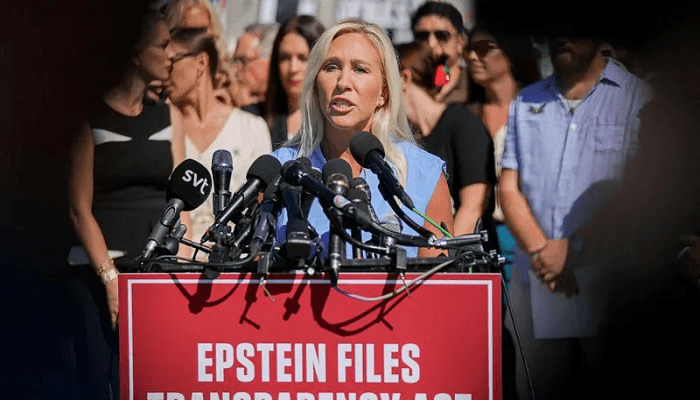
Multiple outlets report the feud centers on Greene's role in seeking disclosure of Epstein materials and her recent policy disagreements with Trump that have widened their split.
Push to release Epstein files
Greene and her defenders say the row stems from her efforts to make the so-called "Epstein files" public. She was one of four House Republicans to sign a discharge petition to force the debate and framed her push as standing with victims of sexual abuse. Greene posted texts and messages she says show she urged Trump to release the documents and argued the files could expose a "web of rich powerful elites."
Supporters who identify as Epstein survivors or family members have publicly backed her demand for disclosure. Committee releases already have produced tens of thousands of pages that prosecutors and oversight members continue to litigate in public.

Trump-Greene feud
Mr. Trump's public response was personal and derisive.
“Former president Donald Trump attacked Rep. Marjorie Taylor Greene on Truth Social, calling her ‘Wacky Marjorie,’ accusing her of constantly complaining, and saying he won’t take her calls.”
He branded Greene with nicknames, accused her of constant complaining, called her disloyal and suggested he might support a primary challenger to her seat.
That response was widely reported verbatim by British and U.S. outlets and amplified across social platforms, deepening the perception that the feud may have real political costs for both figures and signaling to some Republicans that loyalty to Trump remains a litmus test.
Threats and responses to Greene
Greene says the fallout has produced concrete security warnings. Private firms alerted her to a 'hotbed of threats', and she referenced prior swatting at her home. Aides say the rhetoric has historically preceded violent acts tied to radicalized individuals.
Media accounts note Greene did not list specific threats publicly, but several survivors and family members who support her have likewise reported receiving threats. Authorities and the White House have been reported as not responding publicly to her accusations in several accounts.
GOP divisions and consequences
Observers say the episode underscores growing fractures within the GOP and the MAGA coalition over issues ranging from Epstein disclosures to policy disagreements such as expiring ACA subsidies and aid packages. Commentators and regional outlets say the spat signals Trump is willing to publicly discipline former supporters, while others warn the public attacks could empower violent, extreme online actors. The dispute is being tracked closely as House leaders prepare a vote on unclassified Epstein materials, and several outlets suggest the confrontation could affect 2025 primaries and intra-party discipline.
“Rep. Marjorie Taylor Greene said private security firms have warned her about threats to her safety, which she blamed on President Trump’s public attacks.”