Syria11 November, 20253 min read
Trump Hosts Al-Qaeda Leader Ahmed al-Sharaa at White House Amid ISIS Assassination Attempts
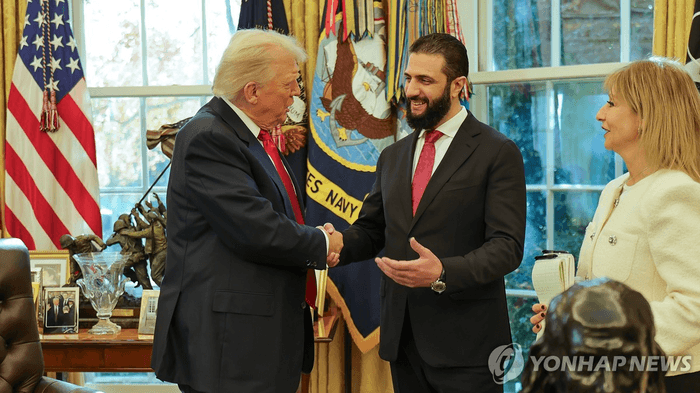
President Trump hosted Syrian leader Ahmed al-Sharaa, a former al-Qaeda commander, at the White House. The U.S. suspended most sanctions on Syria for 180 days following al-Sharaa's historic visit.
99 outlets told this the same way.
Outlets did split on France Suspends Police Stun Grenades at High School Protests After 15-Year-Old Loses Hand →
Trump Meets Syrian Leader
Former U.S. President Donald Trump hosted Syria’s new leader Ahmed al‑Sharaa at the White House in a closed‑door meeting widely framed as a historic first for a Syrian head of state since 1946.
“President Trump hosted Syrian President Ahmed al-Sharaa at the White House, marking the first visit by a Damascus head of state.”
Multiple outlets emphasize Sharaa’s insurgent past, describing him as a former al‑Qaeda–linked commander with a prior $10 million U.S. bounty who helped lead Hayat Tahrir al‑Sham (HTS) after splitting with ISIS.
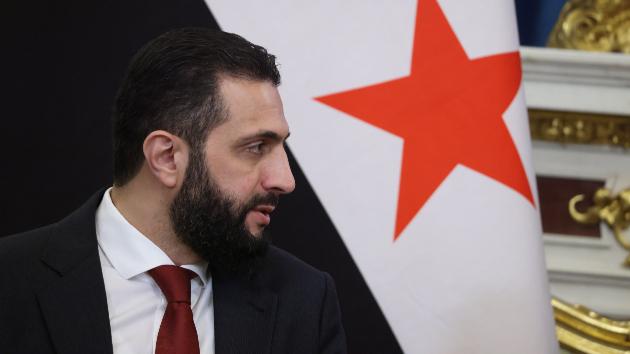
The visit unfolded amid security jitters, with reports that ISIS recently attempted to assassinate Sharaa prior to his trip.
Trump publicly praised Sharaa’s toughness and signaled openness to closer ties and Syria’s inclusion in U.S.-led regional initiatives.
Sharaa sought to recast himself from militant leader to statesman and pressed for normalized relations and investment to rebuild war‑torn Syria.
Sanctions Relief and Designations Dispute
A central point of dispute across reports is the scope of sanctions relief and the status of Sharaa’s terror designations. Several outlets say Washington removed Sharaa and HTS from U.S. terrorism lists and suspended major Caesar Act sanctions for 180 days, while others imply broader lifting. RTE.ie and Daily Sabah describe U.S. and UN actions easing or lifting sanctions and delisting Sharaa, with UPI and DW specifying a time‑limited 180‑day suspension that only Congress can permanently repeal.
By contrast, WSAZ frames the White House meeting as following the lifting of U.S. sanctions, a stronger claim than most other accounts. BNO News details new guidelines allowing most civilian business while keeping restrictions tied to Russia, Iran, human rights abuses, and Assad‑linked figures.

Syria's Role in Anti-ISIS Efforts
Security cooperation against ISIS is a major theme in recent reports. Several sources indicate that Syria either joined or is about to join the U.S.-led Global Coalition to Defeat ISIS. Some reports suggest this membership is already formalized, while others describe it as imminent or focused on intelligence sharing rather than direct military deployments.
“Following the meeting, Syria joined the US-led international coalition against the Islamic State (ISIS) as its 90th member.”
France 24 and WSAZ state that Syria became the coalition’s 90th member following a White House meeting. Bangladesh’s state agency also reports Syria's admission as the 90th member.
In contrast, AL-Monitor describes Syria's planned participation as enhanced intelligence cooperation without direct military involvement. The Los Angeles Times notes that the meeting centered on Syria’s involvement but does not confirm any formal step.
Regional Security Developments in Syria
Beyond ISIS, reports diverge on the regional agenda. Some outlets describe nascent U.S.–brokered Syria–Israel understandings and even a prospective U.S. military presence near Damascus. Other sources are more cautious in their assessments.
France 24 mentions White House talks on the disputed Golan Heights. The Australian Broadcasting Corporation and Straight Arrow News cite plans for a U.S. presence at a Damascus air base. These reports are echoed by The Journal and Firstpost.

Devdiscourse states that Syria is exploring a base and coalition entry. Al-Monitor adds that there are discussions on integrating the Kurdish-led Syrian Democratic Forces into the Syrian Arab Army and pursuing security agreements with Israel. These narratives collectively suggest an ambitious, but not uniformly confirmed, regional security package attached to the Sharaa–Trump outreach.
Controversies and Developments in Syria
Coverage also clashes over Sharaa’s past and the human-rights record of forces aligned with him. The Telegraph reports he once founded a Syrian branch of a militant group before aligning with al-Qaeda. This claim is contrasted by Breitbart’s account that he refused to join that group and later fought both it and al-Qaeda after rebranding HTS.
“Despite criticism over sectarian killings by pro-government Sunni gunmen targeting Alawite and Druze civilians, al-Sharaa has engaged diplomatically with the US.”
DW reports criticism of sectarian killings by pro-government Sunni gunmen targeting Alawite and Druze civilians under Sharaa’s rule. NBC notes Syrians questioning his legitimacy even as Western powers delisted him. Several outlets, including Hindustan Times, Israel Hayom, and Breitbart, detail recent assassination attempts by extremist groups—underscoring persistent threats despite the diplomatic thaw.

Meanwhile, The Guardian highlights U.S. recognition of progress on missing Americans and chemical-weapons elimination as part of delisting and sanctions relief. This shows how some Western narratives emphasize conditional normalization tied to concrete benchmarks.