Trump looks increasingly trapped over Iran as markets gyrate and oil shortage hits heartland
Key Takeaways
- Trump faces dwindling options and increasing entrapment over Iran policy.
- Markets swung sharply, with major reversals on Wall Street and in crude prices.
- Iran rejected Trump's assertion that negotiations had occurred or were near a deal.
Trump Iran strategy and markets
Donald Trump appears to be fast running out of exits on his Iran war folly.
“Donald Trump appears to be fast running out of exits on his Iran war folly”
Despite last night's dramatic about face, and the huge reversals on Wall Street and commodity markets, the White House increasingly looks trapped.
Iran immediately refuted Trump's claim that negotiations had even taken place, let alone that they were close to "a deal".
The sudden shift from furious threats of impending doom to benign negotiator has been a hallmark of Trump's leadership during his second term.
Loading...It has spawned a trading strategy so predictable and profitable that financial markets have coined the term TACO trade; Trump Always Chickens Out.
The routine goes something like this; threats of intimidation, leading to financial market upheaval before the inevitable backdown that sparks a huge relief rally.
On cue, Wall Street soared overnight and oil tumbled.
But Iran's Revolutionary Guard is fighting for survival, not financial gain, and appears determined to inflict maximum economic damage regardless of anything Trump says.
The messaging, even for this administration, has turned chaotic and wildly contradictory, causing markets and oil prices to perform a series of wild gyrations.
The only constant has been the president's routine use of the word "obliterated".
That's apparently the fate of Iran's military, air force and navy along with several layers of its leadership.
And yet, the president last week was pleading for help from allies to open the Strait of Hormuz.
He then claimed that the US had achieved all its objectives, hinting that an end was in sight.
But thousands of US marines are on their way to the now war-torn Persian Gulf.
China leverage and energy dynamics
While it's gone largely unnoticed, the White House over the weekend postponed a top-level meeting between Trump and his Chinese counterpart, Xi Jinping, that was due to start in about a week's time.
There's no definite date for a resumption, although White House officials have indicated it won't be until the Iran conflict is wound up, or, in alternative reports, for about five or six weeks.
That may or may not give an indication of thinking within the administration as to how long it believes the bombardment will continue.
Early in the conflict, some analysts believed there was an ulterior motive behind America's surprise attack on Iran — to build leverage over China.
Where Xi was dangling the threat of withdrawing critical mineral supply, the thinking was that Trump could counter with energy, particularly given America's new-found status as the world's biggest oil and gas producer and exporter.
Having recently kidnapped Venezuelan President Nicolás Maduro and shut off the supply of cheap, sanctioned oil to China, Trump was hoping to have control of Iran's oil exports.
Almost 90 per cent of Iran's oil exports are shipped to China.
Again, it is cheap, sanctioned oil, often trading at $US15 a barrel below the market price.
While it makes up only slightly more than 13 per cent of China's needs, the combined effect of both military operations has seen about 17 per cent of China's oil needs suddenly out of the picture.
Meanwhile, Beijing's other source of cheap oil, Russia, has suddenly had its sanctions status lifted, which elevates its oil export prices to global benchmarks.
That's going to hurt.
US oil shortage and global impact
The US might be a net exporter of oil, making it technically self-sufficient.
“Donald Trump appears to be fast running out of exits on his Iran war folly”
But it still imports huge amounts.
Why? Because, as the old TV ad goes, "Oils ain't oils."
LoadingAmerican oils are mostly light and low in sulphur and, given US refineries use a range of different crudes to produce the fuels they require, only about 60 per cent of the oil they use is produced at home.
The remainder comes mostly from Canada and Mexico with a small amount from the Persian Gulf, which makes America just as exposed to higher oil prices as everyone else.
National US gasoline prices have doubled in the past few weeks.
Having demonised his predecessor Joe Biden for allowing fuel prices to get out of control, Trump is now facing the prospect of mid-term elections in the next few months amid soaring fuel prices.
That pressure alone may have been enough to prompt the president into his hugely embarrassing backflip.
But it may well turn out to be ineffective.
The Strait of Hormuz is not international waters.
It is controlled by Iran and Oman, although international shipping has the right to safely transit the narrow waterway.
The actual shipping lanes are just 3.2 kilometres wide, making global shipping, especially vessels loaded with fuel, easy targets for Iranian-made drones.
Even the mere threat of drone attacks is enough for insurers to run a mile, which is enough to keep the strait shut indefinitely.
Given the locally made drones cost as little as $US30,000 ($43,000), are brutally effective, easily concealed and simple to operate, they will be almost impossible to completely eradicate even if the large-scale assault continues.
Putin windfall and US debt
Amid the chaos, the ongoing death and destruction, there's at least one winner.
Vladimir Putin, now embroiled in a grinding and brutal conflict in Ukraine for the past four years that is now costing his army 30,000 casualties a month, has finally been delivered a windfall gain.
Russian oil, banned in the West ever since the invasion and sold on the cheap to whichever nation was prepared to take the risk, is finally back on the open market.
America's decision to lift sanctions on Russian oil has helped deliver an extra $US150 million a day from oil sales, adding billions of dollars to Putin's war chest.
As a long-running ally of Iran, and a collaborator in its drone production, it will be in Russia's interest to ensure the Strait of Hormuz is obstructed.
India and China, which have long purchased Russian oil despite the sanctions, are reported to have lifted buying orders.
US debt, meanwhile, has ballooned beyond $US39 trillion as the cost of financing the war adds to an already disturbingly large US deficit.
The yield on US 10-year bonds has risen alarmingly in the past three weeks, now sitting at more than 4.4 per cent, half a per cent higher than at the start of the war.
That only makes the debt burden worse and could dash any effort by the US Federal Reserve's incoming chairman, Kevin Warsh, to cut interest rates.
Prepare for more turbulence.
More on Iran

President Trump Says Iran Deal Within Reach Amid Talks With Senior Iranian Official
10 sources compared

Trump Approves Iran Operation After Netanyahu Presses for Joint Strike on Khamenei
12 sources compared

President Donald Trump orders ICE officers deployed to airports amid DHS shutdown.
227 sources compared
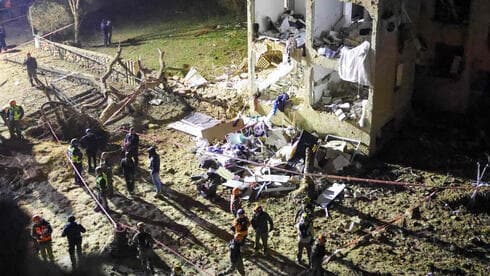
Iranian Missiles Strike Israel; Officials Report 180 Injured Amid Conflicting Casualty Figures.
12 sources compared