USA24 October, 20253 min read
Trump Names $300 Million White House Ballroom After Himself Following East Wing Demolition
This article is an automated aggregation of coverage from news outlets. Our editorials offer in-depth analysis curated by the NewsCord team.
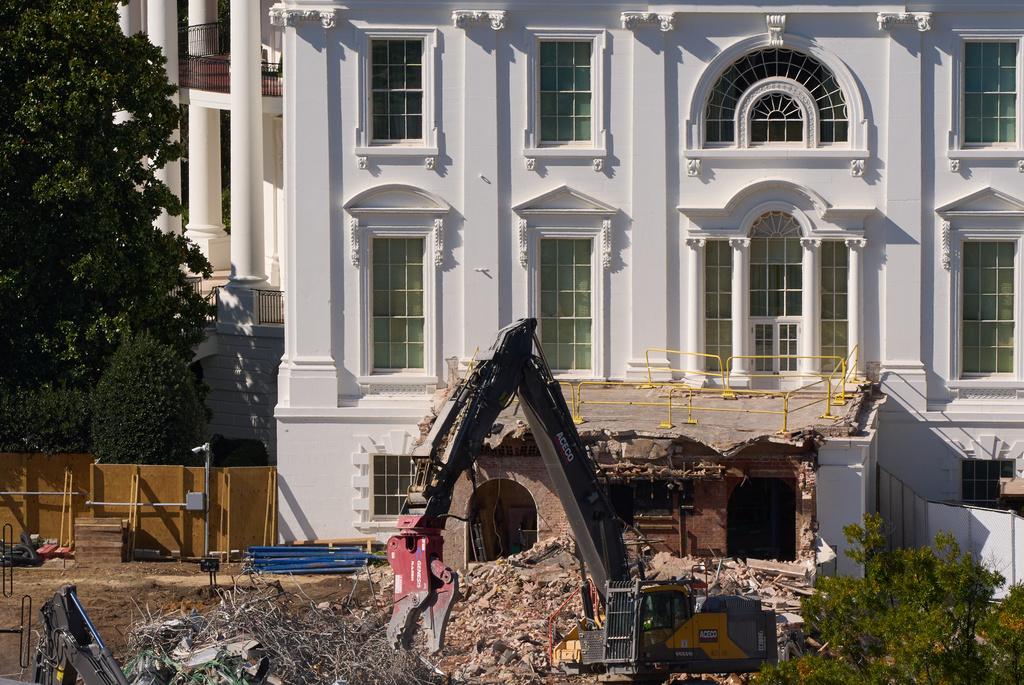
The White House East Wing was completely demolished to build a new ballroom. The new $300 million ballroom is expected to be named after Donald Trump.

11 outlets told this the same way.
Outlets did split on Trump Interrupted by Protesters at San Antonio Rally for Ken Paxton →
White House East Wing Renovation
The White House’s East Wing has been completely demolished to make room for a $300 million ballroom.
“The eastern section of the White House, known as the East Wing, has been completely demolished to make way for former President Donald Trump’s $300 million gilded ballroom project.”
Multiple outlets report that officials are already calling the new space “The President Donald J. Trump Ballroom.”

This move contradicts earlier assurances that existing structures would be left untouched.
Satellite images of the demolition have fueled public outrage.
The White House maintains that any official naming announcement will come directly from Trump.
Critics quoted by mainstream outlets describe the project as a “vanity” addition that overwhelms the historic character of the building.
Pro-Administration voices emphasize that it is a long‑awaited event space completed at no cost to taxpayers.
Several reports also note that Trump has not publicly confirmed the name despite senior officials reportedly using it internally.

Controversy Over Historic Demolition
Process and legality are major flashpoints in the demolition of the historic East Wing and the adjacent Jacqueline Kennedy Garden. The Guardian reports that demolition proceeded without prior submission to the National Capital Planning Commission (NCPC), even as the White House says demolition permits were not required. The National Trust for Historic Preservation insists on public review of the demolition process.
The New Republic states that the project lacks formal approval from both the NCPC and Congress, and that at least two lawsuits have been filed. Newsweek notes that the National Trust has urged a pause in the demolition. People adds that the abrupt teardown has ignited criticism and accusations of secrecy.

Funding and Donor Details
Funding is portrayed as private and lavish, but the figures and implications vary by outlet. Daily Mail reports $350 million raised, exceeding the $300 million budget, with Trump pledging millions. Metro.co.uk echoes that donations from major corporations and billionaire investors surpass construction costs in pounds.
“The project has raised $350 million in donations, exceeding the initial budget, with contributions from top tech company executives and Trump himself pledging millions.”
The Guardian and The New Republic both link funding to major tech companies. The New Republic names Apple, Google, Amazon, Microsoft, and Meta and notes the project’s rise from $200 million to $300 million.
Newsweek underscores donor access concerns after a White House dinner and flags broader ethics questions. Mediaite relays Trump’s claim there will be no cost to taxpayers.
White House Ballroom Project
Design, purpose, and timetable differ across various reports about the White House ballroom project. People describes the ballroom as mirroring Mar-a-Lago’s look to bring Florida aesthetics to Washington. Mediaite quotes Stephen Miller on a neoclassical design that will replace a mid-20th-century structure.
Newsweek reports that Trump defends the need for an indoor venue at the White House instead of tents. Regarding timing, Daily Mail states the project aims to finish before January 2029 but calls the timeline ambitious. Metro.co.uk repeats the goal of completion by 2029 but notes that the schedule is uncertain.

Reactions to Demolition Controversy
Backlash and consequences are prominent. The Guardian cites outrage from historians and former officials sparked by satellite images of the demolition, and reports a Virginia lawsuit seeking to halt the project. Newsweek amplifies critics calling it an unnecessary “vanity project” while the National Trust urges a pause.
“Satellite images revealed the destruction, sparking outrage among historians, former officials, and the public.”
People reports tensions with the press and notes demolition of the Jacqueline Kennedy Garden. Daily Mail adds that public White House tours have been halted and calls the naming move unusual for a sitting president. The New Republic uniquely ties the episode to a breakdown in checks and balances and, separately, to an unprecedented $130 million anonymous donation to pay military personnel during a shutdown, raising influence concerns amid the administration’s growing reliance on private funding.