Trump Orders Americans to Evacuate Iran Immediately

Trump Orders Americans to Evacuate Iran Immediately

13 January, 202611 sources compared
Iran-Israel

Key Points from 11 News Sources

  1. 1

    U.S. ordered Americans in Iran to evacuate immediately, advising land routes to Armenia and Turkey

  2. 2

    Trump announced 25% tariffs on any country trading with Iran

  3. 3

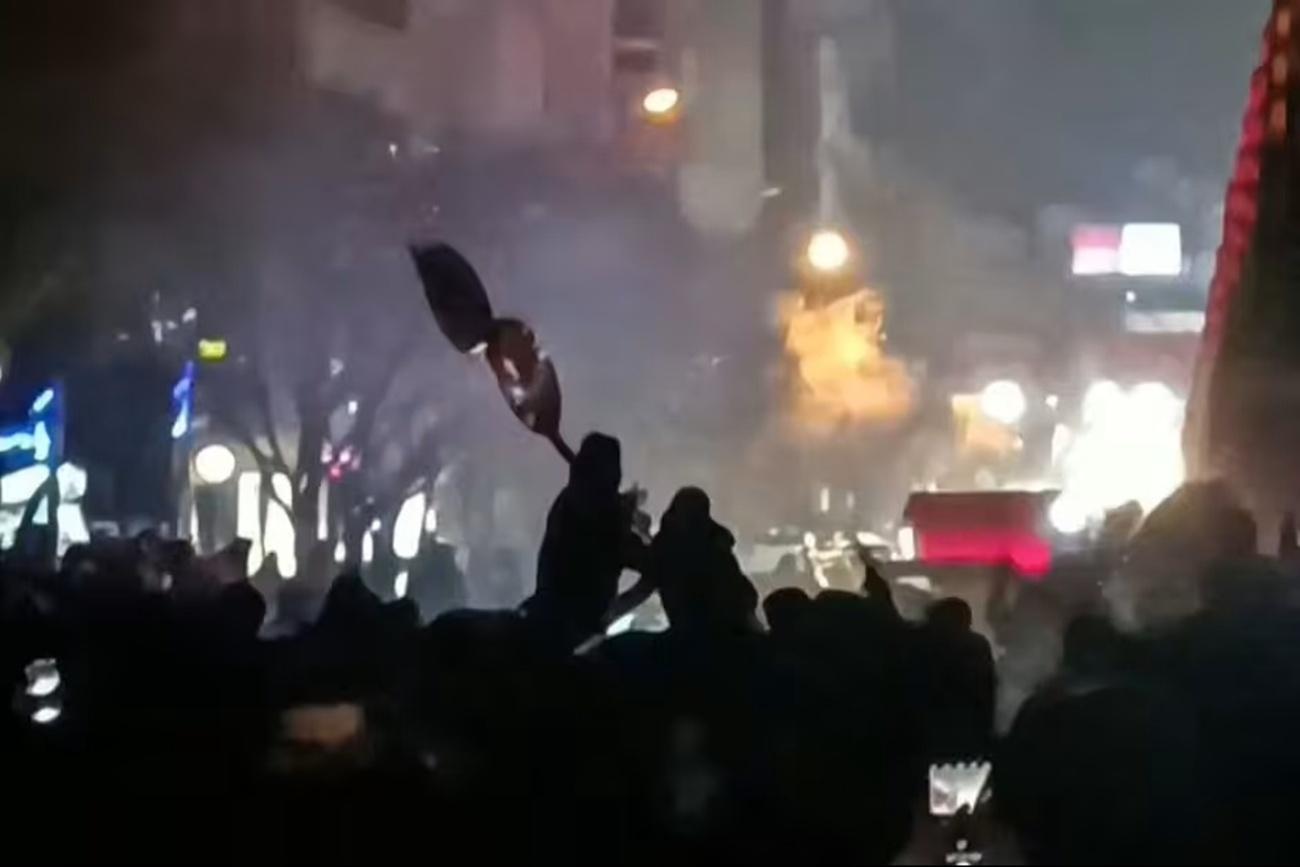
    Iranian security forces conducted nationwide internet blackout and door-to-door raids amid deadly protests

Full Analysis Summary

U.S. evacuation advisory for Iran

The U.S. Embassy has issued an urgent order for American citizens to leave Iran immediately amid escalating nationwide protests.

The Embassy advises departures by land where possible and warns of potential violence, arrests, and injuries.

The advisory includes practical guidance: Americans are urged to travel by land to Armenia or Turkey.

Those who cannot leave are told to shelter in place and stockpile essentials.

U.S.-Iranian dual nationals are instructed to use Iranian passports to exit.

The evacuation order comes amid near-total communications outages and reported transport and flight disruptions that complicate departures.

Coverage Differences

Tone and emphasis

Western tabloid and mainstream-leaning sources present the story as urgent, practical safety advice focused on immediate steps for U.S. citizens, while alternative and geopolitical sources emphasize the broader causes and consequences of unrest and the danger of escalation. For example, Daily Express US (Western Tabloid) frames the story as an 'urgent warning' with concrete departure routes and sheltering advice, whereas International Business Times (Western Alternative) foregrounds a 'near‑total communications blackout' and human‑rights losses, and Serrari Group (Other) situates the evacuation within a longer history of U.S.–Iran tensions and prior strikes. These are different emphases rather than direct factual contradictions.

Practical detail vs. strategic context

Daily Express US provides concrete evacuation instructions (land routes, sheltering, passport rules), while Serrari Group and International Business Times focus more on strategic context, past military actions, and the potential for wider conflict — showing that some sources prioritize immediate traveler guidance and others prioritize geopolitical analysis.

Evacuation obstacles and restrictions

Practical barriers to evacuation are widely reported.

Authorities and activists describe a near-total communications blackout, road closures, public transport disruptions, and airlines limiting or canceling service.

These factors make the embassy's recommendation to leave via land routes both more urgent and more difficult.

The Daily Express cites government-imposed mobile, landline, and national internet restrictions, along with flight suspensions through January 16.

The International Business Times underscores the communications blackout and reports security forces conducting door-to-door raids and seizing satellite dishes and CCTV to identify protesters.

These operational constraints and alleged security sweeps create a fraught environment for those attempting to depart.

Coverage Differences

Operational reporting vs. human‑rights emphasis

Daily Express US (Western Tabloid) emphasizes concrete operational obstacles — 'road closures, public transport disruptions and government-imposed mobile, landline and national internet restrictions' and 'Airlines are limiting or canceling flights'. International Business Times (Western Alternative) emphasizes state tactics used against protesters and the human‑rights implications (raids, confiscations), showing one source framing the barriers as logistical and the other as part of an intentional crackdown. Both report constraints but from different angles.

Implication for evacuees

Daily Express US focuses on immediate advice for evacuees (shelter, stockpiling essentials); International Business Times frames similar constraints as evidence of an intentional attempt to mask abuses (Amnesty’s view). Those different framings affect how readers perceive whether the barriers are primarily safety/operational or part of repression.

Crackdown and safety concerns

Human-rights groups and activists, reported by the International Business Times, describe a severe crackdown.

Amnesty calls the internet shutdown a deliberate effort to hide abuses.

Activists told ABC News that an estimated 544 people were killed and more than 10,681 detained.

Analysts warn authorities are increasingly labeling protesters 'terrorists,' a rhetorical shift that could be used to justify harsher measures.

The Daily Express warns of arrests and injuries, and the Serrari Group documents how Tehran has combined domestic pro-government rallies with stern warnings about targeting U.S. or Israeli forces.

These accounts present a picture in which civilian safety and civil liberties are central concerns underlying the evacuation advisory.

Coverage Differences

Scale and casualty focus

International Business Times (Western Alternative) provides explicit casualty and detention figures and cites Amnesty and activists; Daily Express US highlights the risk of 'arrests and injuries' as reasons for evacuation but does not provide casualty totals; Serrari Group situates these events within wider state messaging and regional military dynamics, showing different focal points (human‑rights toll vs. immediate safety vs. geopolitical signaling).

Source framing of repression

International Business Times quotes Amnesty and activists and emphasizes intentionality ('deliberate effort to hide human-rights abuses'), while Daily Express frames the repression primarily as an immediate security threat to U.S. citizens needing to evacuate; Serrari frames repression and counter‑protest activity as part of Tehran’s strategic messaging and risk calculus for wider conflict.

U.S. responses to Iran

Sources say the White House prefers diplomacy but is keeping all options on the table and President Trump has warned military action is possible.

Officials are reviewing responses that range from diplomacy and cyber operations to covert or kinetic strikes.

Serrari Group provides background on recent strikes and on deliberations between Washington and Tehran, highlighting why officials might consider both restraint and deterrence.

PBS, citing the Associated Press, reports the president has repeatedly warned Iran that the U.S. could use force if Tehran uses deadly force against protesters.

The president has not said whether his administration has decided on any specific response, reflecting uncertainty about immediate policy moves.

Coverage Differences

Range of response options vs. clarity of intent

International Business Times (Western Alternative) lists the range of options being briefed to officials — from diplomacy to cyberattacks to kinetic strikes — while PBS (Western Mainstream) emphasizes that the president 'has not said whether his administration has decided on any specific response,' highlighting uncertainty. Serrari Group (Other) adds historical context about prior strikes that shapes risk calculations. The sources agree the U.S. is considering options but differ in how definite or imminent they portray military action.

Preferred tools and analyst judgment

International Business Times reports analysts view targeted cyber operations as a lower‑risk option compared with large‑scale strikes, a nuance largely absent from the evacuation‑focused Daily Express coverage; Serrari’s context about prior operations explains why cyber options may be weighed as alternatives to direct strikes.

Coverage by source type

Coverage differs by source type.

The Daily Express US, a Western tabloid, concentrates on urgent practical instructions and clear safety messaging.

International Business Times, a Western alternative outlet, highlights human-rights allegations, casualty figures, and analytical debate over responses including cyber or kinetic options.

Serrari Group, categorized as Other, provides geopolitical history and warns of the risk of wider regional escalation after earlier strikes.

PBS, a Western mainstream outlet, reports the president's warnings while underlining that no specific U.S. response has been finalized.
Readers should note these emphases when interpreting the evacuation order.

Immediate humanitarian and logistical advice is consistent across sources, while interpretations of causes, casualty scale, and the likelihood of U.S. military action differ by outlet and perspective.

Coverage Differences

Summary of emphases by source type

This paragraph synthesizes how each source type frames the story: Daily Express US (Western Tabloid) stresses practical evacuation guidance; International Business Times (Western Alternative) stresses repression, casualty estimates, and policy options; Serrari Group (Other) situates events in a longer conflict history and warns about escalation; PBS (Western Mainstream) emphasizes official statements and uncertainty about immediate U.S. policy. These represent differences in emphasis and framing rather than direct factual contradictions.

What is omitted by some sources

Some evacuation‑focused outlets (e.g., Daily Express US) do not provide casualty totals or analyst discussion of response options that are present in International Business Times, while Serrari Group includes background on prior kinetic actions that other outlets omit; these omissions affect the reader’s sense of scale and the strategic context.

All 11 Sources Compared

Al Jazeera

How US sanctions crippled lives of Iranians Trump says he wants to ‘help’

Read Original

bluewin E-Mail

Trump announces 25 percent tariffs for Iran's trading partners +++ Shah's son Pahlavi urges US to intervene

Read Original

CNN

What are Trump’s options on Iran?

Read Original

Daily Express US

Trump orders Americans to evacuate Iran immediately as military chaos looms

Read Original

International Business Times

Trump Orders Americans to Leave Iran as Security Raids Blackout Homes Nationwide

Read Original

NBC News

Trump says Iran wants to negotiate as protest crackdown death toll rises, activists say

Read Original

PBS

Trump cancel meetings with Iranian officials and tells protesters 'help is on its way'

Read Original

Serrari Group

Trump Escalates Economic Pressure on Tehran with Sweeping 25% Tariff Threat Against Iran’s Global Trading Partners

Read Original

Sky News

Iran latest: Trump tells protesters to 'take over your institutions' and 'help is on its way'

Read Original

The Independent

Trump-Iran latest: President tells protesters ‘help is on its way’ in Tehran threat

Read Original

The New Indian Express

Trump holds off on US military action against Iran's protest crackdown as he 'explores' Tehran messages

Read Original