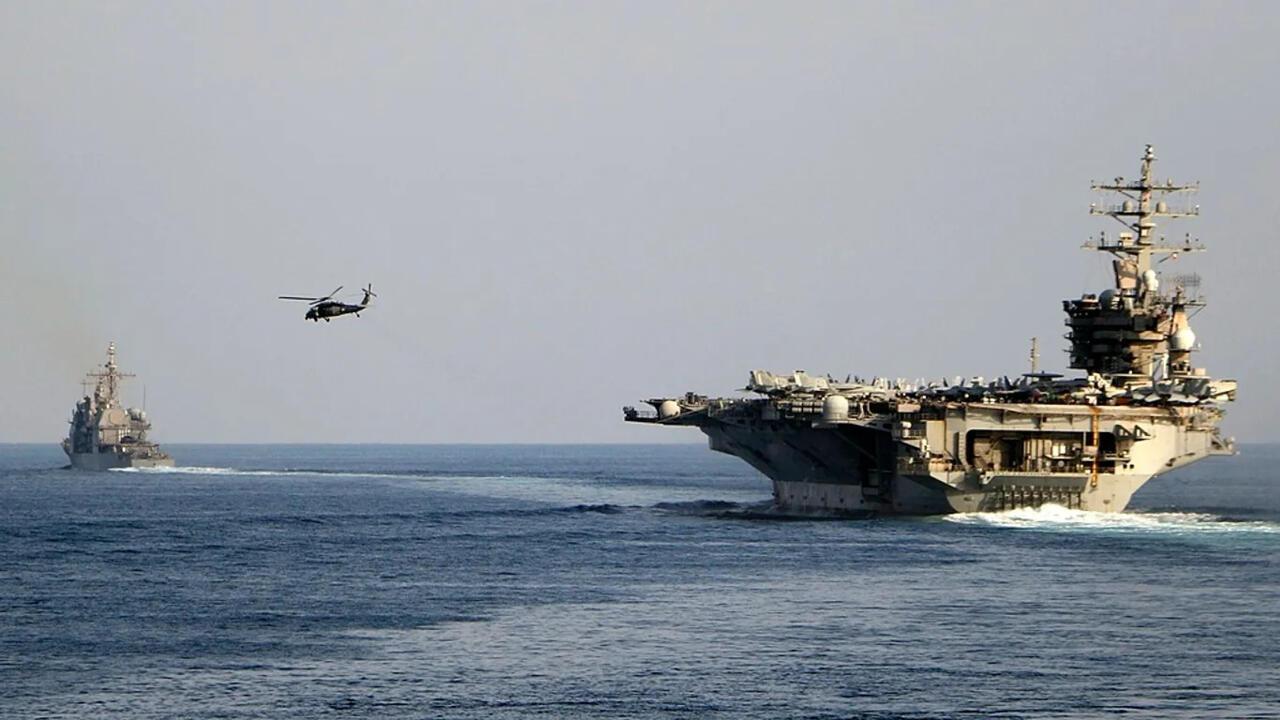
Trump Orders U.S. Forces To Shoot And Destroy Iranian Vessels In Strait Of Hormuz
Key Takeaways
- Trump orders U.S. forces to shoot and destroy Iranian vessels blocking the Strait.
- Iran has deployed mines in the Strait of Hormuz.
- Diplomatic efforts for renewed Iran talks underway, with Pakistan-based discussions involving U.S. envoys.
Minefields, blockade, and leverage
The Strait of Hormuz has become the central pressure point in the U.S.-Iran conflict, with multiple outlets describing how Washington’s blockade and Tehran’s maritime tactics are tightening a standoff that is now shaping negotiations and global shipping.
The Hill frames Iran’s leverage in blunt terms, quoting a banner in Tehran’s Enqelab Square declaring, “The Strait of Hormuz will remain closed; the entire Persian Gulf is our hunting ground.”

The same article says Iran’s military “effectively closed the Strait of Hormuz” almost as soon as joint U.S.-Israeli forces launched attacks on Iran “more than 50 days ago,” and it describes the corridor as “a 22-mile-wide” passage that “typically facilitates about 20 percent of the world’s energy trade.”
Axios adds that Iran’s Islamic Revolutionary Guard Corps (IRGC) navy “laid more mines in the Strait of Hormuz this week,” and it describes the standoff as escalating with “Iran laying mines and attacking commercial ships on one side and the U.S. tightening its naval blockade on the other.”
NBC News reports that President Donald Trump ordered the U.S. military to “shoot and kill” any Iranian boats laying mines in the strait, while also saying the U.S. boarded “another tanker” tied to smuggling Iranian oil.
In parallel, Al Jazeera quotes Trump’s Truth Social post claiming, “Losing 500 Million Dollars a day,” and it describes the U.S. blockade of Iranian ports as beginning at “14:00 GMT on April 13.”
Taken together, the sources depict a situation where the Strait is simultaneously a battlefield, a negotiation lever, and a choke point for commerce.
Trump’s threats and mine-clearing
As the maritime standoff intensifies, the sources show a sequence of U.S. actions and warnings aimed at mine-laying and navigation through the Strait of Hormuz.
NBC News says Trump ordered the U.S. military to “shoot and kill” any Iranian boats laying mines in the strait and that the U.S. would “intensify its efforts to clear mines that have helped choke off global shipping.”

Axios describes the U.S. response in operational terms, saying the aircraft carrier USS George H.W. Bush and its strike group arrived Thursday in the U.S. Central Command (CENTCOM) area of responsibility and that it would be “the third U.S. aircraft carrier in the region.”
Axios also states that CENTCOM said Thursday it has redirected “33 vessels since the blockade began,” and it adds that U.S. officials say the Navy is operating “underwater drones” for mine-clearing operations.
The Independent, while focused on historical analogy, argues that it is “almost impossible to clear a passage through a minefield when the shoreline is held by the enemy,” and it warns that “quite another to get involved in a real fight at sea level.”
Fox News quotes a warning from Hegseth that the U.S. forces will “shoot to destroy” any ships laying mines in Strait of Hormuz.
Al Jazeera adds that Iran’s response includes closing the Strait to foreign shipping and capturing foreign-flagged ships, describing the blockade as prompting Tehran to “closed the Strait of Hormuz to all foreign shipping and has captured several foreign-flagged ships.”
In the same Al Jazeera account, Iran’s First Vice President Mohammad Reza Aref writes that “One cannot restrict Iran’s oil exports while expecting free security for others,” and it frames the dispute as a choice between “either a free oil market for all, or the risk of significant costs for everyone.”
Negotiations in Pakistan, and refusals
While the maritime confrontation escalates, the sources also describe parallel diplomacy centered on Pakistan and the question of whether direct U.S.-Iran talks will occur.
CBS News says U.S. envoys Steve Witkoff and Jared Kushner are expected to head to Islamabad Saturday for Iran peace talks, while noting it is “unclear if direct talks with Iran will take place.”
CBS News also reports that after “about 20 hours of talks with top Pakistani officials, including Field Marshal Asim Munir and Prime Minister Shebaz Sharif,” Iranian Foreign Minister Abbas Araghchi departed Islamabad and was on his way to Muscat.
The Guardian describes the same diplomatic push, saying Witkoff and Kushner were traveling to Pakistan for talks with Iran’s foreign minister and that Leavitt told the Fox News show “America Reports” that “Everyone will be on standby to fly to Pakistan if necessary, but first, Steve and Jared will be going over there to report back to the president.”
Fox News adds that Iran’s foreign minister Abbas Araghchi has arrived in Pakistan but has not publicly confirmed plans to meet with U.S. officials, and it says Press Secretary Karoline Leavitt confirmed the talks are expected to resume this weekend after Iran requested another in-person meeting.
DW reports that the White House said Weitkov and Kushner would depart Saturday morning to meet with Iranian Foreign Minister Abbas Araghchi, while it also says Iran’s foreign ministry spokesman said on X that Iranian officials do not intend to meet U.S. representatives and that Tehran’s concerns would be conveyed to Pakistan.
Al Jazeera’s account of the negotiations includes a direct rejection, stating that Iran has “made no request for talks with the Americans and has so far completely rejected the US’s excessive demands,” as reported by Iranian state media Tasnim News.
The Hill’s narrative ties the diplomacy to the Strait itself, saying Trump announced Tuesday he would delay renewed strikes on Iran until it came forward with a proposal for long-term peace and “unilaterally extending a 14-day ceasefire indefinitely,” while also maintaining a naval blockade of maritime traffic entering and exiting Iranian ports.
Global stakes and economic pressure
The sources repeatedly connect the Strait of Hormuz standoff to global economic consequences, including energy prices, shipping disruptions, and food insecurity.
The Hill says Iran’s closure of the Strait came with a warning that the U.S. and Israel “did not see a lot of risk” before the Strait was closed, and it quotes Jim Krane saying Iran can “basically take the global economy hostage if its enemies decide to launch a war.”

The Hill also says the implications are “enormous,” citing that the Philippines “declared a state of national emergency in March due to dwindling energy supplies,” and it adds that “a shortage of jet fuel in Europe has spurred refueling restrictions and canceled flights.”
Axios provides shipping metrics, saying “Traffic has collapsed to single digits on most days, down from more than 100 ships daily,” and it describes the strait as “the world’s most important oil chokepoint.”
Al Jazeera adds that a World Food Programme representative said “45 million people will face food insecurity and malnutrition if the Strait of Hormuz continues to be blocked,” and it also quotes Trump’s claim that “Losing 500 Million Dollars a day” is part of the pressure narrative.
Al Jazeera further states that the U.S. blockade began at “14:00 GMT on April 13” and that Iran’s oil exports through the Strait account for “about 80 percent of its total oil exports,” while also citing Kpler figures that Iran exported “1.84 million barrels per day (bpd) of crude oil in March.”
The same Al Jazeera report says Iran exported “55.22 million barrels of oil” from “March 15 to April 14,” and it notes that the price per barrel “has not fallen below $90 per barrel over the past month.”
NBC News adds a separate layer of economic and operational pressure by saying the intensifying maritime standoff leaves the trade route “effectively shut,” and it reports that Tehran attacked “three commercial ships” and seized “two of them yesterday.”
What comes next in the Strait
Looking ahead, the sources describe both contingency planning for renewed fighting and competing legal and strategic narratives about who controls navigation.
“Skip to main content Updated Apr 23, 2026 - Politics & Policy Iran deploys more mines in the Strait of Hormuz, sources say Barak Ravid, Marc Caputo email (opens in new window) sms (opens in new window) facebook (opens in new window) twitter (opens in new window) linkedin (opens in new window) bluesky (opens in new window) Add Axios as your preferred source to see more of our stories on Google”
CNN, as quoted by Mont Carlo الدولية, says Washington is preparing “strikes focused on the Strait of Hormuz if fighting resumes against Iran,” and it describes “dynamic targeting” of Iran’s capabilities around the Strait, the southern Arabian Gulf, and the Gulf of Oman, including “targeting fast small attack boats, mine-laying vessels, and other assets.”

The same CNN-sourced account says U.S. planners believe Washington must either “eliminate military capabilities or accept the risks,” and it adds that planners may target “dual-use targets and infrastructure targets, including energy facilities,” to force Iran back to negotiations.
DW adds a parallel strategic framing, reporting that Iran’s IRGC central command Khātam al-Anbiyā’ said that if “the invading American army continues the siege, looting and piracy in the region, it should be sure it will face a response from the powerful Iranian armed forces.”
DW also reports that Iran’s foreign ministry spokesperson Esmail Baghaei said Iran has acted “entirely” lawfully and that “the measures taken regarding the Strait of Hormuz are entirely lawful,” while also asserting “the right to take the necessary measures to prevent misuse of this waterway.”
The Hill describes an operational threat from Iran’s IRGC navy, quoting a warning that “approaching the Strait of Hormuz will be considered co-operation with the enemy, and the offending vessel will be targeted.”
In parallel, the Independent’s historical argument warns that even with a plan, mine-clearing can fail when the shoreline is held by the enemy, citing the First World War Dardanelles campaign and describing how the “General Recall” came “less than seven hours into the operation.”
Axios says the U.S. Navy is operating underwater drones for mine-clearing and that Trump ordered mine-clearing “to continue, but at a tripled up level!”—a signal that the next phase may be more intense even as envoys travel to Pakistan.
More on Iran
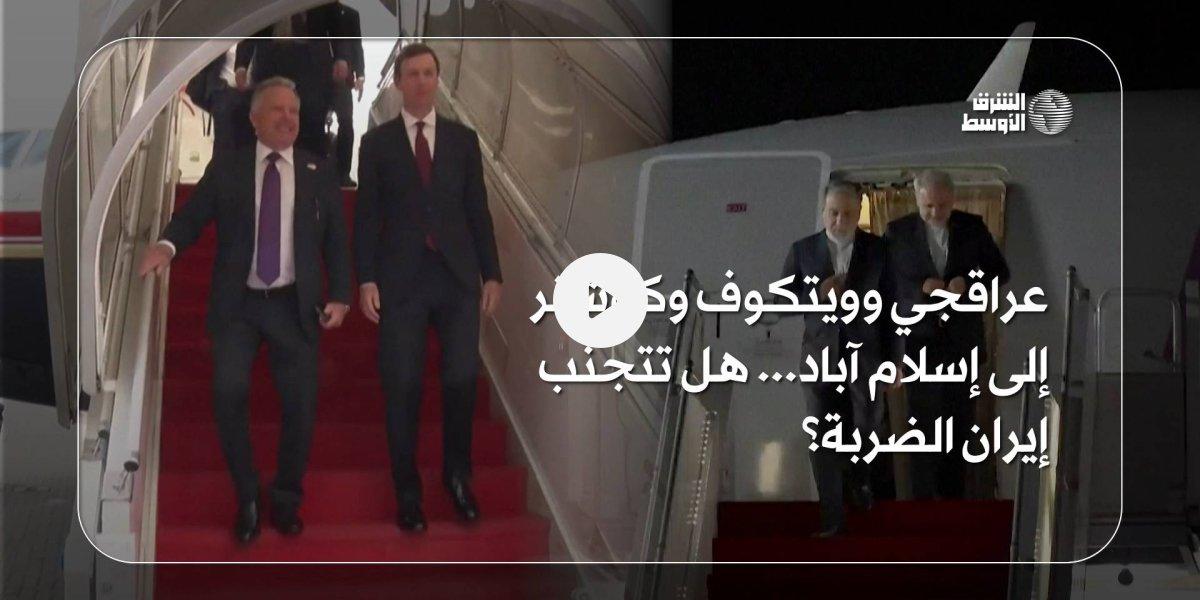
Trump Sends Steve Witkoff and Jared Kushner to Pakistan for Direct Iran Talks
31 sources compared

Iran’s Abbas Araghchi Travels to Pakistan as Trump Sends Witkoff and Kushner for Ceasefire Talks
36 sources compared
Trump Orders U.S. Forces To Board Iranian Ships Amid Hormuz Blockade
17 sources compared

Ahmad Vahidi and the IRGC Control Iran, Jerusalem Post Says Mojtaba Khamenei Not Leading
22 sources compared