South America20 October, 20252 min read
Trump Orders U.S. Military Strikes on Colombian Boats and Cuts Aid After Petro Accuses U.S. of Murdering Fisherman
Trump labeled Colombian President Gustavo Petro an 'illegal drug leader' and halted all U.S. aid. U.S. military conducted multiple strikes on vessels in Caribbean waters, killing at least 29 people including an innocent Colombian fisherman.

63 outlets told this the same way.
Outlets did split on Alexandre de Moraes Orders Eduardo Bolsonaro Arrest, Cancels Passport, Enforces Four-Year Sentence →
US-Colombia Military Tensions
Former U.S. President Donald Trump escalated a fast-moving crisis with Colombia by ordering and defending a series of U.S. military strikes on boats in Caribbean waters.
“The U.S. conducted seven military strikes in the region, killing at least 32 people, including an innocent Colombian fisherman ... announced a halt to U.S. aid to Colombia.”
He also announced that U.S. aid and “payments and subsidies” to Colombia would be halted.

The strikes, which different outlets say have killed at least 27 to 32 people since late summer, included the death of Colombian fisherman Alejandro Carranza.
President Gustavo Petro condemned Carranza's death as “murder” and a violation of sovereignty.
U.S. officials said one operation targeted a vessel linked to the ELN rebel group and killed three people.
Trump publicly branded Petro an “illegal drug leader.”
The mounting fallout has pushed relations to their lowest point in decades.
There are warnings that unraveling cooperation could weaken Colombia’s security at a time of rising coca cultivation and rural violence.
Dispute Over Maritime Strike
Specific operations have intensified the dispute between involved parties. U.S. officials and Fox host-turned-cabinet figure Pete Hegseth are cited as saying a strike in international waters destroyed a boat linked to Colombia’s ELN, killing three. Petro insists one of the attacked vessels belonged to a civilian family and that fisherman Alejandro Carranza’s death was “murder.”
ELN leaders deny trafficking and even offered to submit to an international investigation. Washington-aligned outlets describe the targets as “narcoterrorists.” Two survivors from a submarine strike were repatriated to Colombia and Ecuador.
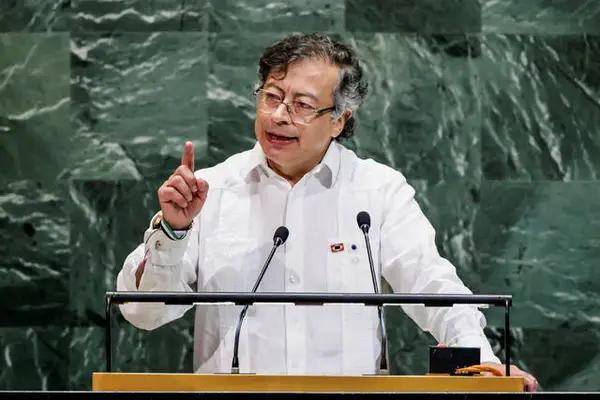
US-Colombia Aid and Diplomacy Dispute
The dispute quickly spilled into aid, trade, and diplomacy. Trump labeled Petro an “illegal drug leader,” vowed to end payments and subsidies, and floated tariffs. Some reporting notes funding had continued through waivers and that no concrete cuts were finalized.
“Colombia has recalled its ambassador ... halted all payments ... peso fell 1.4%.”
Reported figures for U.S. assistance vary widely: some outlets cite roughly $740 million in 2023, others note declines to about $230 million, while CNN puts ongoing annual support near $450 million. Colombia recalled its ambassador and saw its currency slip. Washington’s decertification of Colombia and visa friction with Petro added further strain.
Human Rights and Regional Tensions
Legal and human rights scrutiny has intensified. UN human rights experts condemned some of the killings as “extrajudicial executions.” Amnesty International described the actions as “murder on the high seas.”
Analysts warn that cutting aid and alienating Bogotá could weaken Colombia’s ability to confront rebels like the ELN during its worst security crisis in years. Survivors of one strike were treated differently by their home countries.
Colombia plans to prosecute its injured citizen, while Ecuador cleared its national. This asymmetry has also fueled regional unease.
US-Venezuela-Colombia Tensions
Broader geopolitics and media frames further diverge. City Paper Bogotá reports Trump touting a “sixth” strike and revealing CIA covert actions against Venezuela’s Nicolás Maduro. The Guardian and France 24 highlight an expanding U.S. military footprint and Colombia recalling its ambassador after Trump threatened aid cuts and tariffs.
“It is the sixth such operation ... and revealed CIA covert actions against Venezuela’s Nicolás Maduro.”
Minute Mirror adds that Washington “decertified” Colombia and that Bogotá suspended arms purchases from the U.S. CBS notes Venezuela’s condemnation. Some coverage veers into unique or off-topic territory—Minute Mirror briefly mentions an unrelated Israeli cyberattack—underscoring how outlet focus and regional lenses shape the story’s contours.
