Europe12 January, 20262 min read
Trump Orders U.S. Military To Prepare Invasion Plan For Greenland
This article is an automated aggregation of coverage from news outlets. Our editorials offer in-depth analysis curated by the NewsCord team.
Trump ordered the U.S. military to prepare an invasion plan for Greenland. Trump said U.S. must take Greenland from Russia or China, insisting 'one way or other'.

25 outlets told this the same way.
Outlets did split on Marco Rubio Urges Europe To Awaken From Slumber In Athens Speech →
Trump insists on Greenland acquisition
Former President Donald Trump publicly renewed demands that the United States acquire Greenland. He said the U.S. should get it 'one way or the other' and left military action on the table as an option. U.S. outlets reported his language as including a willingness to use force if negotiations failed.
PBS reported Trump reiterated 'one way or the other, we're going to have Greenland' and noted that 'the White House has not ruled out military force'. Moneycontrol recorded his phrasing that the U.S. might do it 'the easy way or the hard way' and quoted his dismissal of Greenland's defenses as 'two dog sleds'. Other reporting captured similar blunt lines, with SSBCrack News quoting him saying 'if we don't take Greenland, Russia or China will'.
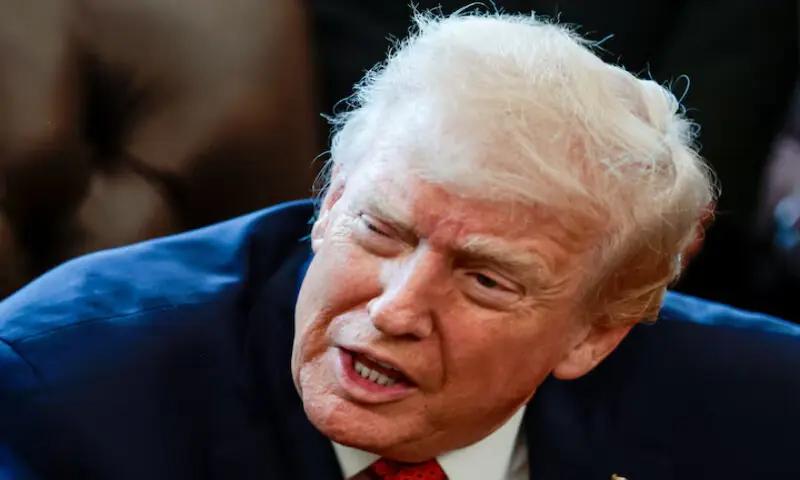
Transatlantic reactions to Greenland
European and Greenlandic officials reacted with alarm, warning that any U.S. attempt to seize Greenland by force would deeply damage transatlantic ties and could jeopardize NATO. Denmark's prime minister warned a U.S. invasion would 'wreck' or 'destroy' the alliance, according to multiple outlets including PBS and the BBC. The New York Post cited senators saying annexing Greenland could imperil NATO, with Senator Mark Warner calling annexation a 'death knell' for the alliance.
Al Jazeera reported that Sweden and Germany explicitly backed Denmark and described the U.S. president's rhetoric as 'threatening.' Several outlets noted Denmark and Greenland's firm rejection of becoming part of the United States.

Greenland strategic debate
Trump and some U.S. officials justified interest in Greenland by citing its strategic location, Arctic shipping routes, and mineral resources, arguing action was needed to prevent Russia or China from gaining influence. Analysts and independent sources dispute aspects of that justification. Mint reports that claims of Russian and Chinese ships near Greenland are overstated and that Greenland is not the fastest source of rare earths, with most production located in China.
Coastfm.co.uk notes that Denmark and independent ship-tracking agencies dispute those claims, though some experts say Russian submarines may operate in the region. The BBC connects the strategic debate to melting ice that could make minerals and hydrocarbons more accessible, which helps explain geopolitical interest even as experts caution against overstating immediate threats.
Arctic security responses
Despite dramatic rhetoric, multiple analysts and outlets consider a forcible U.S. takeover unlikely because of severe diplomatic fallout, bipartisan U.S. opposition, and practical legal and political barriers. Mint reports that most analysts see a U.S. forcible takeover as unlikely due to bipartisan opposition and the high diplomatic costs. Outlets including The Guardian, Outlookbusiness, and Al Jazeera describe European responses such as meetings between U.S., Danish, and Greenland officials and proposed NATO Arctic missions.
Germany and the UK are pushing for stronger Arctic security coordination. The rhetoric's practical effect has been to prompt NATO and European partners toward greater Arctic cooperation even as Greenland and Denmark firmly reject U.S. acquisition.