Trump Orders US To Guide Stranded Neutral Ships Out Of Strait Of Hormuz Starting May 4
Key Takeaways
- Trump says US will guide stranded neutral ships out of Hormuz starting May 4.
- Iranian reports claim missiles struck a US frigate near Jask; US Central Command denies.
- Diplomatic talks stalled; Trump dissatisfied with Iran's negotiating proposal, signaling possible escalation.
Hormuz mission begins
Iran’s response to a new U.S. plan for the Strait of Hormuz is unfolding as Washington moves to “guide” stranded neutral ships out of restricted waters starting May 4.
“by Lowell Here are a few international, national and Virginia news headlines, political and otherwise, for Monday, May 4”
Radio Free Europe/Radio Liberty reports that President Donald Trump said the effort would begin on May 4, while Trump also asserted that the U.S. was having “positive discussions” with Iran about ending war in the Middle East.
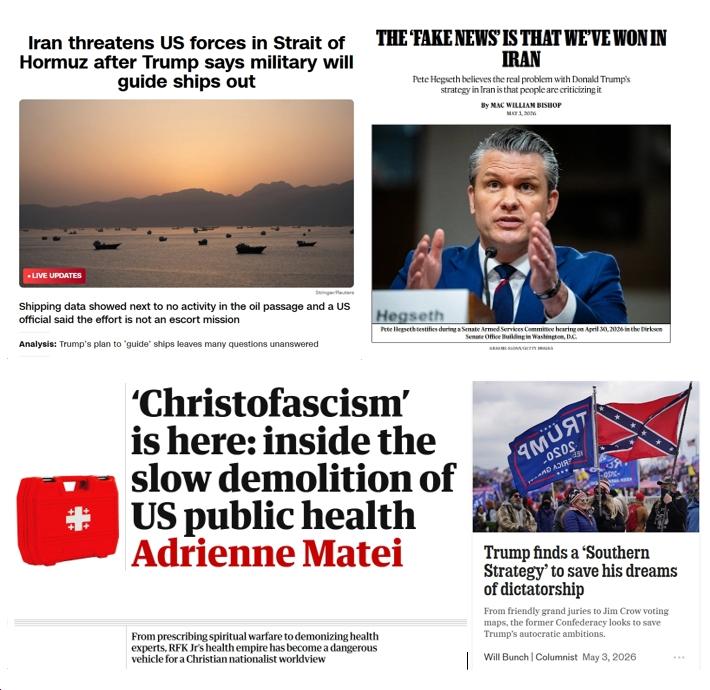
The same report quotes Trump calling the action a “humanitarian” gesture and saying the U.S. “will guide their Ships safely out of these restricted Waterways, so that they can freely and ably get on with their business.”
Trump also warned that if the mission is interfered with, “that interference will, unfortunately, have to be dealt with forcefully.”
The U.S. Central Command (CENTCOM) released a statement saying the mission “will include guided-missile destroyers, over 100 land and sea-based aircraft, multi-domain unmanned platforms, and 15,000 service members,” while an Axios reporter, citing two U.S. officials, said Navy ships would not escort commercial vessels but rather would be “in the vicinity” should they be needed to prevent attacks.
On the Iranian side, Ebrahim Azizi, head of the Iranian parliament's national security commission, posted on X that “Any American interference in the new maritime regime of the Strait of Hormuz will be considered a violation of the cease-fire.”
Cease-fire, enforcement, and boundaries
As the U.S. frames its Hormuz move as a humanitarian process, Iran is simultaneously describing enforcement mechanisms and a defined “control area” in the strait.
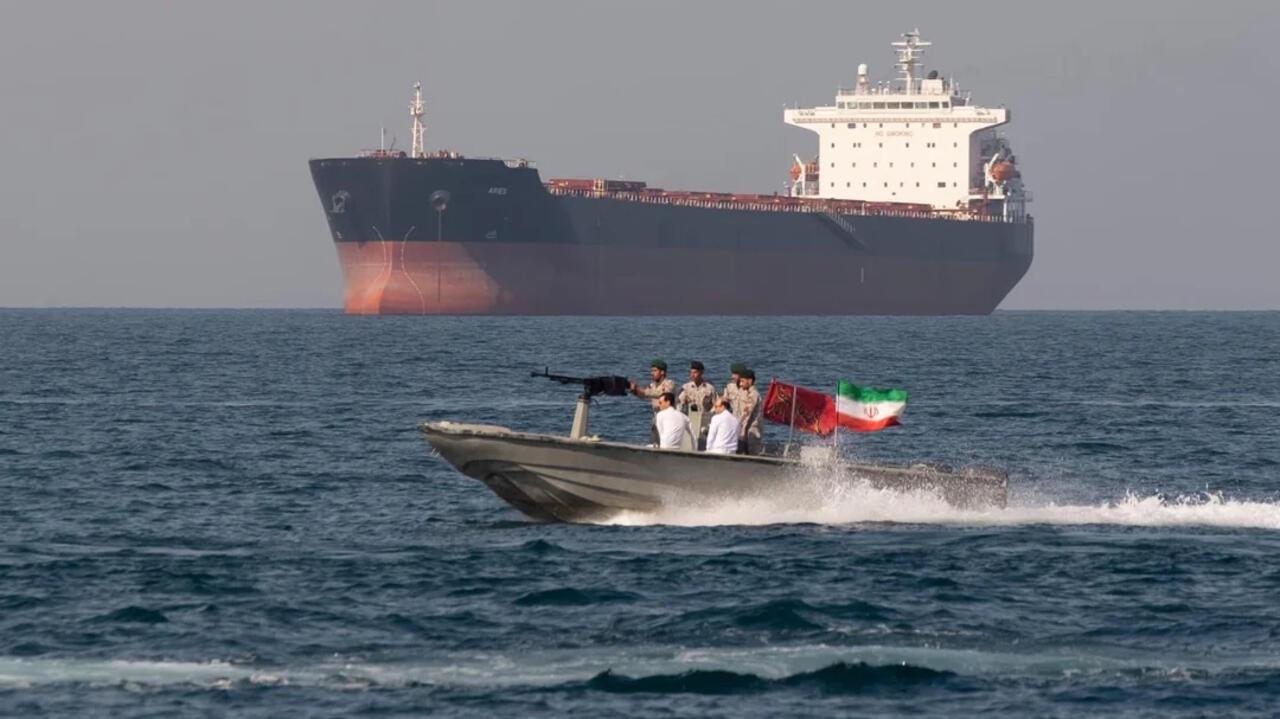
Radio Free Europe/Radio Liberty says Iran’s Islamic Revolutionary Guards Corps (IRGC) warned that maritime activity in the Strait of Hormuz must comply with its naval protocols or face enforcement action, adding that the warning follows recent U.S. statements including Trump’s plan to deploy naval forces to escort or “guide” commercial ships.
The report says the IRGC responded to what it called “baseless” claims and stated that there has been no change in how the strait is managed, while civilian and commercial vessels following designated transit routes in coordination with its navy would remain safe.
It also says any noncompliant movements would face “serious risks,” including being stopped by force.
In a separate statement, the IRGC outlined what it described as a new area of the strait under Iranian control, defined by two boundary lines: “from Kuh-e Mobarak, on Iran’s southeastern coast near the Gulf of Oman, to waters south of Fujairah on the United Arab Emirates’ eastern coast,” and “from the western tip of Qeshm Island to Umm Al Quwain on the UAE’s northern Gulf coast.”
The same report also includes Iran’s foreign ministry spokesman Esmail Baqaei calling on the United States to back away from “excessive demands” so peace negotiations can move forward, saying “At this stage, our priority is to end the war.”
Negotiations stall, war talk returns
Beyond the maritime confrontation, the sources describe a negotiation process that is not producing agreement and is instead feeding renewed warnings about renewed conflict.
“US Denies Ship Hit By Iranian Missiles Iranian media said a US Navy frigate was targeted by two missiles near Jask at the entrance to the Strait of Hormuz after allegedly ignoring Iranian warnings, forcing it to turn back”
Radio Free Europe/Radio Liberty reports that Iran’s foreign ministry spokesman Esmail Baqaei said the U.S. should back away from “excessive demands” and that “At this stage, our priority is to end the war,” while the report also says that a day earlier Iran said it had received a response from Washington to its latest peace proposal.
The same report states that Trump said he would probably reject the Iranian proposal because “they have not paid a big enough price,” without elaborating.
South China Morning Post adds that Iran will not accept “imposed” peace and that Trump was not satisfied with negotiations, saying “At this moment I’m not satisfied with what they’re offering,” and blaming stalled talks on “tremendous discord” within Iran’s leadership.
The South China Morning Post report says a senior Iranian military officer told state media that renewed fighting with the U.S. was “likely,” hours after Trump said he was not satisfied with an Iranian negotiating proposal.
Masrawy similarly describes the same sequence, saying a senior Iranian military official said on Saturday that a renewal of fighting with the United States is 'likely,' and quoting Mohammad Jafar Asadi: “the possibility of a new conflict between Iran and the United States is real,” and “Evidence has shown that the United States does not honor any pledges or agreements.”
Oil prices rise as Hormuz tightens
The sources connect the diplomatic stalemate and Hormuz restrictions to market pressures, describing both a near-closure of the strait and rising oil prices.
Al Jazeera’s report says oil prices continued to climb “today, Tuesday,” as efforts to end the war between the United States and Iran stalled and the “strategically vital Strait of Hormuz remained nearly closed, limiting supply to global markets.”

It frames the escalation as coming amid “a lack of signs of diplomatic progress,” quoting a U.S. official saying Donald Trump is dissatisfied with Iran's latest proposal to end the war.
Al Jazeera also says Iranian sources revealed that Tehran avoided addressing its nuclear program, preferring to defer it until after the war ceases and maritime disputes in the Gulf are settled.
The report states that “this stalemate could push the conflict toward a dead end,” and it ties that risk to the “ongoing closure of the Strait of Hormuz,” adding that “through which about 20% of global oil and gas consumption passes.”
It reports that “Brent crude futures for June delivery rose 3% to reach $111.48 per barrel by 08:00 GMT,” and quotes Fuad Rizkzadeh: “For oil traders, the rhetoric is no longer what matters, but the actual flow of crude through the Hormuz Strait, and at the moment, this flow remains limited.”
Economic pressure and negotiation leverage
Several reports describe Iran’s economic strain as a factor that could affect its negotiating posture, while also detailing the scale of economic damage and the political debate around how much pressure Iran can absorb.
“Iran may not be choking like a stuffed pig as Donald Trump predicted, but its economy is in serious difficulty as a combination of a massive war-damages bill, inflation, currency devaluation, unemployment and a contraction in oil revenues combine to leave the political elite worrying how hardline they can afford to be with their US negotiators”
The Guardian says Iran “may not be choking like a stuffed pig as Donald Trump predicted,” but that its economy is in “serious difficulty,” combining “a massive war-damages bill, inflation, currency devaluation, unemployment and a contraction in oil revenues.”

It cites an estimate circulating in Iran’s media suggesting damages from US-Israeli attacks are “nine times the value of the Iranian budget last year,” and it says the UN Development Programme estimated that “4.1 million more Iranians could fall into poverty.”
The Guardian also recounts Trump’s prediction about oil storage and blockade, including Trump’s claim that Iranian wells would “explode” in a “very powerful” destructive process starting in three days, and it quotes Trump telling Fox News: “When it explodes, you can never, regardless, you can never rebuild it the way it was.”
The Guardian further reports that the value of the toman has fallen almost 22% on the open market, to “190,000 to the dollar on Sunday,” and that inflation is “73.5%,” with “food and beverage prices” surging “115%.”
It says more than 23,000 factories and firms have been hit by US-Israeli airstrikes, resulting in “a million jobs lost,” according to Iran’s deputy work and social security minister, Gholamhossein Mohammadi, and it quotes Ahmad Zeidabadi: “The internet and the economic conditions of the people are no joke. The reality is without the internet normal life and social stability are impossible.”
More on Iran

Trump Announces Project Freedom To Guide Stranded Ships Out Of Strait Of Hormuz Monday
19 sources compared
Iran Claims It Struck U.S. Navy Vessel Near Strait of Hormuz, CENTCOM Denies
19 sources compared
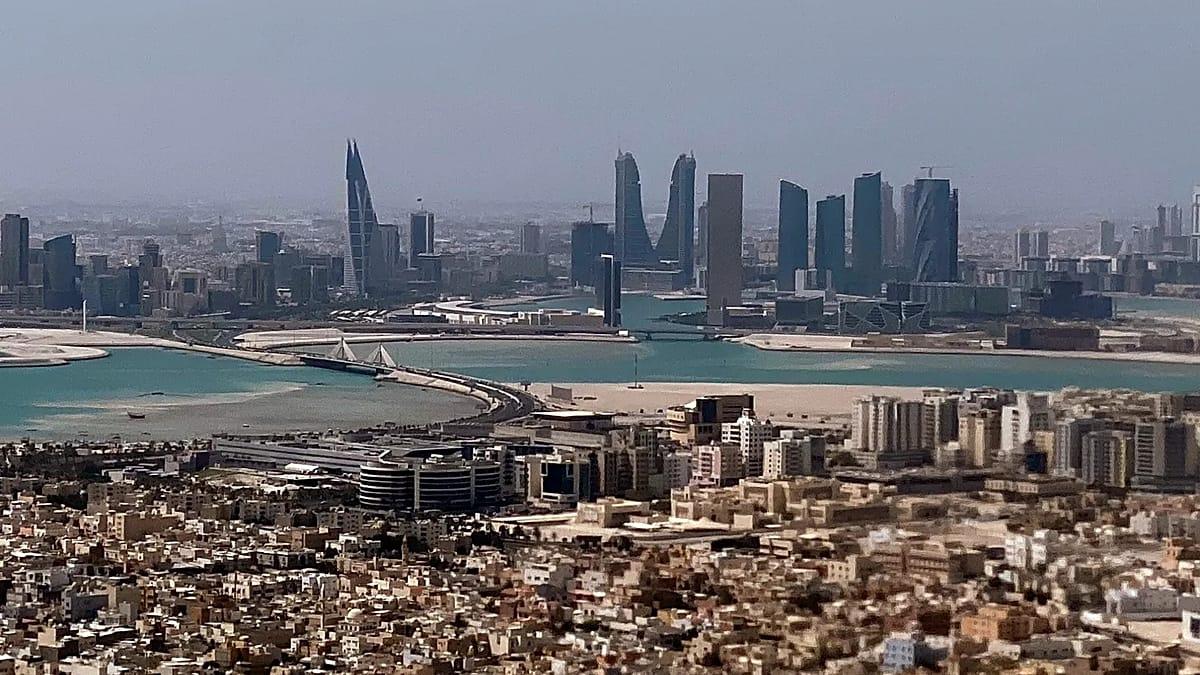
Iran Destroys 74 Missiles And 117 Drones In Bahrain, Bahrain Defence Forces Say
10 sources compared
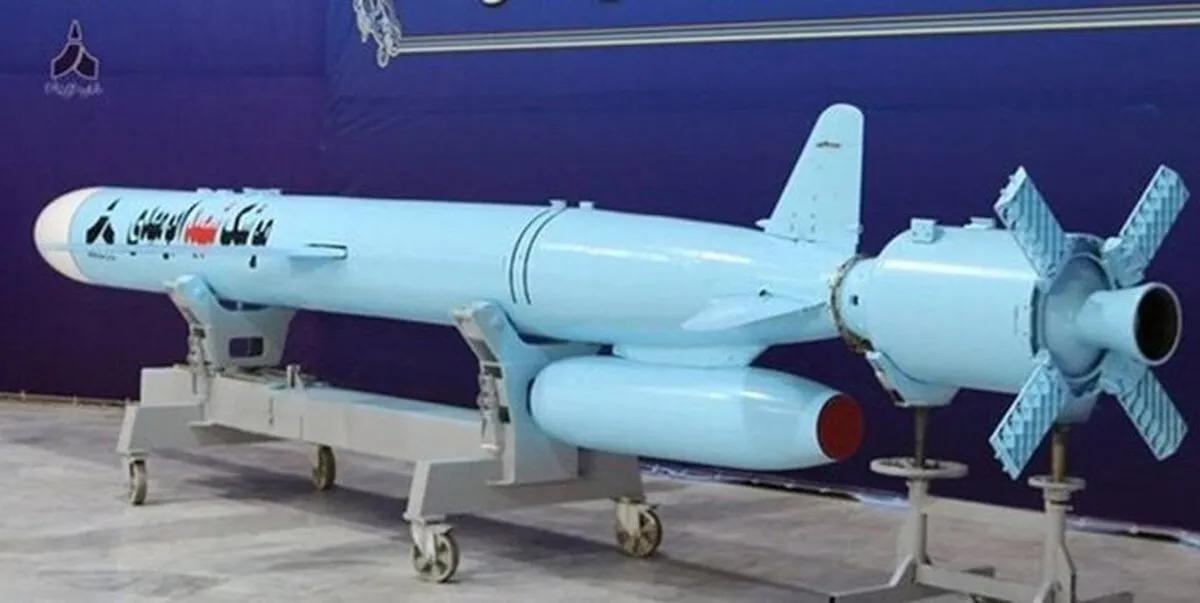
Iranian Media Claims Two Missiles Hit US Frigate Near Strait of Hormuz, Washington Denies
29 sources compared