Full story
Troop Drawdown Shakes Europe
European leaders treated President Donald Trump’s decision to withdraw thousands of U.S. troops from Germany as both a surprise and a signal that Europe must take more responsibility for its own security.
“we’re going to cut way down. And we’re cutting a lot further than 5,000.”
The Associated Press reported that the Pentagon announced last week it would pull some 5,000 troops out of Germany, while Trump told reporters on Saturday, “we’re going to cut way down. And we’re cutting a lot further than 5,000.”
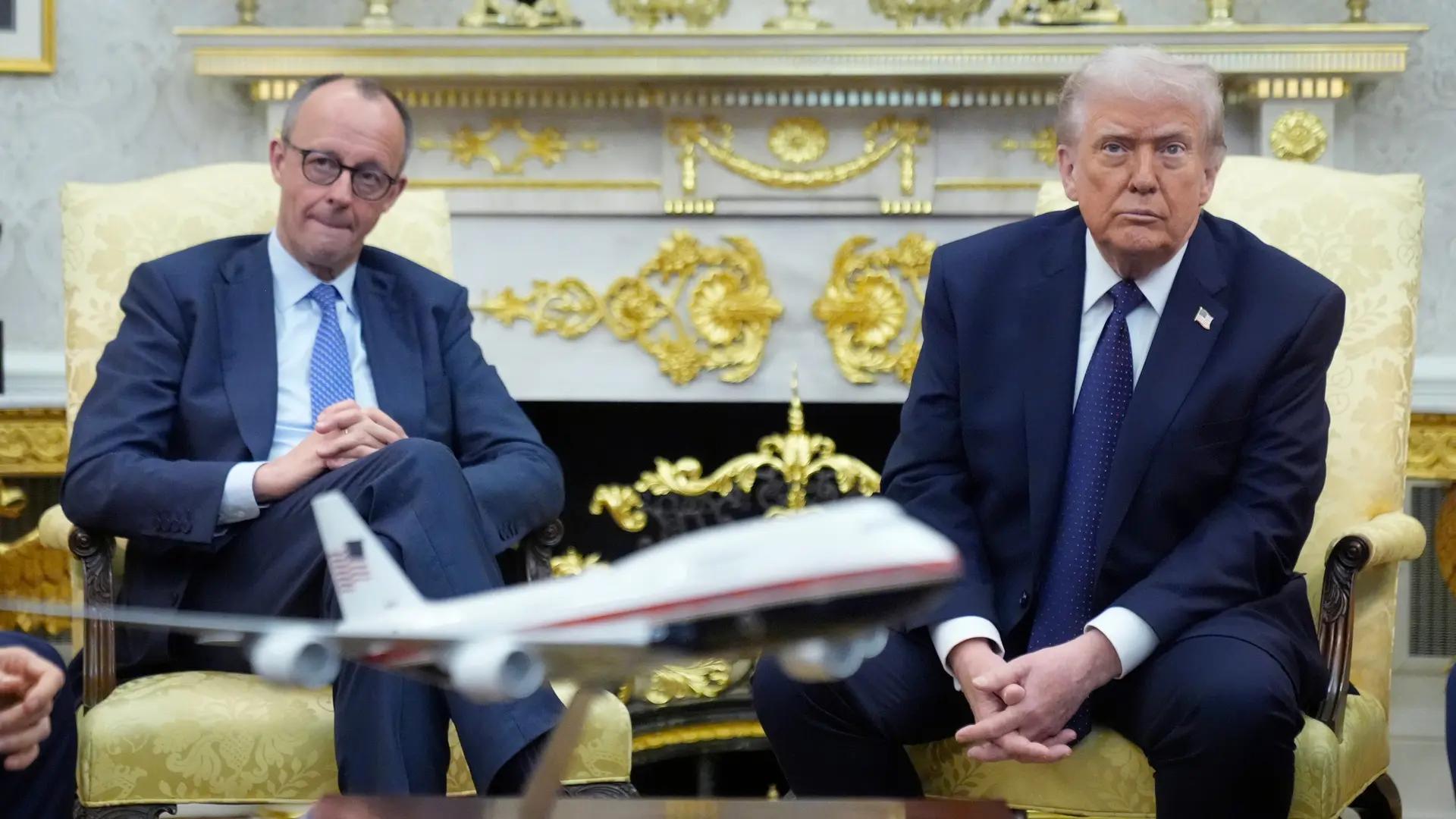
In Yerevan, Armenia, Norwegian Prime Minister Jonas Gahr Støre said, “I wouldn’t exaggerate that because I think we are expecting that Europe is taking more charge of its own security,” and British Prime Minister Keir Starmer said, “there needs to be a stronger European element in NATO, I have no doubt, about that.”
The European Union’s foreign policy chief, Kaja Kallas, said, “there has been a talk about withdrawal of U.S. troops for a long time from Europe. But of course, the timing of this announcement comes as a surprise.”
AP also said the decision blindsided NATO and came amid an escalating dispute with German Chancellor Friedrich Merz over the U.S.-Israeli war on Iran.
The same AP account quoted Merz’s spokesman Stefan Kornelius saying, “Absolutely,” when asked whether the U.S. can still be relied on as a military partner, and Kornelius added that “we have a very resilient and broad relationship.”
The drawdown left “30,000 U.S. troops” still in Germany, according to CNN, and the BBC reported the U.S. has “more than 36,000 active duty troops in Germany,” underscoring the scale of the remaining presence even as the political shock spread across Europe.
Merz, Iran, and the Rift
The troop drawdown was tied in multiple reports to a dispute between Washington and Berlin over the Iran war and to comments by German Chancellor Friedrich Merz that triggered a backlash.
Al Jazeera said Merz tried to downplay tensions with the United States after Washington announced plans to reduce the number of American troops in Germany, with Merz telling broadcaster ARD that US plans to withdraw troops have “no connection” to the rift with President Donald Trump over his strategy in Iran.

Al Jazeera described how “Trouble started last Monday” when Merz criticized Trump’s actions in Iran, saying Iran was “humiliating” the US and warning that Washington did not have a clear path out of the conflict.
It added that Foreign Affairs Minister Johann Wadephul later tried to walk back the comments by saying Merz was referring to Iran’s “bad behaviour” in peace talks, but Trump scolded Merz and threatened to withdraw American soldiers.
In the BBC’s account, Merz’s remarks to students included that “the Iranians are obviously very skilled at negotiating, or rather, very skillful at not negotiating, letting the Americans travel to Islamabad and then leave again without any result,” and the BBC also quoted Merz saying, “An entire nation is being humiliated by the Iranian leadership.”
Time Magazine and CNN both framed the drawdown as part of a broader transatlantic dispute, with CNN quoting Trump’s response to questions about further cuts: “Probably… look, why shouldn’t I? Italy has not been of any help to us and Spain has been horrible, absolutely horrible.”
The Guardian reported that the Pentagon’s decision followed “a ‘thorough review of the Department’s force posture in Europe and is in recognition of theater requirements and conditions on the ground’,” while also noting that Merz’s “humiliated” comments were a trigger for the wider tensions.
Officials, Lawmakers, and NATO
As the political dispute widened, multiple voices from NATO, German leadership, and U.S. lawmakers argued over what the drawdown meant for deterrence and alliance cohesion.
“Prematurely reducing America's forward presence in Europe before those capabilities are fully realised risks undermining deterrence and sending the wrong signal to Vladimir Putin”
The BBC reported that two senior U.S. Republicans, Roger Wicker and Mike Rogers, criticized the Pentagon’s decision, saying it risked undermining deterrence and would send the wrong signal to Russia, and their joint statement warned that “Prematurely reducing America's forward presence in Europe before those capabilities are fully realised risks undermining deterrence and sending the wrong signal to Vladimir Putin.”
The BBC also quoted Pentagon spokesperson Sean Parnell saying the move followed a “thorough review” and recognized “theater requirements and conditions on the ground,” while NATO said it was seeking clarification from Washington.
In the Guardian, Wicker and Rogers released a joint statement saying they were “very concerned” by the possibility of reducing troops in Germany and argued that “Rather than withdrawing forces from the continent altogether, it is in the US interest to maintain a strong deterrent in Europe by moving these 5,000 U.S. forces to the east.”
NBC News added that Wicker and Rogers said it was in “America’s interest to maintain a strong deterrent in Europe,” warning about the signal it would send Russia, and it quoted German Defense Minister Boris Pistorius reiterating that “Europeans must assume more responsibility for our security.”
NPR reported that Pistorius sought calm after the Pentagon announcement, telling dpa, “The presence of American troops in Europe, and particularly in Germany, lies in our interest and in the interest of the US,” and it also quoted NATO spokesperson Allison Hart posting on X that the alliance was working with the United States to understand details and that the announcement “underscores the need for Europe to continue to invest more in defence and take on a greater share of the responsibility for our shared security.”
At the same time, Democrats and some Republicans diverged sharply on the decision’s rationale, with the BBC quoting Rep. Adam Smith saying it was “not grounded in any coherent US national security policy, strategy, or even analysis” and based on “the hurt feelings of a president who is seeking political vengeance.”
Even within the Republican camp, Clay Higgins appeared to support the move while mocking the Senate, saying on X, “Pulling 5K American troops from the arrogant Germans. Maybe we should send them the Senate.”
Together, these reactions showed a debate over deterrence, alliance management, and whether the drawdown reflected strategic planning or political conflict.
Europe’s Next Moves and Uncertainty
Beyond the immediate controversy, the sources described a set of next steps and planning assumptions that European leaders and NATO officials said they were pursuing.
AP reported that NATO Secretary-General Mark Rutte played down the move, saying there “has been a this point disappointment on the U.S. side” about European support for the war on Iran, and it said European leaders insisted they would not help police the Strait of Hormuz until the war is over.

In the AP account, Rutte said European nations “have decided to pre-position assets, key assets, close to the theater for the next phase,” while French President Emmanuel Macron said, “If the United States is ready to reopen Hormuz, that’s great. That’s what we’ve been asking for since the beginning,” and Macron also underlined that Europeans were not ready to get involved in any operation “that does not seem clear.”
The BBC similarly reported that NATO was seeking clarification and quoted NATO spokesperson Allison Hart saying the alliance was working with the U.S. to understand the details, adding that the announcement “underscores the need for Europe to continue to invest more in defence and take on a greater share of the responsibility for our shared security.”
NPR reported that Pentagon spokesman Sean Parnell told NPR the withdrawal would be completed over “the next six to twelve months,” and it said the drawdown would leave “more than 30,000 U.S. troops in Germany.”
Time Magazine and CNN both suggested the drawdown could be only the beginning, with Time saying Trump’s comments implied “even more troop withdrawals could follow,” and CNN quoting Trump’s “Probably… look, why shouldn’t I?” response about Italy and Spain.
The Guardian added that the Pentagon email leaked to Reuters floated punishing Spain and suspending it from NATO, while Al Jazeera reported that Trump threatened to withdraw American soldiers and that about 14 percent of U.S. troops in Germany would be cut based on the planned 5,000 withdrawal over 12 months.
In parallel, multiple sources tied the uncertainty to defense spending and alliance burden-sharing, with the BBC noting Germany’s defense spending projections and NATO’s commitment at the 2025 NATO Summit in The Hague to invest 5% of GDP annually on defense by 2035.
Taken together, the sources portrayed a period of operational planning—pre-positioning assets, clarifying basing and withdrawal details, and debating whether further cuts could extend beyond Germany—while European leaders tried to keep NATO coordination intact.