Iran-Israel29 December, 20253 min read
Trump Pledges To Back Israeli Strikes On Iran, Vows To Order U.S. Strike If Iran Builds Missiles
This article is an automated aggregation of coverage from news outlets. Our editorials offer in-depth analysis curated by the NewsCord team.
Pledged to back Israeli strikes against Iran if Tehran continues missile development Vowed the United States would carry out strikes if Iran reconstitutes nuclear or missile programs
20 outlets told this the same way.
Outlets did split on U.S. Intercepts Iran Message Activating Sleeper Cells After U.S.-Israel Strike Kills Khamenei →
U.S. backing for Israel strikes
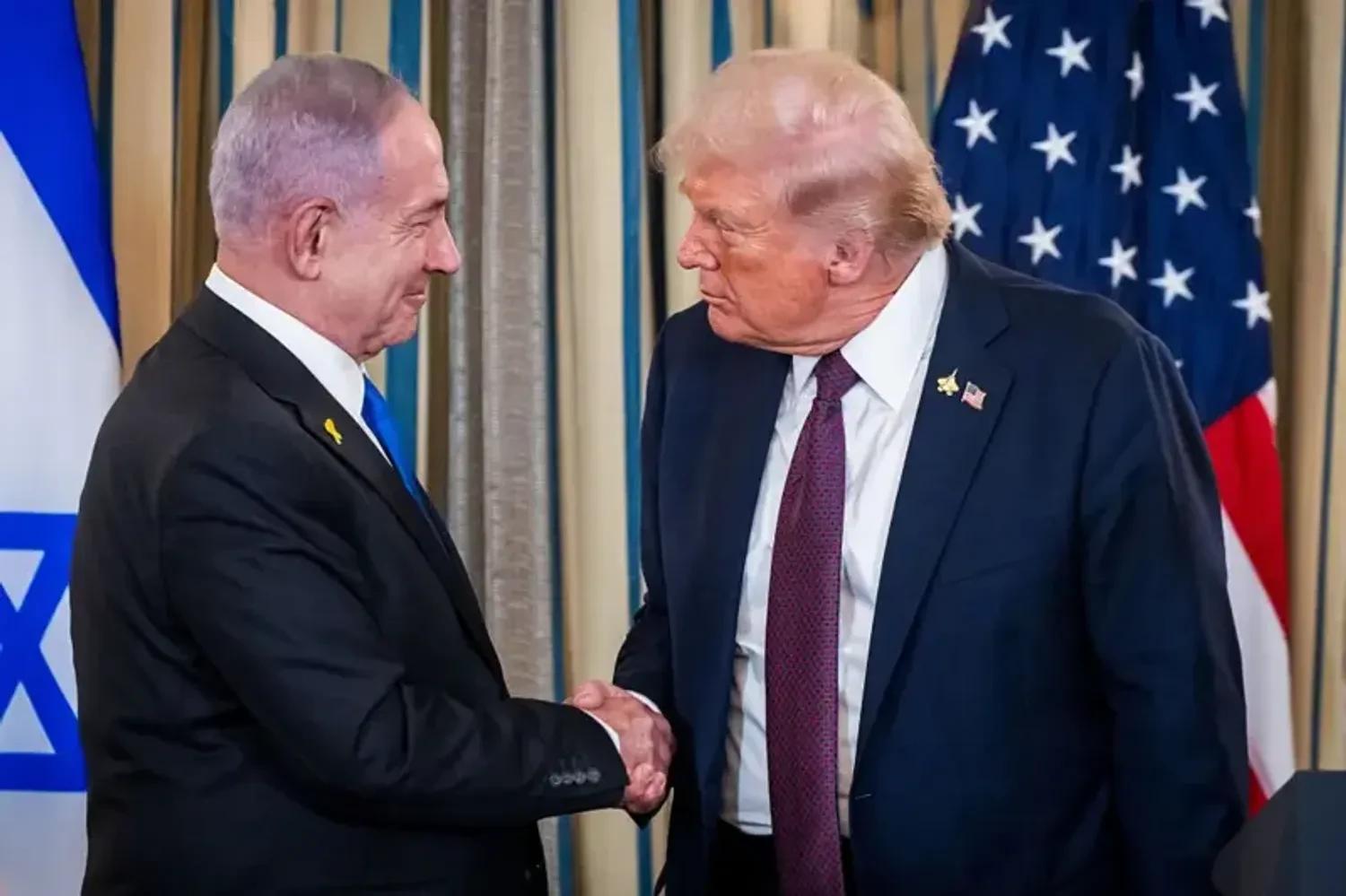
Former President Donald Trump pledged strong U.S. support for Israeli strikes on Iran, according to multiple reports. El País reported that Prime Minister Benjamin Netanyahu asked President Trump for four "green lights," including permission to strike Iran over missile development. The Jewish Telegraphic Agency recorded Trump saying it would be "absolutely" appropriate for Israel to act if Iran continues developing ballistic missiles and nuclear weapons.
Other outlets, including the Deccan Chronicle, quoted Trump warning Iran it "could face new strikes" following their Mar‑a‑Lago meeting. At the same time, Straight Arrow News noted Washington has sent mixed signals by remaining open to talks with Tehran, highlighting both the pledge and its immediate diplomatic ambiguity.

Trump and Netanyahu meetings
The pledge and the threats came during repeated high-profile encounters between Trump and Netanyahu that mixed policy coordination with clear domestic political benefits. SSBCrack News called the Mar-a-Lago meeting 'their fifth meeting this year,' placing it among a series of close interactions.
Букви described the relationship as a 'reciprocal, politically useful arrangement' in which Trump's public endorsement and campaign visibility help Netanyahu domestically. The Jewish Telegraphic Agency reports Trump publicly lauded Netanyahu as a 'wartime Prime Minister' and 'hero' and said a pardon was 'on its way,' illustrating how political support and security commitments are intertwined in these exchanges.

Gaza ceasefire talks
The meetings take place against a fractured Gaza ceasefire and urgent humanitarian concerns. Trump's rhetoric on Iran is linked to wider discussions about how to manage Gaza's future. El País reported that Netanyahu sought tacit U.S. approval for an Israeli-controlled Gaza status quo.
Al Jazeera and its outlet Al-Jazeera Net emphasize the human cost and call for Hamas to disarm. Al-Jazeera Net quotes Trump saying Hamas must disarm quickly or pay a heavy price. AAP News reports Israeli strikes since the ceasefire have killed more than 400 Palestinians.
Mediators and Trump envoys are trying to revive a contested second phase involving Palestinian governance and an international stabilization force. Coverage notes progress is uneven and Rafah remains closed to movement of people and aid.
Media on Iran escalation
Coverage of regional escalation risks highlights diverging emphases: some outlets treat Iran as an imminent military threat, while others stress the risk of miscalculation and the possibility of diplomacy. El País quotes Iran's president Masoud Pezeshkian warning of a possible 'total war'.
The BBC reports Tehran describes itself in an 'all-out war' with Israel and the West, and AAP News notes Iran has held missile exercises after recent confrontations. Conversely, Straight Arrow News and other outlets underline that U.S. policymakers have sent 'mixed signals' and remain 'open to talks,' suggesting a dual track of deterrence and engagement rather than a simple march to war.

Regional escalation risks
Analysts warn that pledges and threats carry broader risks. Striking Iran or expanding operations against Hezbollah could inflame a wider regional war, unsettle Lebanon, and complicate fragile arrangements in Gaza. El País reports Netanyahu seeking U.S. backing to force Hezbollah’s disarmament.
“Israel opposes Turkey joining an international stabilization force for Gaza, and only a small number of countries have agreed to participate in such a force.”
The BBC and AAP News highlight ongoing strikes and instability on the Lebanon front. Straight Arrow News warns that Israeli actions could derail fragile truces and broaden the conflict.

Observers note that domestic politics in Israel, along with Trump’s public support for Netanyahu, shape the timing and tone of these escalatory options. These factors mean strategic decisions are not purely military but are deeply political.