USA19 November, 20252 min read
Trump Praises Saudi Crown Prince While Dismissing Journalist's Murder
Trump said Crown Prince Mohammed bin Salman 'knew nothing' about Jamal Khashoggi's 2018 murder Trump announced deeper U.S.–Saudi ties including designation as a major non‑NATO ally and defense deals
57 outlets told this the same way.
Outlets did split on Trump Interrupted by Protesters at San Antonio Rally for Ken Paxton →
Trump and Saudi Crown Prince
Former President Donald Trump hosted Saudi Crown Prince Mohammed bin Salman at a high-profile White House visit that blended pomp, big economic pledges and a sharp defense of the prince over the 2018 killing of journalist Jamal Khashoggi. Trump publicly defended Mohammed bin Salman, saying the prince knew nothing, while the crown prince called the killing painful and a huge mistake.
“Former President Donald Trump defended Saudi Crown Prince Mohammed bin Salman over the 2018 murder of journalist Jamal Khashoggi, saying the prince ‘knew nothing’ and urging officials not to ‘embarrass our guests.’”
The visit included ceremonial honors and major agreements on defense and investment, framing the encounter as both a diplomatic reset and a commercial opportunity. Media accounts emphasized the contrast between the ceremonial welcome and the lingering controversy over Khashoggi's death, noting that U.S. intelligence assessments and human rights concerns remain unresolved even as business leaders signaled willingness to engage with Riyadh.
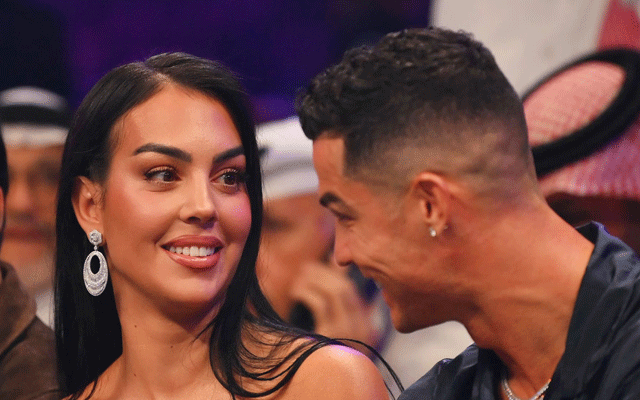
Trump and Saudi Crown Prince
In his public remarks and in exchanges with reporters, Trump defended the crown prince and pushed back on questions about the killing. Multiple sources say Trump rebuked a journalist who pressed the issue. They report he described Khashoggi as "extremely controversial" and reiterated that MBS "knew nothing about it."
The crown prince denied ordering the killing, framed Saudi actions as corrective, called the episode a "huge mistake," and said the kingdom had taken appropriate steps. On-the-ground descriptions of Oval Office and East Room scenes emphasize an unusual blending of informality and theatrical defense of a controversial partner.

Intelligence and Diplomacy
Multiple outlets note the lingering weight of U.S. intelligence findings that link the crown prince to an approved plan to "capture or kill" Khashoggi, a conclusion that has not gone away in public reporting. BBC and ABC cite the 2021 declassified intelligence assessment that attributed responsibility to MBS, while West Asian outlets such as Anadolu Ajansı restate the intelligence finding alongside Riyadh's denial and concerns about civil liberties. The discrepancy between the White House's public embrace and past intelligence assessments underlines the political choice to prioritize strategic and economic ties over full public accountability in press accounts.
“That stance contrasts with a 2021 U.S. intelligence report, declassified under President Biden, which concluded the crown prince approved a plan to ‘capture or kill’ Khashoggi; no direct U.S. sanctions were imposed on him at the time.”
Visit outcomes and criticism
Observers and reports emphasize practical outcomes of the visit: expanded defense cooperation, nuclear and AI discussions, and very large investment pledges several outlets estimated at nearly $1 trillion. The Washington Post and Gulf News highlight business leaders’ willingness to reengage, while outlets such as UPI report that some Democrats criticized the accords and urged tougher safeguards on nuclear cooperation. Coverage therefore splits between reporting the scale of the deals and noting political pushback or unease in the United States about sharing advanced technology and appearing to rehabilitate a leader linked in intelligence reports to a journalist’s killing.
Responses to White House Outreach
Human-rights advocates and family members of Khashoggi are reported as critical and unconvinced by the White House embrace. BBC records Khashoggi’s widow Hanan demanding an apology, a meeting, and compensation, while other outlets such as The New Arab and Anadolu Ajansı highlight civil liberties concerns and lingering questions from intelligence reporting. At the same time, social and cultural figures and business leaders who attended White House events appear in other outlets as evidence of Riyadh’s efforts to rehabilitate its image, producing sharply different emphases across coverage.
“Khashoggi’s widow, Hanan, criticized Trump’s defense, pointed to the crown prince’s 2019 remarks accepting responsibility, and has demanded a meeting, apology and compensation.”