
Trump Prepares Extended Blockade of Iranian Ports for Months, Aides Discuss Pressure Measures
Key Takeaways
- US prepares for an extended blockade of Iranian ports and the Strait of Hormuz.
- Iran offered to reopen Hormuz if the US lifts its blockade and ends the war.
- Proposal would postpone Tehran's nuclear negotiations to a later date.
Blockade for Months
The United States is preparing to continue an extended blockade of Iranian ports, with President Donald Trump and his aides discussing measures to keep pressure on Iran for months even as peace talks remain stalled.
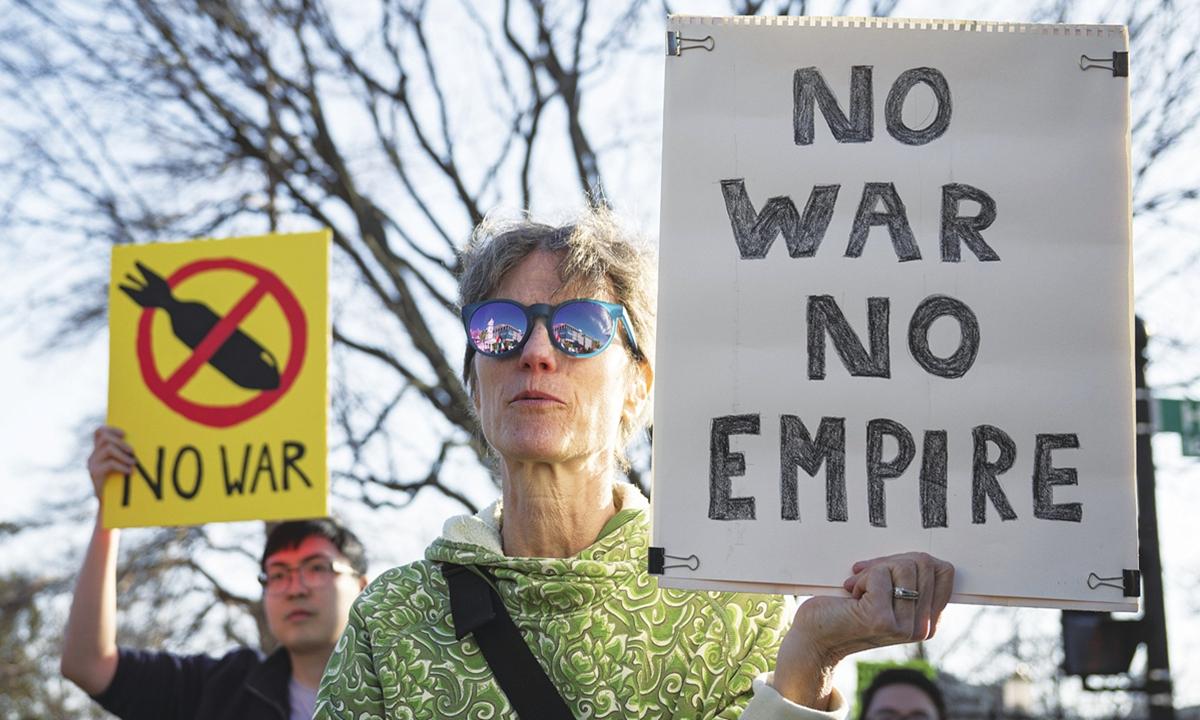
“Protesters gather outside the White House in Washington, D”
In a congressional hearing, US Defense Secretary Pete Hegseth slammed opposition to the Iran war and described lawmakers who criticize the effort as “the biggest adversary.”
CNN reported that Trump and aides met with energy executives “yesterday” to discuss measures that could be taken to continue the blockade of Iranian ports for months, if needed, and how to limit the effects on consumers.
Al Jazeera reported that Trump told Axios on Wednesday that he does not want to end his blockade on Iranian ports, rejecting reopening the Strait of Hormuz so US-Iran talks could proceed.
The Global Times said the Wall Street Journal reported that Trump instructed aides to prepare for an extended blockade of Iran, targeting the country’s coffers to compel a nuclear capitulation Tehran has long refused.
The New Republic likewise said Trump told his aides to prepare for an “extended” blockade of Iran and the Strait of Hormuz as negotiations drag on, citing US officials who spoke with The Wall Street Journal.
Across the reporting, the blockade is framed as an alternative to other options: the Global Times said Trump assessed that resuming bombing or walking away carried more risk than maintaining the blockade, while the New Republic said officials reported Trump decided continuing to squeeze Iran’s economy was the best choice.
Iran’s Response and Threats
Iran’s response to the US blockade is described as both defiant and conditional, with Tehran insisting it remains in a “war situation” and warning of “practical” action if the blockade continues.
Global Times reported that Iran said the country is still in a “war situation,” and that any new action by the enemy “will be faced with new tools, methods, and arenas,” citing Iran’s IRGC-affiliated Fars news agency.

Al Jazeera reported that Trump vowed to maintain the blockade while Tehran threatened “practical” action, and it said Iran set lifting the siege as a precondition for returning to talks.
In the same Al Jazeera account, Trump said, “The blockade is somewhat more effective than the bombing. They are choking like a stuffed pig,” and added, “And it is going to be worse for them. They can’t have a nuclear weapon.”
Euronews also quoted Iran’s parliament speaker Mohammad Bagher Ghalibaf, who said the United States’ naval blockade aims to create division and “make us collapse from within,” and called for “maintaining unity” as the only solution.
TRT عربي reported that Iran’s Supreme National Security Council warned it would close the Strait of Hormuz completely if the US naval blockade persists, and it said the Iranian negotiating delegation will not concede in talks with the United States and will not back down from the rights of its people.
In that same TRT عربي report, the council said the Strait of Hormuz has been opened to commercial ships only until the end of the ceasefire with Washington, and it described the blockade as a violation of the ceasefire that would prevent opening the strait on a conditional and limited basis.
Negotiations, Red Lines, and Calls to Reopen
A central dispute in the US-Iran standoff is whether the Strait of Hormuz should be reopened and whether nuclear negotiations can be postponed.
“Iran offers to reopen Strait of Hormuz if US lifts its blockade and the war ends, officials say Iran offers to reopen Strait of Hormuz if US lifts its blockade and the war ends, officials say CAIRO (AP) — Iran offered to end its chokehold on the Strait of Hormuz if the U”
AP reported that Iran offered to reopen the Strait of Hormuz if the US lifts its blockade and ends the war, and it said the proposal would postpone discussions on the Islamic Republic’s nuclear program, citing two regional officials.
AP also said US President Donald Trump seems unlikely to accept the offer, and it quoted US Secretary of State Marco Rubio saying, “We can’t let them get away with it,” and “We have to ensure that any deal that is made, any agreement that is made, is one that definitively prevents them from sprinting towards a nuclear weapon at any point.”
CNBC reported that White House press secretary Karoline Leavitt confirmed Trump and his national security team discussed Iran’s proposal to reopen the Strait of Hormuz if the US lifts its blockade and the war ends, and she said “The meeting may be ongoing,” around 1:23 p.m. ET.
CNBC also quoted Rubio’s criticism of the idea of opening the straits, saying, “What they mean by opening the straits is, 'Yes, the straits are open, as long as you coordinate with Iran, get our permission, or we'll blow you up and you pay us,'” and added, “That's not opening the straits.”
The New Arab reported that Iran reportedly asked Trump to end the blockade of its ports, and it said Trump claimed Tehran urged him to reopen the Strait of Hormuz “as soon as possible” while it attempts to “figure out its leadership situation.”
In parallel, AP said dozens of nations repeated calls to open the critical waterway in a joint statement led by Bahrain, and it quoted António Guterres telling the Security Council, “These pressures are cascading into empty fuel tanks, empty shelves — and empty plates,” while German Chancellor Friedrich Merz criticized the US for going into the war with what he said was no strategy.
Escalation, Intercepts, and Maritime Risk
Alongside the blockade and diplomatic exchanges, the reporting describes repeated maritime confrontations and threats in the Gulf and around the Strait of Hormuz.
CNN described how Israeli forces intercepted an aid flotilla in international waters bound for Gaza, with flotilla spokesperson Gur Tsabar telling CNN that contact was made at 8:47 p.m. Greece time (1.47 p.m. ET), 671 miles from Israel, and it said Greenpeace confirmed that its affiliated vessel Arctic Sunrise received the radio warning and that contact had been lost with several flotilla vessels after communication channels were jammed.

In the US-Iran maritime standoff, the Global Times said Mojtaba Ferdosipour, head of Iran's Interests Section in Egypt, told the Xinhua News Agency that Washington’s attempt to force Iran into accepting unilateral demands through a maritime blockade is futile, noting that Iran can bypass the blockade by leveraging its land borders with neighboring countries.
Euronews reported that Trump warned Iran to “get smart soon” and agree to a peace deal, while it said a second round of peace talks was due to take place in Islamabad at the weekend and Trump abruptly ordered his envoys not to attend.
TRT عربي reported that the Iranian Supreme National Security Council said the Strait of Hormuz has been opened to the passage of commercial ships only until the end of the ceasefire with Washington, and it described ships crossing the strait during this phase as needing to cover costs related to security, safety and environmental protection services.
The Global Times said the latest stalemate emerged after the White House confirmed on Monday that Trump and his national security team discussed a new proposal by Iran to end the war, and it said Reuters reported a US official briefed on Trump’s meeting said the president was “unhappy” with Iran’s proposal.
Taken together, the sources depict a situation where maritime pressure and diplomatic proposals are moving in parallel, while both sides issue warnings about what will happen if the other does not change course.
Economic and Political Stakes
The blockade is presented in the reporting as having immediate economic and political consequences for both Iran and the United States, while also shaping pressure on Gulf allies.
“• Defense hearing: US Defense Secretary Pete Hegseth slammed opposition to the Iran war during a congressional hearing today, describing lawmakers who criticize the effort as “the biggest adversary”
Al Jazeera said the impasse has sent oil prices soaring, fuelling energy inflation in the US, where the price of one gallon of petrol has surpassed $4.22 ($1.11 per litre) “up from less than $3 ($0.79 per litre) before the war,” and it said Brent crude oil futures jumped to more than $119 per barrel on Wednesday.

AP reported that the strait’s closure has put pressure on Trump, as oil and gasoline prices have skyrocketed ahead of crucial midterm elections, and it said the blockade has had far-reaching effects throughout the world economy, including raising the price of fertilizer, food and other basic goods.
The Al Jazeera report also said at least two commercial ships linked to Iran have been captured by the US as part of the siege, and that the US military said on Monday it redirected 39 vessels in the regional waters over the past weeks.
The New Republic similarly described the blockade’s economic effects, saying the average cost for a gallon of gas was above $4.22, and it added that in some areas of California, such as San Francisco, Napa, and San Jose, gas was well above $6 per gallon.
Euronews said Trump told his envoys not to attend a second round of peace talks in Islamabad, and it said US special envoy Steve Witkoff and Jared Kushner were to head to Pakistan on Saturday for an “in-person conversation” to “hopefully move the ball forward towards a deal,” as the White House said on Friday.
Finally, the Al Jazeera report said Iranian Parliament Speaker Mohammad Bagher Ghalibaf promised that Iranians “will defeat this deceptive plan of the enemy” and “achieve a brilliant victory” in the war, while Iran’s Foreign Ministry said Araghchi met Mirjana Spoljaric, president of the International Committee of the Red Cross (ICRC), and decried US and Israeli attacks on civilian sites including schools, cultural sites and hospitals.
More on USA
Donald Trump Vows To Keep Iran Naval Blockade Until Nuclear Deal Is Reached
18 sources compared

King Charles III Delivers Joint Address to Congress in Washington, Cites Bonds With United States
11 sources compared

U.S. Supreme Court Voids Louisiana’s Majority-Black District, Weakening Voting Rights Act
15 sources compared

Trump Tells Aides to Prepare Extended Blockade of Iranian Ports as US-Iran Talks Stall
23 sources compared