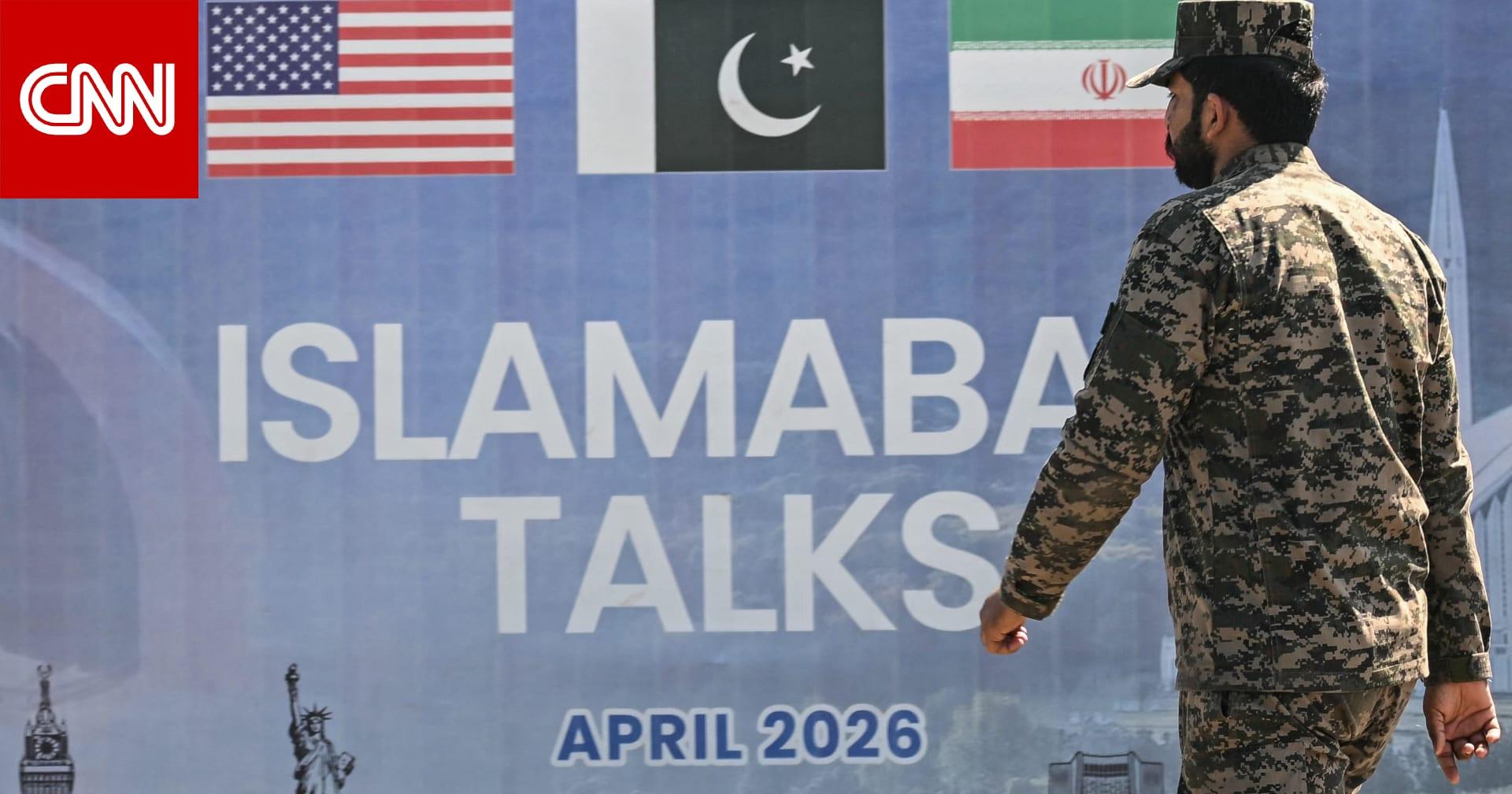
Trump Presses US-Iran Diplomatic Breakthrough as US Negotiators Head to Pakistan
Key Takeaways
- Pakistan hosts US-Iran talks, with PM and army chief engaging in diplomacy.
- Second round of US-Iran talks planned in Islamabad.
- BBC lists five major points of disagreement; CNN Arabic notes high-stakes talks.
US-Iran diplomacy push
The United States and Iran are pressing for a diplomatic breakthrough after President Trump railed against Iran’s decision to close the Strait of Hormuz, calling it "A Total Violation of our Ceasefire Agreement."
“Pakistan’s army chief and the prime minister have wrapped up separate diplomatic visits aimed at advancing efforts to end the United States-Iran conflict, with Field Marshal Asim Munir leaving Tehran and Prime Minister Shehbaz Sharif returning from Turkiye”
CNN’s “On GPS” also said Trump confirmed that US negotiators will be in Pakistan tomorrow for a second round of talks.

In parallel, Al Jazeera reported that Pakistan’s army chief and prime minister wrapped up separate diplomatic visits aimed at advancing efforts to end the United States-Iran conflict, with Field Marshal Asim Munir leaving Tehran and Prime Minister Shehbaz Sharif returning from Turkiye.
Al Jazeera said Munir met Iran’s leadership and peace negotiators during a three-day visit to Tehran, and that the military statement described the effort as Pakistan’s “unwavering resolve to facilitate a negotiated settlement… and to promote peace, stability and prosperity.”
The same Al Jazeera report said Munir held talks with the country’s president, foreign minister, parliament speaker and head of Iran’s military central command centre.
It also said Parliament Speaker Mohammad Bagher Ghalibaf and Foreign Minister Abbas Araghchi led the Iranian delegation to Islamabad for peace talks with the US last week, which ended without agreement.
CNN Arabic’s analysis framed the talks as the highest level of US-Iran engagement since the Islamic Republic was established in 1979, and said leaving without a deal would be “a crushing blow to the fledgling hopes of finding a way out of this crisis.”
Timeline and escalation
The diplomatic push is unfolding against a fast-moving sequence of ceasefire and Strait of Hormuz developments.
CNN’s “On GPS” said Trump railed against Iran’s decision to close the Strait of Hormuz and linked the move to the ceasefire, calling it "A Total Violation of our Ceasefire Agreement."
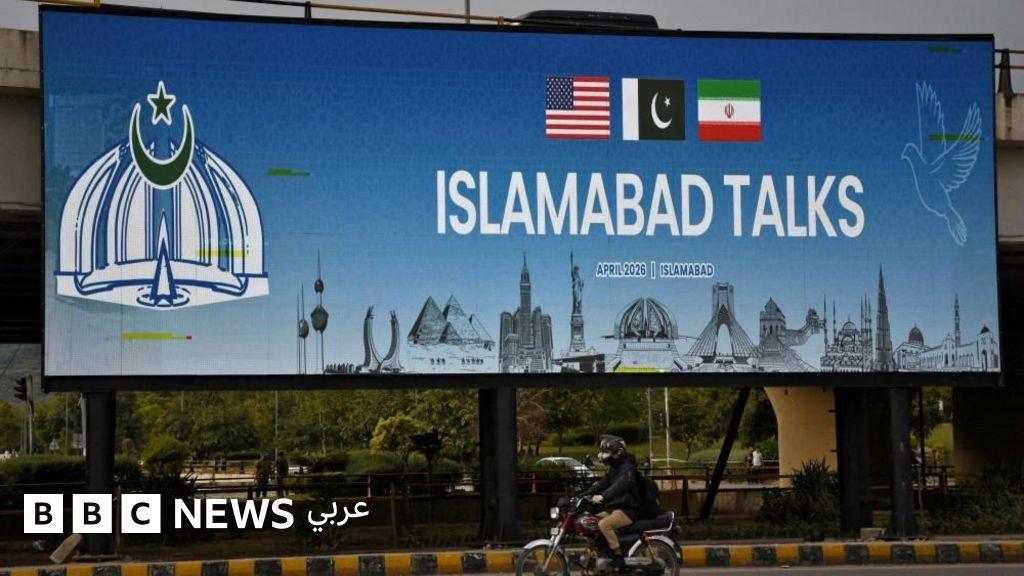
Al Jazeera reported that pressure for a deal has grown after Iran reimposed restrictions on the Strait of Hormuz, “hours after its reopening following the start of a ceasefire in Lebanon,” and said Tehran accused the US of violating a deal to reopen the waterway.
Al Jazeera also said a ceasefire is due to expire on April 22, while diplomacy continued through Pakistan’s outreach to regional leaders.
CNN Arabic’s analysis described the two-week ceasefire as “implemented,” and said Vice President J. D. Vance appeared to be seeking a relatively quick resolution after it was put in place.
BBC’s diplomatic correspondent Paul Adams said negotiations began on Saturday in the Pakistani capital, Islamabad, to bring an end to the war in the Middle East, with the talks hosted by Pakistani government officials.
BBC further reported that the U.S. vice president arrived in Islamabad accompanied by Jared Kushner and special envoy Steve Weitkov, while Iranian Parliament Speaker Mohammad Bagher Ghalibaf and Foreign Minister Abbas Araqchi arrived at midnight just before the talks began.
CNN Arabic added that the two-week ceasefire came amid an extremist threat from President Donald Trump to destroy an Iranian civilization and blow up its power plants and vital infrastructure.
Competing negotiating positions
The sources portray the talks as high-level but mismatched in approach and demands.
“Today, President Trump railed against Iran’s decision to close the Strait of Hormuz, calling it "A Total Violation of our Ceasefire Agreement”
CNN Arabic said the two delegations entered the talks with “two completely different approaches,” describing American Vice President J. D. Vance as seeking a relatively quick resolution after the two-week ceasefire was implemented, while Tehran “typically moves very slowly and negotiates for the long term.”
CNN Arabic also said that after Vance stated that the United States had offered its 'best and final' offer, “the ball now seems to be in Iran's court,” and that Iran believes the talks failed because of American demands that are 'excessive.'
BBC’s Paul Adams laid out the five major points of disagreement, beginning with Lebanon, where Iranian President Masoud Beshkian wrote on X that “The continuation of these actions will render the negotiations moot.”
BBC then described the Strait of Hormuz as another issue that could derail the talks, quoting Trump saying Iran is “doing a very poor job” at allowing ships to pass through the strait, and adding that “hundreds of ships and about 20,000 sailors remain stuck there.”
On the nuclear issue, BBC said Trump launched the process of the “epic fury” to ensure Iran never has a nuclear weapon, while Iran insists it has the right to enrich uranium for civilian purposes as a signatory to the Nuclear Non-Proliferation Treaty.
BBC also reported that Trump’s fifteen-point plan calls on Iran to “end all uranium enrichment on its soil,” while Defense Secretary Pete Haigseth said Iran will never possess a nuclear weapon or the capacity to attain one.
CNN Arabic further claimed that Iran’s Foreign Ministry confirmed that diplomacy is “a continuation of the holy Jihad waged by those defending Iranian soil.”
Voices, warnings, and diplomacy
The reporting includes direct statements from US and Iranian leaders, alongside Pakistan’s role as a conduit for talks.
BBC quoted U.S. Vice President J.D. Vance saying, “If the Iranians are willing to negotiate in good faith, we are certainly ready to lend a helping hand,” while also warning, “If they try to game us, they will find that the negotiating team is not that responsive.”
BBC also described Iranian President Masoud Beshkian’s message on X that “The continuation of these actions will render the negotiations moot,” and said Iran will never abandon its Lebanese brothers and sisters.
In the same BBC account, Israeli Prime Minister Benjamin Netanyahu said there is no ceasefire regarding Hezbollah, and it noted that Israel’s repeated warnings to residents of Beirut’s southern suburbs to evacuate had not yet led to any further action.
CNN Arabic added that the two-week ceasefire came amid an extremist threat from President Donald Trump to destroy an Iranian civilization and blow up its power plants and vital infrastructure, and it raised the question of whether that threat would come to the forefront again.
Al Jazeera reported that Donald Trump said a second round of talks with Iran could be held in Pakistan in the coming days, and it also said the New York Post reported that Trump praised Munir, saying he was “doing a great job.”
Al Jazeera’s Kamal Hyder said “all eyes are on Islamabad,” and described “a flurry of diplomatic activity and a hope and expectation that some sort of breakthrough may happen,” even as “Serious differences remain.”
The Al Jazeera report also quoted Shehbaz Sharif posting on X: “I leave Antalya [Turkish city] with fond memories and a renewed commitment to further strengthening the enduring fraternal bonds between our two nations, and to continuing our close cooperation to advance dialogue and diplomacy for lasting peace and stability in the region.”
What happens next
The next phase of the US-Iran effort is framed as dependent on whether talks can overcome multiple flashpoints and whether the ceasefire clock runs out.
“Pakistan’s army chief and the prime minister have wrapped up separate diplomatic visits aimed at advancing efforts to end the United States-Iran conflict, with Field Marshal Asim Munir leaving Tehran and Prime Minister Shehbaz Sharif returning from Turkiye”
Al Jazeera said the talks ended without agreement and that a ceasefire is due to expire on April 22, while also describing expected further negotiations in Pakistan in the coming days as Islamabad intensifies contacts with regional and global leaders.
CNN Arabic said leaving without a deal would be “a crushing blow” to hopes of finding a way out of the crisis, and it posed “the most important question now” as whether Trump’s threat would come to the forefront again.
BBC’s Paul Adams described how the Strait of Hormuz could derail talks, including reports that some ships charged fees of $2 million and Trump warning that Iran would be better off not imposing fees on oil tankers.
BBC also said on Thursday it announced the creation of new transit routes north of the two existing traffic separation schemes, and that Iran said the new routes are necessary “to avoid the presence of different types of naval mines in the main traffic area.”
On the nuclear dispute, BBC reported that Iran’s ten-point proposal includes a demand for international recognition of its rights to enrich uranium, while Trump’s fifteen-point plan calls on Iran to “end all uranium enrichment on its soil.”
CNN Arabic added that uranium enrichment is a key point of dispute and that Iran still seems unwilling to give up enrichment, while also saying the White House wants a decisive commitment from Iran not to manufacture a nuclear weapon.
The BBC account also tied the negotiations to regional dynamics, noting that Iran’s regional allies and proxies—Hezbollah in Lebanon, the Houthi movement in Yemen, Hamas in Gaza, and armed groups in Iraq—have given Tehran regional influence and that the network Iran calls the “Axis of Resistance” has faced ongoing attacks since the Gaza War erupted in October 2023.
More on USA

Marjorie Taylor Greene Presses Questions After Thomas Crooks Killed in Butler, Pennsylvania Attack
10 sources compared

DOJ Civil Rights Chief Harmeet Dhillon Demands Wayne County 2024 Ballots From Cathy Garrett
11 sources compared
Bernie Sanders’ Senate Effort Fails to Block Israel Weapons Sales as Democrats Split
12 sources compared
Donald Trump Sends U.S. Delegation to Pakistan for Iran Talks, Threatens Power Plants and Bridges
47 sources compared