
Trump Urges NATO, China to Send Warships to Guard Oil as Strait of Hormuz Closes
Key Takeaways
- Iran largely closed the Strait of Hormuz to America and its allies.
- Trump urged NATO allies and China to deploy warships to guard oil shipments.
- The call for naval protection has gained little traction.
Diplomatic Pressure Mounts
President Trump has intensified diplomatic pressure on NATO allies and China to send warships to the Strait of Hormuz amid Iran's effective blockade of the strategically vital waterway.
The strait handles approximately one-fifth of the world's oil shipments, making its closure a critical global economic concern.

Trump warned that negative responses to his call for naval reinforcements would be 'very bad for the future of NATO' and specifically suggested China should contribute naval power to help secure the gulf.
The U.S. energy secretary, Chris Wright, acknowledged in a televised interview that there were 'no guarantees' that oil prices would fall in the coming weeks.
International oil prices continued to climb past $106 per barrel, representing more than a 3 percent increase in early trading.
Treasury Secretary Scott Bessent separately met with Chinese officials in Paris for trade talks as the administration sought to coordinate international responses to the Iranian actions.
International Caution Persists
International responses to Trump's warship proposal have been largely cautious or noncommittal, with foreign governments hesitant to commit naval forces to the volatile region.
The diplomatic outreach comes as Iran has strategically maintained its blockade while making an exception for Chinese vessels, significantly reducing Beijing's incentive to deploy its own naval power.
Trump attempted to build international consensus by speaking directly with Prime Minister Keir Starmer of Britain about the importance of reopening the strait, reflecting the administration's concern about maintaining NATO unity during the crisis.
Despite these efforts, the effectiveness of any multinational naval mission remains uncertain given the complex geopolitical dynamics and Iran's determination to maintain control over the critical waterway.
Military Escalation Continues
As the conflict enters its third week, military tensions continue to escalate across the Middle East with coordinated strikes hitting strategic targets throughout the region.
Early Monday morning, airstrikes targeted the Iranian capital Tehran, including at an airport, with residents reporting hearing huge explosions.
In Beirut, the Lebanese capital, the sound of airstrikes and thunder were indistinguishable in the early hours as fighting intensified.
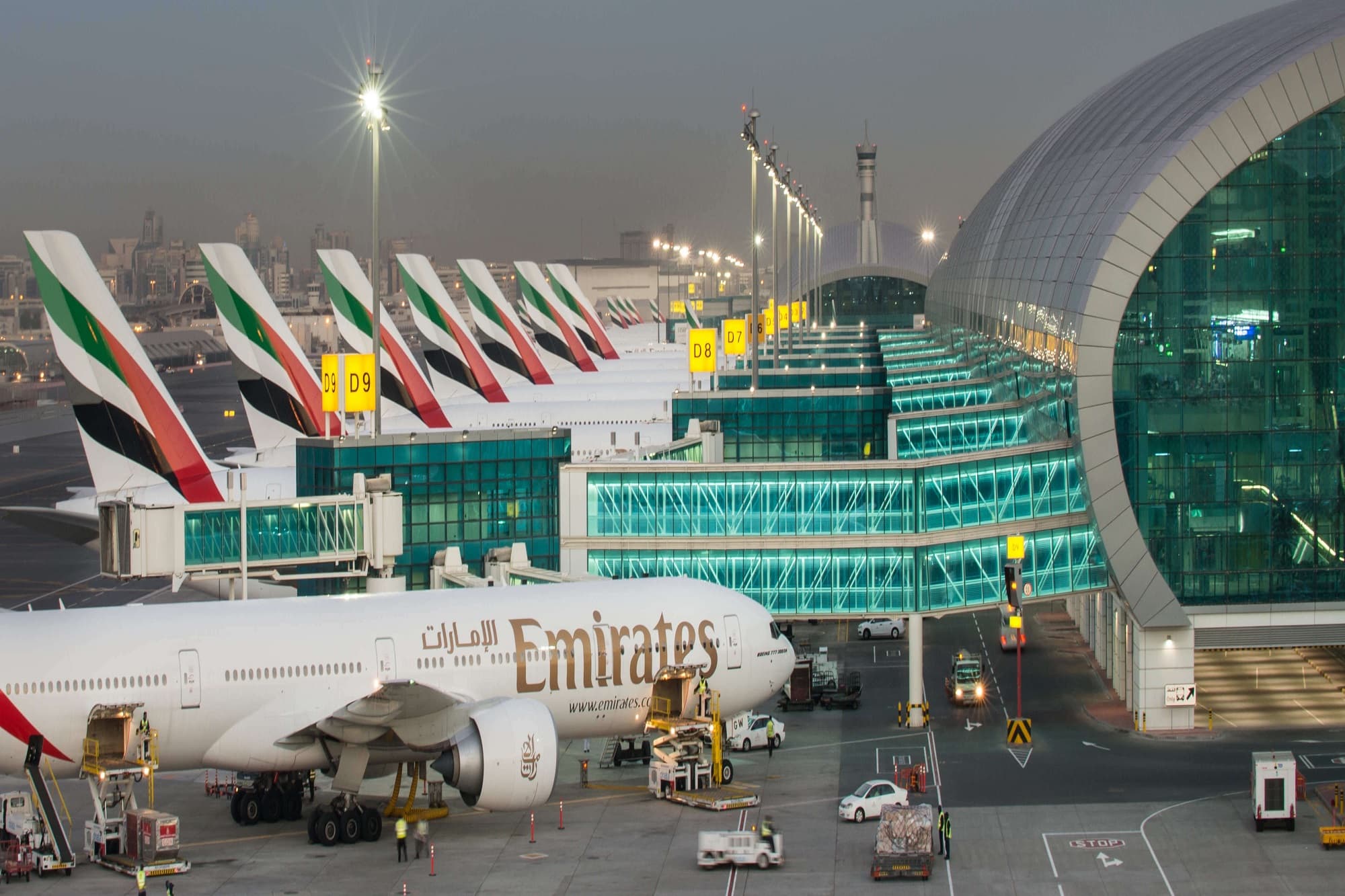
Dubai's international airport, normally one of the world's busiest, experienced another 'drone-related incident' that damaged a fuel tank and caused a fire.
This marks another in a series of similar attacks in recent weeks, demonstrating the widening scope of the conflict beyond Iran's strait blockade.
Civilian infrastructure is increasingly becoming targets in the escalating regional violence.
Multi-Front Conflict Emerges
The conflict has expanded to include attacks on multiple fronts, with Iranian-backed militias claiming responsibility for strikes against Western interests in the region.
Iraqi officials reported that four people were injured in a missile attack on Baghdad International Airport on Sunday.
The attack was claimed by Kataib Hezbollah, a powerful Iranian-backed Iraqi militia that had previously taken responsibility for attacking the U.S. Embassy in Baghdad.
Meanwhile, Saudi Arabia announced that it had intercepted drones near its capital and in an eastern province, though officials did not specify the origin of the threats.
These coordinated attacks by Iranian-aligned forces demonstrate a multi-front strategy that complicates international efforts to contain the conflict.
They suggest Iran's determination to maintain pressure on multiple adversaries simultaneously.
Iran Defiant Amid Pressure
Iran has maintained its defiant stance throughout the escalating conflict, with Foreign Minister Abbas Araghchi explicitly rejecting Trump's claims that Iran was seeking a diplomatic solution.
In an interview with CBS News, Araghchi stated that Iran was 'ready to defend ourselves as long as it takes' and denied Trump's assertion from the previous day that Iran wanted to make a deal.
This hardline position suggests that Iran views its control over the Strait of Hormuz as a critical strategic imperative that it is unwilling to relinquish.
Despite the severe economic and military pressure being applied by the United States and its allies, the Iranian leadership appears prepared to endure significant economic hardship and international isolation.
They refuse to compromise on what they perceive as their sovereign rights in the Persian Gulf region.
More on Iran
Iranian Women's Soccer Captain Zahra Ghanbari Withdraws Asylum Bid in Australia
10 sources compared
Iranian Drone Strike Shuts Dubai International Airport, Thousands Stranded
25 sources compared

Iran Drone Strike Shuts Dubai International Airport, Triggers Global Travel Disruption
16 sources compared

Iran's New Supreme Leader Mojtaba Khamenei Travels to Moscow for Leg Surgery
15 sources compared