
Trump Pushes Save America Act as Senate Debates Proof of Citizenship for Voters
Key Takeaways
- The SAVE Act requires citizenship proof to register and photo ID to vote.
- Trump portrays the bill as his top priority, prompting prolonged Senate debate.
- The path to passage remains uncertain; Republicans opened debate but lack consensus.
Trump's Top Priority
President Donald Trump has made the SAVE America Act his top legislative priority, promoting it relentlessly across multiple platforms including Oval Office appearances, campaign rallies, and his Truth Social account.
“The SAVE America Act is a top priority for President Donald Trump that he has been mentioning at every opportunity — in appearances before reporters in the Oval Office, at campaign-style rallies in rooms full of supporters and in musings on his Truth Social platform”
The legislation, which would require proof of U.S. citizenship to register to vote and photo identification to cast ballots, has become central to Trump's election security narrative despite lacking evidence of widespread noncitizen voting.

Trump has intensified pressure on Senate Republicans, threatening to refuse to sign any other legislation until the bill reaches his desk and warning of 'big trouble' if they fail to deliver.
The president has framed the measure as essential for guaranteeing Republican success in the 2026 midterm elections, which will determine control of Congress and set the tone for his final two years in office.
Bill Provisions
The SAVE America Act contains stringent requirements that would significantly alter how Americans register and vote.
To register, voters would need to present documentary proof of U.S. citizenship such as a passport, birth certificate, or REAL ID that indicates citizenship status — driver's licenses in many states would not suffice.
The bill would also mandate that all voters present government-issued photo identification at polling places, while mail-in voters would need to enclose copies of photo ID both when requesting ballots and when returning them.
Additionally, states would be required to submit their voter rolls to the Department of Homeland Security for cross-referencing with citizenship data, potentially allowing for mass purges of voters deemed ineligible.
Election workers who fail to properly verify eligibility could face criminal penalties, creating significant liability concerns for local election officials.
Democratic Opposition
Democrats and voting rights groups have mounted fierce opposition to the legislation, warning it would disenfranchise millions of eligible voters.
“Skip to Main Content Up next Rep”
An estimated 21 million Americans do not have documents proving their citizenship readily available, and 2.6 million Americans lack government-issued photo ID entirely, according to the Brennan Center for Justice and the University of Maryland's Center for Democracy and Civic Engagement.
Low-income and minority voters, who typically support Democratic candidates, are disproportionately affected by these documentation requirements.
Women who have changed their names through marriage could face additional barriers when their documents don't match their current surnames.
Critics also note that the bill would take effect immediately, forcing underfunded local election offices to implement complex new verification systems before the 2026 midterm elections with no additional funding provided.
Republican Arguments
Republicans argue the legislation is necessary to ensure election integrity, despite existing federal laws already prohibiting noncitizen voting and making such fraud extremely rare.
Republican supporters highlight the bill's requirement for documentary proof of citizenship as essential to prevent ineligible voters from registering, pointing to polls showing strong public support for voter ID requirements.
The Senate debate process has been contentious, with the initial procedural vote passing 51-48, with Senator Lisa Murkowski joining Democrats in opposition and Senator Thom Tillis absent.
While Republicans have a 53-47 majority in the Senate, 60 votes are needed to bypass the filibuster, meaning the bill lacks the necessary support for passage unless several Republicans defect.
Senate Majority Leader John Thune has acknowledged there isn't enough support to eliminate the filibuster but has agreed to hold extended debate to appease Trump and force Democrats to defend their position on the legislation.
Broader Context
The SAVE America Act represents the latest chapter in a decades-long Republican effort to impose stricter voting requirements, with similar proposals dating back to at least 2006.
“Democracy Dies in Darkness By Theodoric Meyer The Senate voted Tuesday to take up a far-reaching voting bill that President Donald Trump has demanded Congress pass before the midterms — but the legislation has no path to passing even as senators prepare for days of intense debate”
The legislation would override existing state-level voting systems, creating a federal mandate that conflicts with current practices where 14 states and Washington D.C. do not require any voter identification and instead use signature verification or other methods.
Election experts warn that the bill's implementation would create chaos, as most states lack the procedures and materials to collect photo ID copies for mail-in voting, potentially eliminating an entire voting method.
The bill has also become entangled with Trump's broader election security agenda, with the president suggesting he wants to add provisions banning mail-in ballots and restricting transgender rights.
Voting rights groups note that fraudulent voting by noncitizens is exceedingly rare and that the bill would create significant barriers to voting for eligible citizens without addressing any meaningful problem in the election system.
More on USA
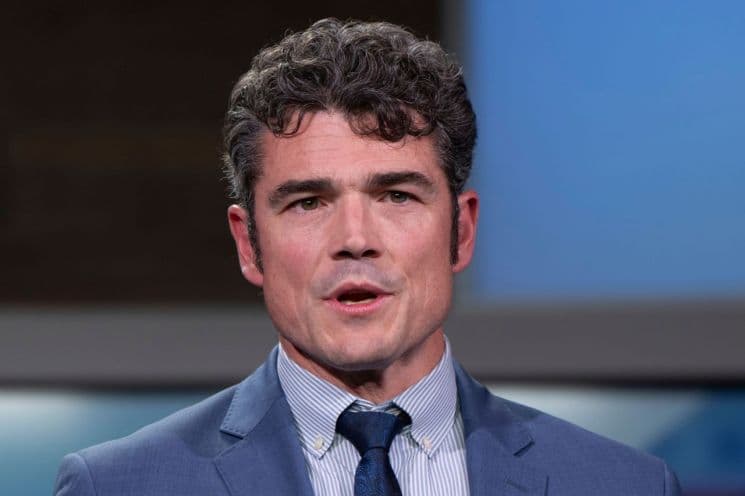
FBI investigates Joe Kent, former National Counterterrorism Center director, for allegedly leaking classified information.
81 sources compared

Lt. Gov. Juliana Stratton Wins Illinois Democratic Senate Primary to Replace Durbin
171 sources compared

Senators Grill Mullin Over DHS Nomination as Intel Officials Testify on Top Threats
91 sources compared

César Chávez Faces Sexual Abuse Allegations, Including Rape of Dolores Huerta and Other Survivors
34 sources compared