USA23 January, 20263 min read
Trump Removes Canada From His 'Board of Peace' After Ottawa Presses for Gaza Ceasefire
Trump publicly revoked Canada's invitation to join the Board of Peace on Truth Social Revocation followed Mark Carney's Davos speech criticizing economic coercion and Trump's 'Canada lives...' rebuke
64 outlets told this the same way.
Outlets did split on Trump Interrupted by Protesters at San Antonio Rally for Ken Paxton →
Trump withdraws Canada's invitation
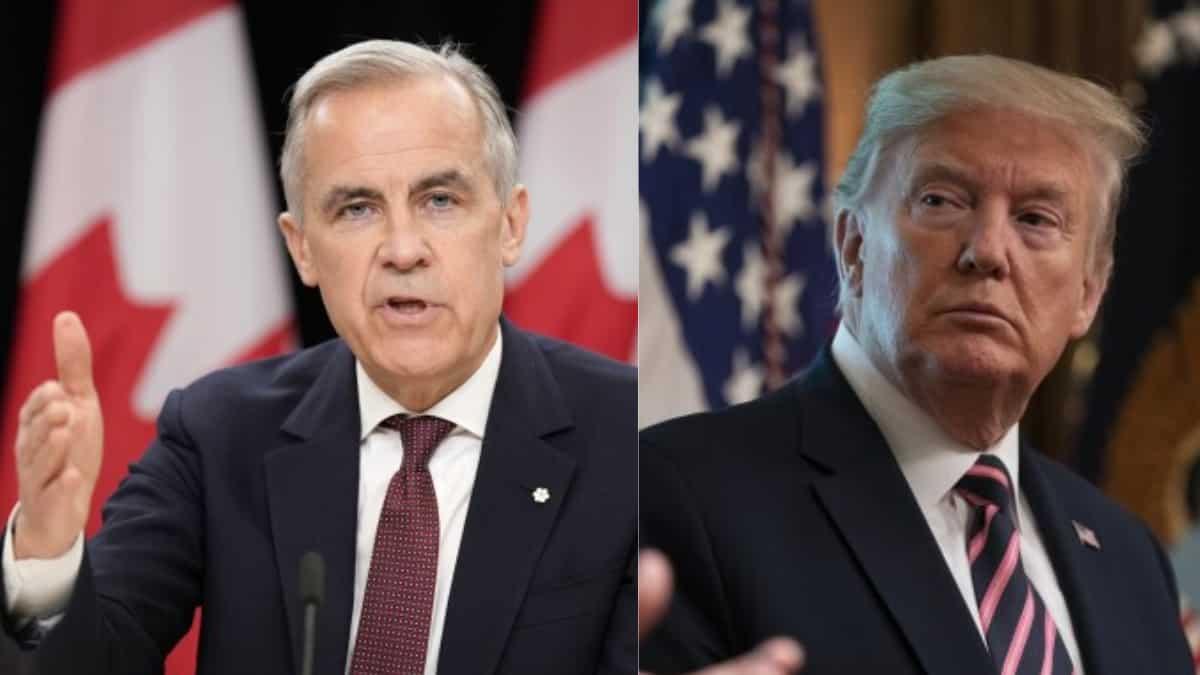
President Donald Trump announced on Truth Social that he had withdrawn Canada's invitation to join his newly launched 'Board of Peace,' a body he unveiled at the World Economic Forum in Davos and which he initially tied to overseeing a Gaza ceasefire and reconstruction. The move followed a public exchange triggered by a high-profile Davos speech by Mark Carney, who warned that the rules-based global order was fraying and urged middle powers to resist economic coercion, and a subsequent rebuke by Trump that included the remark "Canada lives because of the United States." News outlets report the withdrawal as abrupt and politically charged, and note Carney's own response defending Canadian sovereignty: "Canada thrives because we are Canadian."
“Late Thursday Trump posted on Truth Social that he was withdrawing an invitation for Mark Carney to have Canada join; Carney was not at the Davos launch after giving a widely noted speech earlier in the week...”
Trump's Board of Peace
Trump's 'Board of Peace' was presented at Davos as a U.S.-led mechanism to help secure a Gaza ceasefire and manage post-conflict reconstruction. Reporting shows major ambiguities about the board's remit, membership and relationship with the United Nations. Trump repeatedly said permanent members could pay $1 billion for a guaranteed seat and touted broad participation, claiming roughly 30 to 59 countries at different moments.
Outlets such as Al Jazeera and CBC reported that several key Western allies, including Britain, France and Italy, either declined or expressed serious doubts about joining. The United Nations, though tied by a Security Council resolution to the Gaza plan, said its engagement with the body would be limited to that specific context.
Davos confrontation over trade
The Davos confrontation stemmed from Carney's speeches warning that the "old world order is dead" and that powerful states were weaponizing trade and economic integration. Those remarks drew unusual applause and were widely read as a critique of U.S. policy. Multiple outlets recorded a sharp exchange in which Trump taunted Carney at Davos and on social media, calling Canada ungrateful and asserting "Canada lives because of the United States."
“A spat erupted after Mark Carney’s speech at Davos in which he warned the 'old world order is dead'... Trump posted a letter and criticizing Canada for not being 'grateful,' saying 'Canada gets a lot of freebies from us' and that 'Canada lives because of the United States.'”
Carney replied from Quebec City, saying "Canada thrives because we are Canadian," stressing both independence and continued partnership. Coverage consistently linked the spat to broader tensions over tariffs, defence and sovereignty.
Canada's conditional engagement
Ottawa's public posture blended caution and conditional engagement. Canadian officials had signalled willingness in principle but insisted on safeguards. Finance Minister François-Philippe Champagne and other sources said Canada would not pay a $1 billion fee for a permanent seat.
Carney reportedly conditioned Canadian involvement on unrestricted humanitarian access to Gaza and clear governance terms. Several Canadian outlets and international reports noted Ottawa's reticence and that Carney left Davos to work on ceasefire diplomacy. This underlined that Canadian participation was contingent on concrete guarantees rather than automatic alignment with Trump's initiative.

Reactions to Gaza board
Observers say the episode highlights wider diplomatic and normative tensions. Some governments and commentators worry the board could undercut the UN or create a U.S.-led parallel structure. Others view it as an ambitious if flawed attempt to marshal resources for Gaza.
“President Trump said nearly 30 countries have joined a new international 'peace board' he says will oversee the second phase of a Gaza ceasefire...”
Coverage shows divergence by region and outlet type. West Asian outlets such as Al Jazeera emphasize the board's ambition and its unclear membership. Western mainstream outlets (BBC, The Globe and Mail, The Telegraph) stress skepticism from European allies and the possible strain on Canada–U.S. ties.
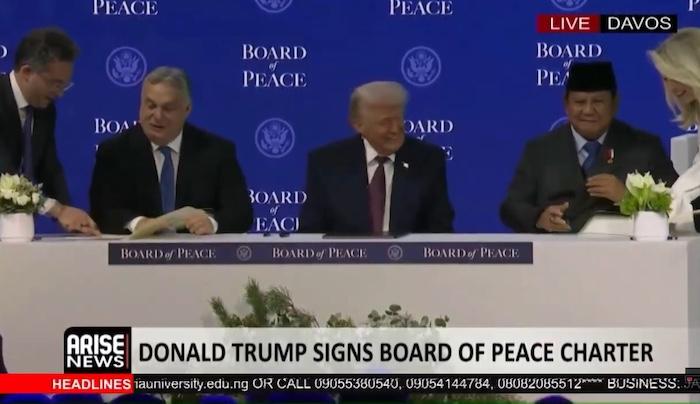
Western alternative sources and regional press underline Trump's unilateral posture and the political theatre of the Davos rollout. The result is a patchwork narrative in which the board's future, legitimacy and practical impact remain ambiguous and contested.