Ukraine War22 November, 20253 min read
Trump Says 28-Point Ukraine Peace Plan Is 'Not Final' as European Allies Demand Major Rewrites
Trump says the 28-point peace plan is not his final offer to Ukraine European and G7 leaders say the US draft requires additional work and major revisions

28 outlets told this the same way.
Outlets did split on Russian Attack Kills At Least 33 On Two Buses In Kramatorsk →
US-brokered peace plan
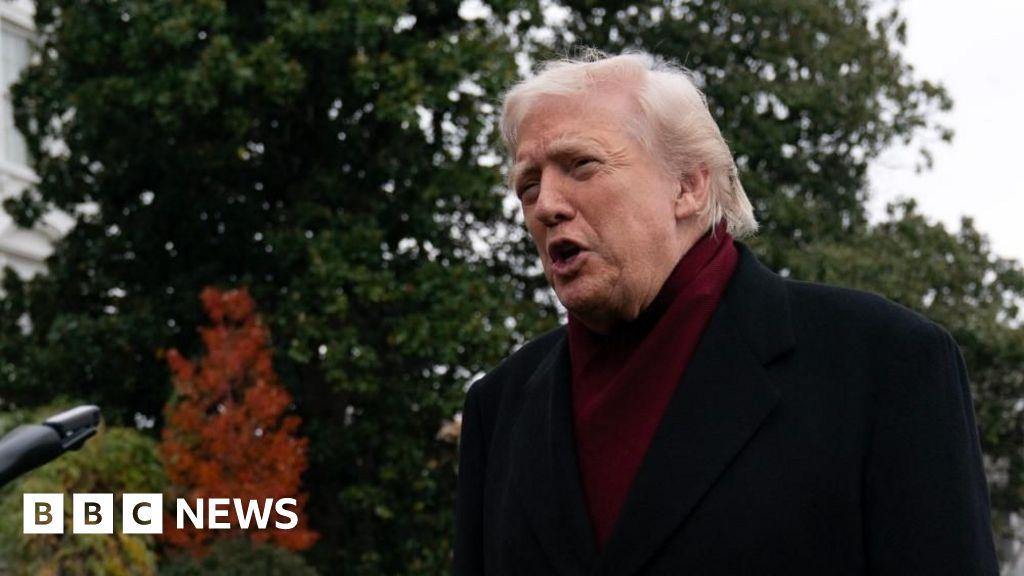
President Donald Trump told reporters his 28-point US-brokered plan to end the Russia–Ukraine war is "not his 'final offer'." European, Canadian and Japanese leaders demanded major rewrites and called parts of the draft a starting point that "require[s] additional work." Allies described the draft as containing some "elements essential for a just and lasting peace" but warned it raised acute concerns about Ukrainian borders and limits on Kyiv's armed forces.
“President Trump said the US 28-point plan to end the Russia–Ukraine war is not his ‘final offer,’ after allies raised concerns about elements seen as favourable to Moscow.”
Washington has set a near-term deadline, giving Kyiv until 27 November to respond. Senior security officials from the US, Britain, France and Germany are due to meet Ukrainian counterparts in Geneva to try to refine the proposal, with US envoys Marco Rubio and Steve Witkoff among those expected to attend. Ukrainian President Volodymyr Zelensky warned the country faces "one of the most difficult moments in our history," reflecting intense pressure on Kyiv as leaders debate next steps.

Reported draft concessions
Reporters and leaks have attributed a string of specific and contentious provisions to the draft, including caps on Ukraine’s armed forces, a ban on Kyiv joining NATO, and territorial concessions that would recognize some Russian-held claims. Tabloid and conservative outlets lay out the most concrete items, with The Telegraph reporting troop caps at 600,000 and the loss of provinces including Crimea. The Daily Mail detailed limits on NATO access, quick elections, and sanctions relief intended to reintegrate Russia.
Other mainstream outlets such as DW, France 24, and The Guardian summarize the same categories of concessions but use more cautious language. Some West Asian and Asian reports emphasize that the United States has not published the text and that Kyiv says the draft would require ceding territory and abandoning NATO membership.

G20 response to US draft
European and other Western leaders reacted strongly at the G20 in Johannesburg. They issued a joint statement saying the US draft can serve only as a 'basis which will require additional work' and stressed that borders cannot be changed by force. UK Prime Minister Keir Starmer and other leaders have pressed for stronger security guarantees for Kyiv.
“European leaders at the G20 in Johannesburg said the US’s leaked 28‑point peace proposal for Ukraine ‘is a basis which will require additional work.’”
They dispatched national security advisers to Geneva to scrutinize the plan, reflecting allied concern that proposed caps on Ukraine's military or territorial concessions could leave Kyiv more vulnerable. Several outlets emphasised that many European leaders were blindsided by the US-Russia drafting process. Kyiv rejected key provisions, with President Zelensky insisting he would defend Ukrainian interests.
Geneva talks on US draft
Diplomatic mechanics will be tested in Geneva as national security advisers from the E3 (Britain, France, Germany), U.S. envoys, and Ukrainian delegates seek to refine a U.S. draft. Reports identify U.S. envoys such as Marco Rubio, Steve Witkoff and Daniel Driscoll among attendees, and Kyiv has named Andriy Yermak to lead its delegation; some outlets say talks may even include Russian representatives.
Coverage diverges sharply on the draft's origins, with The Straits Times highlighting an October Miami meeting involving Kremlin-linked Kirill Dmitriev and U.S. envoys, while several Western outlets portray the proposal as a U.S. initiative needing allied buy-in and shared with Kyiv under pressure. Questions have also been raised about who inside the U.S. government was briefed, with some sources saying many senior State Department and National Security Council officials were not informed.
Reactions to U.S. draft
The stakes are framed differently across outlets. Several Western mainstream sources and some allied leaders say parts of the U.S. draft contain elements essential for a just and lasting peace and could be a negotiable starting point. Critics, including Ukrainian officials, many analysts and bipartisan U.S. lawmakers, warn the plan rewards Moscow, risks undermining Ukraine's sovereignty and could leave Kyiv vulnerable to renewed aggression.
“Zelensky rejected the plan, saying it would require ceding territory and permanently abandoning NATO membership.”
Vladimir Putin has welcomed the initiative as a possible basis for settlement. Commentators caution that a rushed deadline and pressure on Kyiv could force concessions many allies deem unacceptable without robust security guarantees.
