Trump Says IAEA Inspectors Will Go To Iran At An Appropriate Time
Key Takeaways
- Trump says IAEA inspectors will go to Iran at an appropriate time.
- Senate approves war powers resolution requiring presidential authorization for new Iran war.
- Resolution passes narrowly, 50-48, marking first such vote in both chambers.
War powers and inspections
The U.S. Senate narrowly passed an Iran War Powers Resolution on June 23 by a 50 to 48 vote, requiring President Donald Trump to seek congressional approval if he decides to resume a war against Iran and mandating that he withdraw U.S. forces unless Congress authorizes military action in the region.
After the vote, Gregory Meeks, the ranking Democrat on the Foreign Affairs Committee, said, "both chambers have now made clear that the president cannot continue this war of choice and must cease all hostilities against Iran," and he added that he would explore legal avenues to ensure the Executive complies with the will of Congress.

Trump also said on June 23 that International Atomic Energy Agency (IAEA) inspectors will go to Iran at an "appropriate time" to inspect nuclear facilities damaged in U.S. air strikes earlier this year.
Asked when such inspections could start, Trump told journalists, "There is no rush, but they will be on site at an appropriate time."
Rubio’s Gulf toll-free push
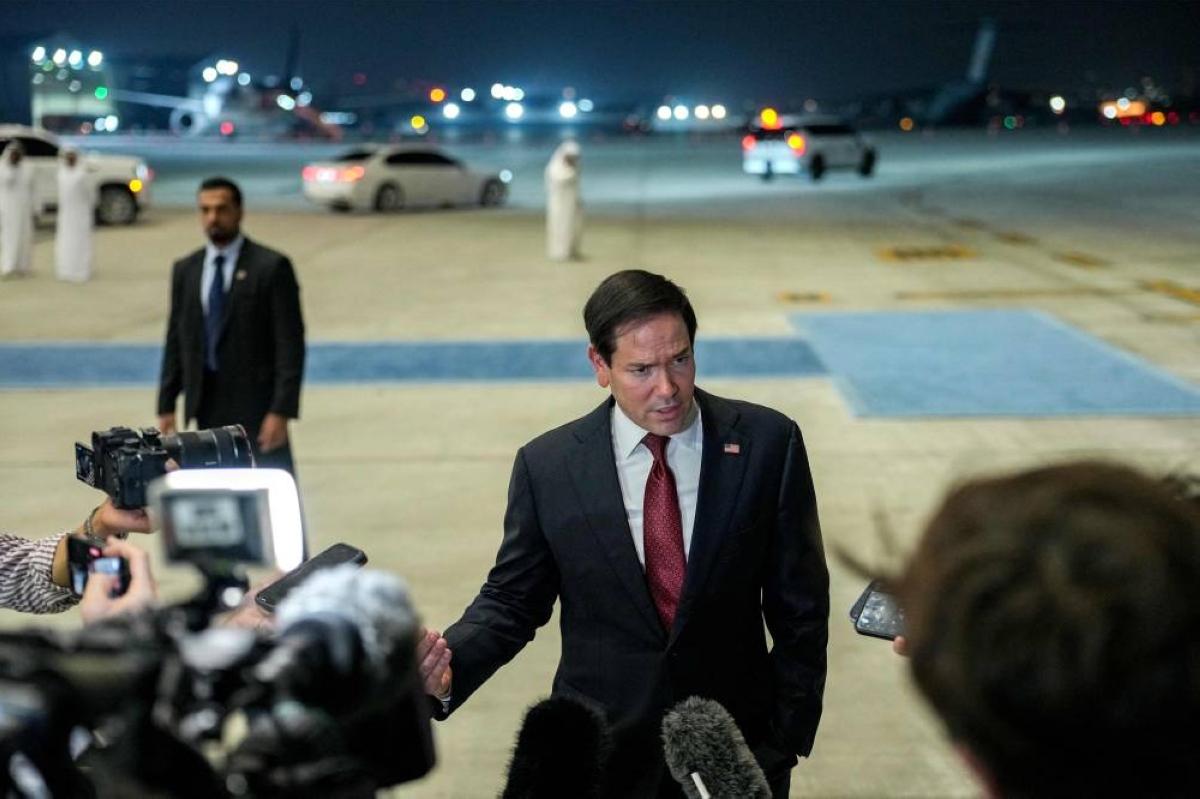
U.S. Secretary of State Marco Rubio arrived in Abu Dhabi on June 23 to open a high-stakes Gulf tour aimed at reassuring Washington’s closest Arab allies after a fragile cease-fire framework between the United States and Iran raised fresh questions over regional security.
Rubio told reporters, "No country is allowed to charge tolls or fees on an international waterway," as he insisted the Strait of Hormuz would be toll-free and said, "It’s an international waterway."

The Guardian described the 60-day ceasefire deal as establishing a 60-day period of toll-free passage through the strait, after which Iran and Oman would discuss the "future administration and maritime services in the strait of Hormuz" with other Persian Gulf littoral states.
The Guardian also reported that concerns in the Gulf include fears that the release of Iran’s frozen assets would be reinvested into its military, while Iran directly denied that an agreement had been struck for international inspectors to monitor its nuclear programme.
Competing inspection claims and stakes
In the U.S.-Iran interim peace deal, competing assertions about nuclear inspections have complicated efforts to convince regional allies, with Iranian Ministry of Foreign Affairs spokesperson Esmaeil Baghaei saying Tehran had no plans to allow IAEA inspectors to access the country’s most sensitive nuclear sites.
Yet just hours later, U.S. President Donald Trump wrote on Truth Social that, "Iran has fully and completely agreed to highest level Nuclear inspections long into the future (Infinity!!!)."
Foreign Policy said IAEA chief Rafael Grossi told Japanese broadcaster NHK that inspections would commence, though he did not give a start date or specify how the agency would access destroyed sites.
The Guardian added that Rubio also nodded to the potential spoiler role that Israel’s conflict with Hezbollah in Lebanon could play, saying that Iranian proxies must also respect the ceasefire but that the issue would be addressed "at the appropriate time in these negotiations."
More on USA
Benjamin Song Gets 100 Years as Antifa-Linked Plot Sentences Eight in Alvarado ICE Shooting
10 sources compared

DOJ Investigates Poetica Coffee After Brooklyn Chain Bans Rep. Dan Goldman Over Israel Support
11 sources compared

Zohran Mamdani Backs Brad Lander, Claire Valdez, and Darializa Avila Chevalier in New York Primaries
10 sources compared

U.S. Supreme Court Rejects Damon Landor’s RLUIPA Damages Claim Over Louisiana Prison Dreadlocks
19 sources compared