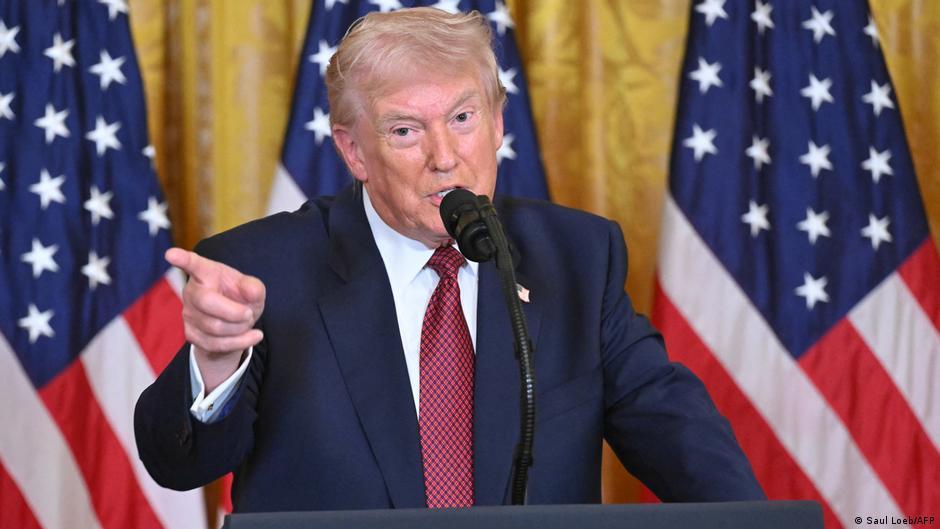
Trump Says Iran War Nearing End as Vance Seeks Major Deal With Tehran
Key Takeaways
- U.S. seeks rapid halt to the Iran conflict.
- Urgency to reach agreement within a set timeframe.
- Iran faces coercive diplomacy with deadlines and ultimatums.
War, deals, and timelines
Iran’s confrontation with a U.S.-led coalition has been described across outlets as both a military episode and a negotiation test, with competing claims about how close the parties are to ending the fighting.
“What you need to know: The Deutsche Welle Persian News Desk is a news digest of topics and day-to-day developments in Iran, the region, Germany, and the world across political, social, economic, cultural, sports, and other spheres”
Mehr News Agency frames the recent “forty-day war between Iran and a U.S.-led coalition” as exposing “a deep cultural and perceptual gulf,” arguing that Washington relies on “deadlines, ultimatums, and brute force” while Tehran responds with “strategic patience.”
In a separate report, the outlet اليـوم السابع says American President Donald Trump told Fox News that “the war with Iran is nearing its end,” adding that if he “had not, Iran would have had a nuclear weapon at this moment.”
The same report quotes Trump’s claim that the “military operation against Iran is very close to ending,” while Tehran would need “about 20 years to rebuild.”
It also says U.S. Vice President J. D. Vance told negotiators they want to reach an agreement and stressed that Trump wants “a comprehensive agreement.”
The report further states that Vance said talks between Washington and Tehran held in Pakistan on Saturday “achieved significant progress but the deal is not complete,” and it ties the negotiation window to a ceasefire lasting “two weeks” launched on “February 28.”
Why pressure may fail
Mehr News Agency’s interview argues that the U.S. approach is structurally mismatched with how Iran interprets surrender, dignity, and sovereignty, and it links that mismatch to why negotiations may not produce durable outcomes.
The interview asks why Washington seems incapable of understanding that within Iranian culture, “the concept of 'surrender' is often viewed as an existential impossibility,” and it answers by describing “the problem here is not only political but deeply cultural.”

It says Washington has “increasingly built its foreign policy around a logic of pressure and coercion,” proceeding from the assumption that any state will make “rational” concessions once resistance costs reach “a critical mass.”
The interview also says “Donald Trump has taken this aggressive approach to new extremes–despite his campaign promises to the contrary,” and it contrasts “might makes right” and “Obey, or face the consequences” with what it calls “civilizational states such as Iran.”
It argues that “national dignity is often of greater importance than material well-being,” and it describes Iranian identity as shaped by “millennia of history” and “a revolutionary legacy.”
The interview points to the Joint Comprehensive Plan of Action as an example of pragmatism, saying Tehran accepted “significant limitations and concessions” to “reduce pressure and protect the country’s socio-economic stability.”
It then says the JCPOA was “unilaterally scrapped by President Trump’s first administration,” and it connects that decision to “massive violence across the region.”
Voices on exits and escalation
While Mehr News Agency emphasizes cultural patience, other reports foreground political and constitutional constraints, as well as the idea that Washington is seeking a rapid exit.
“The president of the Americans for Peace Foundation, Beshara Bahbah, described the war ongoing against Iran as 'an Israeli war in essence,' stressing that the United States became involved in it under Israeli pressure, while the American president is currently seeking a quick exit to prevent it from slipping into a long-term confrontation”
الجزيرة نت quotes Beshara Bahbah, president of the Americans for Peace Foundation, describing the war ongoing against Iran as “an Israeli war in essence,” and it says he stressed that the United States became involved “under Israeli pressure.”
Bahbah told Al Jazeera Mubasher that Washington “carried out strikes on Iran at Israel's requests,” and he said the American president is “currently seeking a quick exit to prevent it from slipping into a long-term confrontation.”
The report adds that Bahbah said the administration would be ready to strike a deal with Tehran “at the first possible opportunity” if Iranian leaders take the initiative to contact to stop the war.
It also says Bahbah argued Trump is “not officially authorized to wage war without congressional authorization,” calling it “an important constitutional constraint,” and he linked the end of the war to “Israel's inability to bear the cost of prolonged attacks.”
In parallel, اليـوم السابع includes a different set of voices from within the negotiation process, quoting UN Secretary-General Antonio Guterres saying “Resuming talks is reassuring and diplomacy is the solution,” and it says he stressed “the need to continue the ceasefire between the United States and Iran.”
The same report quotes Guterres as saying it is “not realistic to expect that a problem of this complexity and longevity can be solved in the first round of negotiations,” and it adds that “therefore, negotiations must continue and the ceasefire must be maintained as talks proceed.”
Competing frames of urgency
The sources also diverge in how they portray urgency and the consequences of delay, with DW Persian News Desk emphasizing a tight deadline for a deal and Mehr News Agency warning that hasty agreements could be “short-lived.”
DW Persian News Desk reports that Donald Trump said on Thursday, February 12, that he expects a deal with Iran to take shape “within the next month,” and it quotes him warning that “this has to happen quickly.”
DW also quotes Trump saying that “We must reach an agreement, otherwise the situation will be very catastrophic, very catastrophic,” and it adds that he said “They should have agreed the very first time; instead they faced a midnight hammer operation.”
DW further states that “No definite result was reached, except that I emphasized that talks with Iran should continue to see whether there is a possibility of finalizing an agreement,” and it says the United States and Iran held talks “last Friday in Oman” for the first time since the June attacks.
In contrast, Mehr News Agency argues that “a too hasty agreement with the United States ending the material and economic violence against Iran might very well be short-lived and in the long-term turn out to be even more detrimental to Iranian interests,” calling that “simply pragmatism.”
It also says Washington’s “language of pressure, ultimatums, and deadlines” is aimed at “the exploitable soundbite or quick political win before the upcoming election cycle,” while Iran relies on “strategic patience and long-term calculation.”
Even within the negotiation-focused reporting, اليـوم السابع describes progress but not completion, saying Vance noted talks in Pakistan “achieved significant progress but the deal is not complete,” and it ties the next steps to a ceasefire lasting “two weeks.”
What comes next and who pays
Beyond diplomacy, the sources connect the Iran conflict to economic and regional pressures, and they also describe domestic legal and human-rights stakes in Iran.
“Dubai's real estate market has seen its first notable price decline since the COVID-19 pandemic, amid the impact of regional geopolitical tensions on demand, despite the strong activity the market has enjoyed in recent years, supported by foreign investors”
In Dubai, سودافاكس reports that Dubai’s real estate market saw “its first notable price decline since the COVID-19 pandemic” amid “the impact of regional geopolitical tensions on demand,” and it attributes the decline “partly” to “the fallout from the regional conflict tied to tensions between Iran and the United States.”

The report says ValuStrat’s price index showed a “5.9% drop in March compared with the previous month,” and it states that REIDIN data put the value of residential property sales at “about 20%” down to “AED 37.2 billion” in March, with “about 13,000” deals versus “around 16,000.”
It also quotes Louis Harding saying the market may not quickly return to previous levels and predicts “continued price declines and softer demand,” while noting that under-construction properties “account for about 75% of total deals” and posted a “13% drop in sales value in March.”
On the Iran domestic front, DW Persian News Desk reports that HRANA said that by the end of day 46 since protests began, “the number of confirmed deaths had reached 7,002,” including “6,506” registered as “protesters,” with “216” under 18 years old, and it adds that “25,022” civilian injuries were recorded and “52,941” arrests were made.
DW also quotes Attorney General Mohammad Movahedi saying “those whose involvement in criminal acts has been proven must be pursued promptly” and that proceedings are “based on the law,” while describing international criticisms as “the continuation of the enemy’s psychological warfare.”
The same DW report includes a U.S. statement through the U.S. Embassy in Baghdad, saying “We are ready to use all tools to counter Iran’s destabilizing activities in Iraq,” linking the conflict’s consequences to Iraq as well.
More on Iran

US Launches Proportional Strikes Against Iran After Trump Says Tehran Shot Down Apache Helicopter
16 sources compared
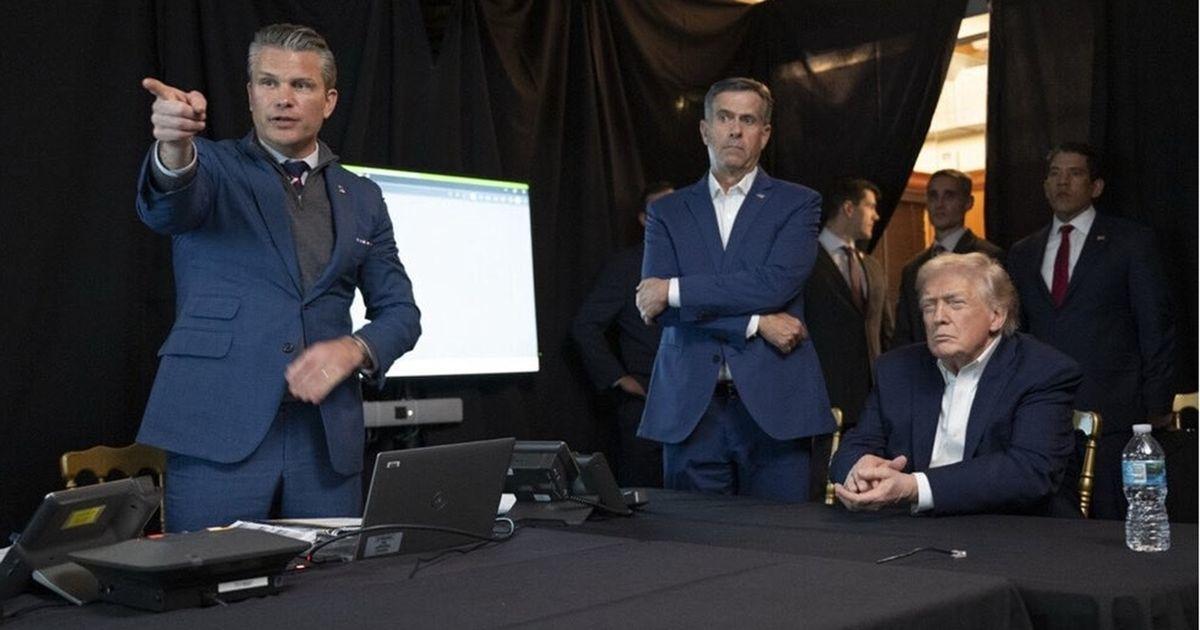
Trump Orders US Strikes on Iran After Iran Shoots Down Apache Helicopter Near Strait of Hormuz
29 sources compared

Trump Vows US Response After Iran Downs Apache Near Strait of Hormuz
10 sources compared
Gunman In Military Uniform Killed After Firing On Israeli Troops At Lebanon Border
13 sources compared