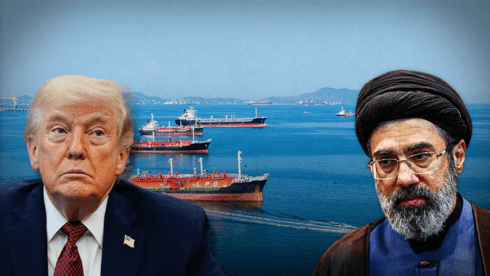
Trump Says Iran Won’t Get Sanctions Relief as US and Iran Dispute Deal Terms
Key Takeaways
- Negotiations over a U.S.-Iran deal are at deadlock amid conflicting statements.
- U.S. strikes on Iranian targets threaten ceasefire; Iran calls it a grave violation.
- Iran remains in peace talks despite Western attacks, with confidence fraying on both sides.
Deal Talks, No Sanctions Relief
US President Donald Trump said Iran would not receive any sanctions relief as a result of negotiations, even as officials from both countries issued conflicting statements about a possible deal.
“Despite suggestions that a deal between the United States and Iran may be close, officials from both countries have continued to issue conflicting statements, signalling an ongoing diplomatic impasse”
Trump also reiterated his claim that Iran would surrender its reserves of enriched uranium, telling PBS News, “They’re going to give up their highly enriched uranium, not for sanctions relief. No, no, not at all,” while Tehran said it would not let go of an estimated 440kg (970 lbs) of nuclear material.

The Al Jazeera account ties the dispute to multiple sticking points, including the continuation of US sanctions against Iran, the US blockade on Tehran’s ports, and control over the Strait of Hormuz.
Al Jazeera also reports that Trump said, “We’re not satisfied with it, but we will be. We will be. Either that or we’ll have to just finish the job,” as the war entered a ceasefire that began on April 8 but remained unresolved.
In parallel, The Independent says the White House dismissed a report on Iranian state television as “a complete fabrication,” while Trump said he was not yet satisfied over a deal and hinted he would “finish the job.”
Bombings and Threats
As peace talks continued, the US struck southern Iran late Monday, and Iran accused the US of violating the ceasefire, with the dispute framed as “bad faith” and “a definitive violation of the ceasefire” by the Iranian foreign ministry.
The Guardian reported that the attack aimed at missile launchers and efforts to lay fresh mines in the strait of Hormuz, and said it killed four Iranian soldiers while talks continued under the joint mediation of Pakistan and Qatar.

Iran’s Supreme Leader Mojtaba Khamenei took to X on Tuesday to issue threats after the strikes, writing, “The United States will no longer have a safe haven for its mischief and for establishing military bases in West Asia,” according to The Hill.
The Hill also quotes IRGC Aerospace Force Commander Seyed Majid Moosavi warning that “The Aerospace Force of the IRGC is prepared for a decisive, swift response and the implementation of measures ordered by the esteemed Commander-in-Chief,” after accusing the US of violating the ceasefire.
In CBS News coverage, Iran accused the US of a “grave violation” of the ceasefire as Trump sought “good deal or no deal,” while Secretary of State Marco Rubio said the talks would take several more days.
Strait of Hormuz at Risk
The emerging framework described in the dispute centers on reopening the Strait of Hormuz and restoring commercial shipping, but the sources show that control and timing remain contested.
Al Jazeera says the two sides clashed over control of the Strait of Hormuz and the US blockade on Tehran’s ports, while The Independent reports that the draft framework described Strait of Hormuz reopening and the lifting of the naval blockade on Iranian ports.
The Hill reports that the US continued enforcing the naval blockade in the Strait of Hormuz by redirecting 108 commercial ships to ensure compliance, and it quotes Cale Brown saying the strikes “It does signal that we won’t tolerate this provocation while we’re engaged in negotiation.”
The Guardian adds that a separate 30-day timeframe was allocated for the US to lift the blockade of Iranian oil ports and for Iran to allow commercial shipping through the strait of Hormuz, restoring maritime traffic to levels from before Israel and the US started the war on 28 February.
CBS News also reports that Secretary of State Marco Rubio said talks on reopening the strait and extending the ceasefire would take several more days, while the same coverage notes Iran’s stance that the possibility of renewed war is low even as it warns it stands ready against any attack.
More on Iran

Iranians Reconnect After 88-Day Internet Shutdown as Masoud Pezeshkian Orders Access Restored
17 sources compared

CSIS Says U.S. Needs At Least Three Years To Rebuild Tomahawk Stockpiles After Iran War
16 sources compared

Iran Accuses U.S. of Ceasefire Violation After Self-Defense Strikes
23 sources compared
Ali Akbar Velayati Says Strait of Hormuz Is Iran’s Real Guarantor of Nuclear Deal
15 sources compared