Trump Says U.S.-Iran War Could Last Another Two Weeks, Maybe Three Weeks
Key Takeaways
- Trump said the Iran war could last another two to three weeks.
- Trump claimed the United States has already won the war.
- Outlets describe shifting timelines for ending the war.
Trump’s shifting Iran timeline
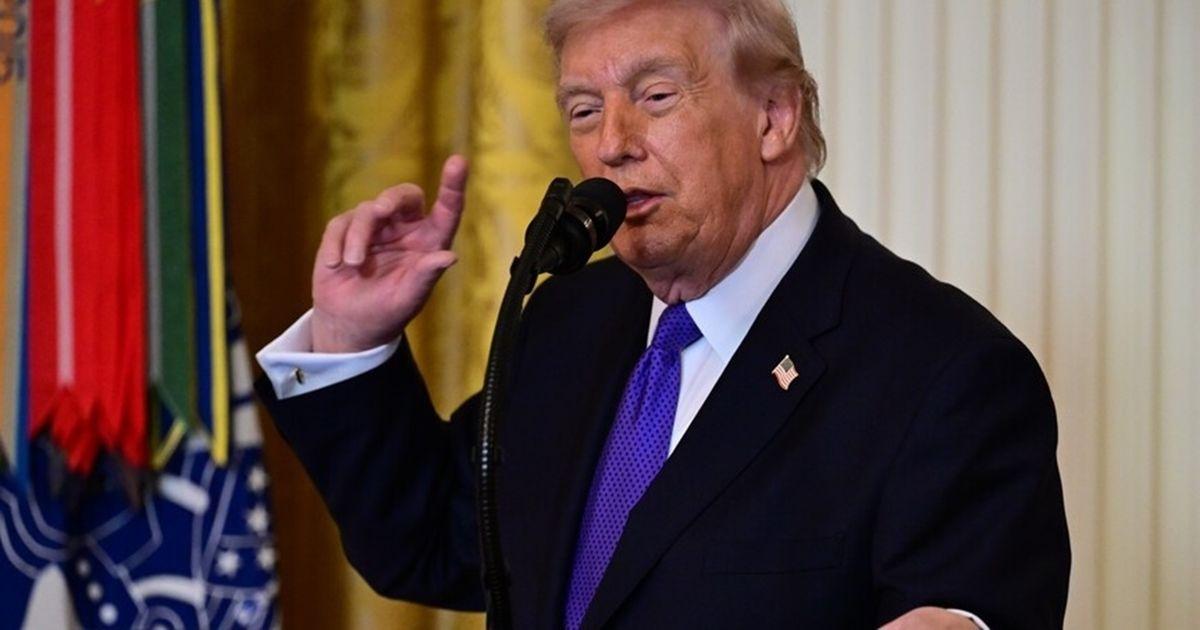
President Donald Trump told conservative radio host Hugh Hewitt that U.S. hostilities with Iran could last “another two weeks, two weeks, maybe three weeks,” adding, “Time is not of the essence for us.”
“The US president, Donald Trump, estimates that the war with Iran could last another two weeks, perhaps three”
In the same interview, Trump said, “We’ve taken out much of what we’d have to do, probably another two weeks,” and he framed the conflict as already decided by claiming, “From the military standpoint, we’ve already won that.”

Trump also said, “One way or the other, we win,” and he added, “We either make the right deal, or we win very easily.”
The timeline he offered came after he had estimated the war would last “four weeks or so” soon after the U.S. and Israel began attacking Iran on Feb. 28.
The New York Post reported that “This past Saturday marked the conclusion of nine weeks of fighting, though a nominal cease-fire has been in place since April 8.”
The Washington Post described the broader pattern behind these statements, saying Trump’s “shifting timeline for the war’s end has been one of the clearest examples of its flip-flopping messaging.”
In parallel, Arabic-language reporting from اليوم السابع said Trump predicted the war could last “another three weeks,” while also stating, “Well, I can't confirm that” when asked whether the ceasefire had ended.
Strait of Hormuz pressure
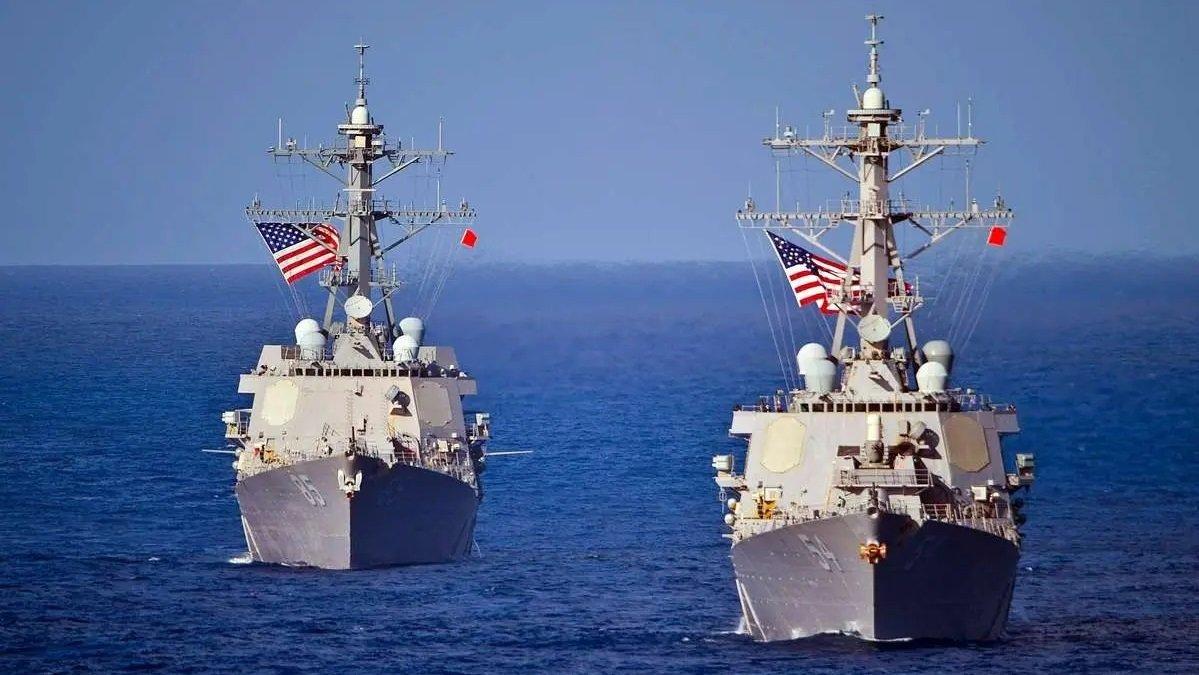
As Trump discussed timelines, the New York Post reported that U.S. Central Command (CENTCOM) said two American-flagged merchant ships “successfully transited the Strait of Hormuz” on the first day of a Trump administration initiative to force shipping traffic through the vital waterway.
The report quoted CENTCOM commander Adm. Brett Cooper saying on a press call that the American military “sank six small boats that were targeting commercial vessels.”

The same article said Iran fired “nearly two dozen missiles and drones toward the United Arab Emirates,” and the UAE’s defense ministry said it had intercepted “15 missiles and four drones,” with authorities in the eastern emirate of Fujairah reporting one drone sparked a fire at a key oil facility, wounding three Indian nationals.
The New York Post also said the British military reported two cargo vessels ablaze off the UAE’s coast, tying the Strait of Hormuz pressure to wider maritime incidents.
In El País, U.S. Defense Secretary Pete Hegseth accused Iran of being “the obvious aggressor” and said it was “harassing civilian vessels, indiscriminately threatening sailors, and using the Strait of Hormuz as a weapon.”
El País further reported that the U.S. military said there are “more than 1,550 merchant ships and 22,500 sailors trapped in the Gulf,” and it quoted Chairman of the U.S. Joint Chiefs of Staff, General Dan Caine, describing the Freedom Project posture as detecting and neutralizing threats including “fast boats and one-way attack drones in the air.”
The same El País piece stated, “Iran does not control the Strait,” and it quoted Hegseth saying the Freedom Project is “independent of Operation Epic Fury,” while insisting, “U.S. forces will not need to enter Iranian waters or airspace.”
Diplomacy, nuclear risk, and detention
While the U.S. and Iran remained deadlocked, Radio Free Europe/Radio Liberty reported that Iranian Foreign Minister Abbas Araqchi was traveling to Beijing for talks on May 5, and it quoted the Iranian Foreign Ministry saying, “During this visit, he will meet with his Chinese counterpart, Wang Yi, to discuss bilateral relations and regional and international developments.”
“Iranian Foreign Minister Traveling To China For Talks Iranian Foreign Minister Abbas Araqchi is traveling to Beijing for talks on May 5”
RFE/RL said the meeting comes as “the United States and Iran remain deadlocked in negotiations to end the war,” and it described a parallel diplomatic push in Washington when U.S. Treasury secretary Scott Bessent urged China to step up its efforts to convince Iran to open the Strait of Hormuz to international shipping.
RFE/RL also reported that Bessent said the issue would be raised during Trump’s upcoming meeting with Chinese leader Xi Jinping in mid May.
The same RFE/RL package included a Reuters report that “Iran's nuclear breakout time [was] unchanged after recent war,” stating that “The assessments of Tehran's nuclear program remain broadly unchanged even after two months of a war.”
RFE/RL added that Reuters cited three sources saying the assessments concluded Iran’s nuclear program remained “essentially intact following the recent conflict launched on February 28.”
RFE/RL also carried a separate thread about detained Nobel Peace Prize laureate Narges Mohammadi, quoting Antonio Guterres’ spokesman Stephane Dujarric saying the UN chief expressed “deep concern” and called on Iranian authorities to ensure Mohammadi “receives, at the very least, urgent medical care as required by her current health condition.”
It further reported that the U.S. ambassador to the United Nations, Mike Waltz, wrote on X urging Tehran to provide “the urgent care she needs,” and it quoted the Narges Mohammadi Foundation describing her condition as “extremely critical.”
Iranian messaging and U.S. claims
Iranian officials and U.S. officials traded messages as the crisis continued, with the New York Post reporting that Mohammad Bagher Ghalibaf, speaker of the Iranian parliament who led Tehran’s delegation during failed peace talks last month in Pakistan, taunted the U.S. on X early Tuesday.
The New York Post quoted Ghalibaf writing: “The new equation of the Strait of Hormuz is in the process of being solidified,” and it added that he said “The security of shipping and energy transit has been jeopardized by the United States and its allies through the violation of the ceasefire and the imposition of a blockade.”
Ghalibaf also wrote, “We know full well that the continuation of the status quo is intolerable for America,” and he added, “while we have not even begun yet.”
In Radio Free Europe/Radio Liberty, Iran’s foreign minister Abbas Araqchi urged the United Arab Emirates not to resort to a “military solution,” writing on X late on May 4 that he believed “there is no military solution” to the current crisis.
RFE/RL quoted Araqchi saying, “While talks are progressing thanks to Pakistan’s generous efforts, the United States must be careful not to be dragged back into a quagmire by ill-wishers,” and it added, “The United Arab Emirates must likewise remain vigilant.”
The same RFE/RL report also described how the UAE had been among the Persian Gulf countries particularly affected by Iranian strikes since February 28, with Tehran saying they were a response to the U.S.-Israeli military campaign.
Meanwhile, the New York Post framed the U.S. posture in terms of leverage and claimed success, quoting Trump’s assertion that “They had 159 ships, Hugh. Now, they have none. They’re all at the bottom of the sea.”
Domestic politics and costs
The U.S. debate over the war also surfaced in domestic political reporting, with عربي21 saying Trump sparked controversy after rejecting poll results that suggested a decline in public support for the war with Iran, describing those polls as 'fake'.
“Since the start of the war in Iran in late February, President Donald Trump has made increasingly contradictory statements about the United States’ strategy”
عربي21 reported that, according to CNN, Trump reaffirmed his rejection during an event with small-business owners at the White House, where he said some polls showed the war's approval rating did not exceed 32 percent, while he rejected these results and said he does not support the war in principle.
The same عربي21 report said Trump stressed that the United States possesses “the strongest army in the world” and argued that poll questions were “biased,” including framing about Iran possessing a nuclear weapon.
It also said the remarks came as “a fragile ceasefire” existed between Washington and Tehran, amid ongoing tensions in the Strait of Hormuz.
The Washington Post, meanwhile, described the political and strategic strain behind the shifting messaging, saying Trump’s “flip-flopping messaging” led to “confusion and required cleanup by the White House staff.”
The New York Times reported that “Energy markets are in turmoil” and that “The Pentagon has given its first public estimate of the war’s cost:$25 billion so far,” while also describing the war as “costly and deeply unpopular” and lacking a clear endgame.
In the New York Post interview, Trump also addressed economic expectations by telling Hewitt that when the war began he thought the stock market would go down “20 or 25%,” and he said he was “OK with that,” while also predicting oil could hit “$200-$250 [per barrel].”
More on USA
Trump Announces Project Freedom to Guide Ships After Iran Blocks Strait of Hormuz
23 sources compared

Trump’s Endorsed Indiana Senate Challengers Face Test in Ohio and Indiana Republican Primaries
23 sources compared
Iran Says US Killed Five Civilians in Strait of Hormuz Passenger Boat Attacks
23 sources compared

Trump Calls One U.S. Brigade Back From Germany, Testing NATO Unity
10 sources compared