Full Analysis Summary
Border enforcement controversy
President Trump dispatched his top border enforcer, Tom Homan, to Minneapolis after federal Border Patrol agents shot and killed 37-year-old ICU nurse Alex Pretti during an aggressive immigration enforcement operation, a move the White House framed as damage-control amid nationwide outrage.
The administration repeatedly defended the agents involved and at times described Pretti in charged terms, while video and independent reviews quickly called key elements of the federal account into question and sparked mass protests.
Local leaders sought de-escalation even as federal officials signaled continued enforcement unless state and local authorities cooperated differently.
Coverage Differences
Contradiction between official framing and video/witness accounts
Western mainstream outlets and official statements reported the administration’s defensive framing and use of strong labels, while several other reports — including independent video reviews — questioned those claims and presented conflicting visual evidence. The BBC (Western Mainstream) reports the administration called Pretti a 'domestic terrorist,' while the South China Morning Post (Asian) and Anadolu Ajansı (West Asian) describe bystander video that appears to show Pretti holding only a phone and being tackled and shot after an officer shouts 'Gun!'; these are presented as reported or verified footage rather than editorial claims.
Tone and leadership emphasis
West Asian and some international outlets emphasize Washington’s rapid personnel response and presidential involvement (‘Homan will report directly to me’) and the national outrage, while some Western mainstream outlets foreground legal and investigatory questions. Hürriyet (West Asian) reports Trump saying Homan 'will report directly to me,' which stresses presidential control; PBS and other U.S. outlets instead highlight unanswered factual and investigatory questions.
Focus on individual commanders versus systemic critique
Tabloid and some national outlets single out controversial Border Patrol figures and theatrical tactics, portraying leadership as a cause of escalation, while other sources concentrate on legal and institutional responses. The Daily Mail (Western Tabloid) highlights commander Gregory Bovino as a 'publicity‑seeking "showman,"' an angle less emphasized in more legally centered coverage.
Disputed border confrontation
Details of the confrontation itself remain contested.
Multiple bystander videos reviewed by news organisations appear to show Pretti holding a phone during the scuffle, being sprayed with an irritant and thrown to the ground before a Border Patrol officer fired multiple rounds.
Federal officials say a 9mm pistol was recovered and that the agent fired in self-defense.
Minnesota investigators said they were initially barred from the scene and have sought court orders to preserve evidence.
U.S. officials and prosecutors said investigations are ongoing and warned that footage can be misleading.
Coverage Differences
Evidence and sequence discrepancy
Video‑based accounts (South China Morning Post, Anadolu Ajansı) describe a rapid struggle in which Pretti appears to hold only a phone and is shot after being tackled, whereas federal statements insist a firearm was recovered and the shooting was defensive. The BBC (Western Mainstream) notes its Verify review found 'no visible gun in available video,' framing the absence of visible weaponry in footage.
Access and investigatory friction
West Asian reporting and regional outlets emphasize that Minnesota investigators said they were barred from the scene despite having warrants and have sought judicial relief to prevent alteration of evidence; U.S. mainstream outlets (PBS, The Boston Globe) highlight a broader set of unanswered questions and formal investigative steps without always emphasizing the bar to state access in the same language.
Graphic description versus procedural emphasis
Some outlets (South China Morning Post) narrate the apparent sequence and describe multiple shots into the back, while others (PBS) avoid specific forensic claims and instead stress that key questions — bodycam footage timing, autopsy, toxicology — remain unresolved.
Political and public reactions
The killing intensified political fallout, prompting Minnesota officials — including Attorney General Keith Ellison and Gov. Tim Walz — to sue to limit or halt 'Operation Metro Surge'.
They also sought temporary restraining orders and mobilized the National Guard.
Protests spread nationally, from Minneapolis to Chicago, New York and other cities.
Corporate leaders, former presidents and local officials publicly condemned the incident.
Some Republicans and senators have also called for investigations.
Coverage Differences
Legal action versus mass protest focus
Legal coverage (Newsweek, wandtv, The Boston Globe) details court filings, restraining orders and judges probing federal tactics, whereas other outlets (Novinite, BBC) give more weight to the scale of street protests and civic anger; both strands document political pressure but with different emphases.
Bipartisan criticism versus administration defenders
Some outlets note bipartisan pressure and calls for investigation (Le Monde, MyJoyOnline), while official administration spokespeople and some allies defended the deployments and agents. Le Monde reports condemnations from former presidents and calls for joint federal and state investigations, while MyJoyOnline notes Republican criticism alongside Democratic demands for accountability.
International and local civic responses
International outlets emphasise cross‑border moral outrage (e.g., CBC quoting Manitoba Premier Wab Kinew saying 'stop killing American citizens'), while local U.S. coverage focuses on litigation and operational limits; both document a rare moment of sustained and geographically broad protest.
Federal deployment disputes
The incident complicates the legal and operational contours of the federal deployment.
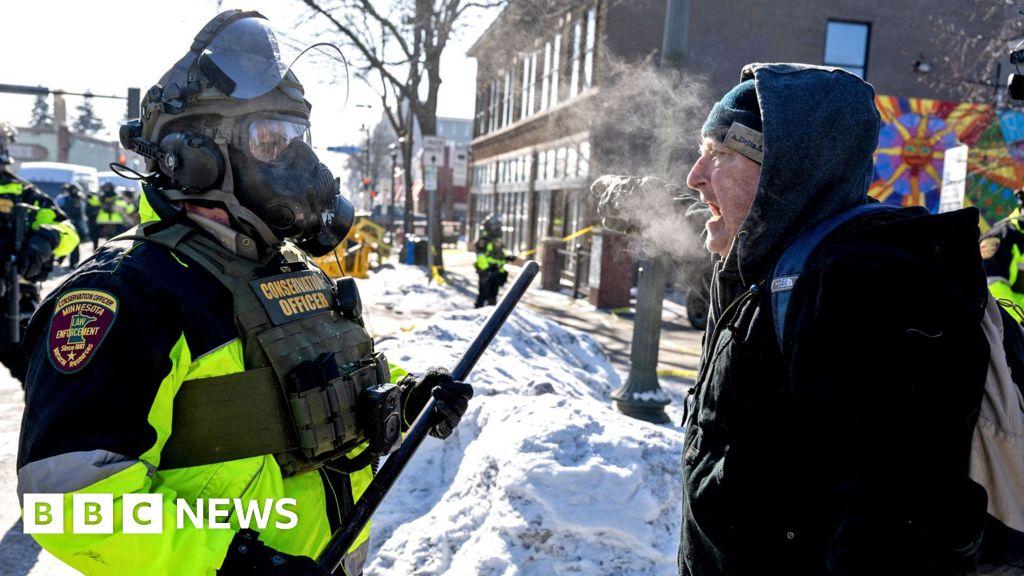
A federal appeals panel kept in place a stay blocking a district judge’s injunction that sought to constrain federal tactics, calling the injunction 'too broad' and 'too vague'.
Minnesota and city officials sought court orders to rein in the surge and to preserve evidence.
The White House signaled it could reduce some Border Patrol deployments if state leaders cooperated with transfers to ICE.
Reports circulated that senior Border Patrol commander Gregory Bovino and some agents would be pulled back as Tom Homan assumed an oversight role.
Coverage Differences
Judicial restraint versus executive posture
Newsweek (Western Mainstream) reports the federal appeals panel’s rationale that an injunction was 'too broad' and 'too vague,' emphasising legal limits on constraining agents; by contrast, state filings and local judges (wandtv, The Boston Globe) pressed for tighter restrictions and questioned federal motives and tactics, highlighting a clash between federal enforcement prerogatives and local‑state oversight.
Operational accountability versus personnel optics
Tabloid coverage (Daily Mail) underscores personnel and public‑relations angles — portraying Bovino as a 'showman' removed amid controversy — while mainstream outlets focus on possible policy changes and legal restraints rather than theatrical elements.
Leverage and conditional withdrawal
Some reporting (Newsweek) notes the White House suggested CBP deployments could be reduced if state leaders cooperated with ICE handovers — framing potential de‑escalation as contingent on state compliance — a framing emphasised less in protest‑focused coverage.
Backlash over federal deployments
Beyond courts and city halls, the episode prompted wider civic and institutional backlash.
Tech workers and companies faced heightened scrutiny over ties to immigration enforcement.
Organized letters and campaigns criticized the deployments as having "criminalized and terrorized" communities.
Some senators signalled they would withhold DHS funding unless reforms were made.
Advocates called for accountability and for federal-state clarity on when and how heavily armed agents operate in American cities.
Coverage Differences
Industry and civic activism versus congressional leverage
Tech‑sector coverage (WIRED) highlights internal employee outrage and reputational concerns about contractors and tools used by ICE, while political reporting (Newsweek, TechCrunch) emphasises legislative leverage, organising letters and campaigns intended to force policy change.
Local protest coverage versus national policy response
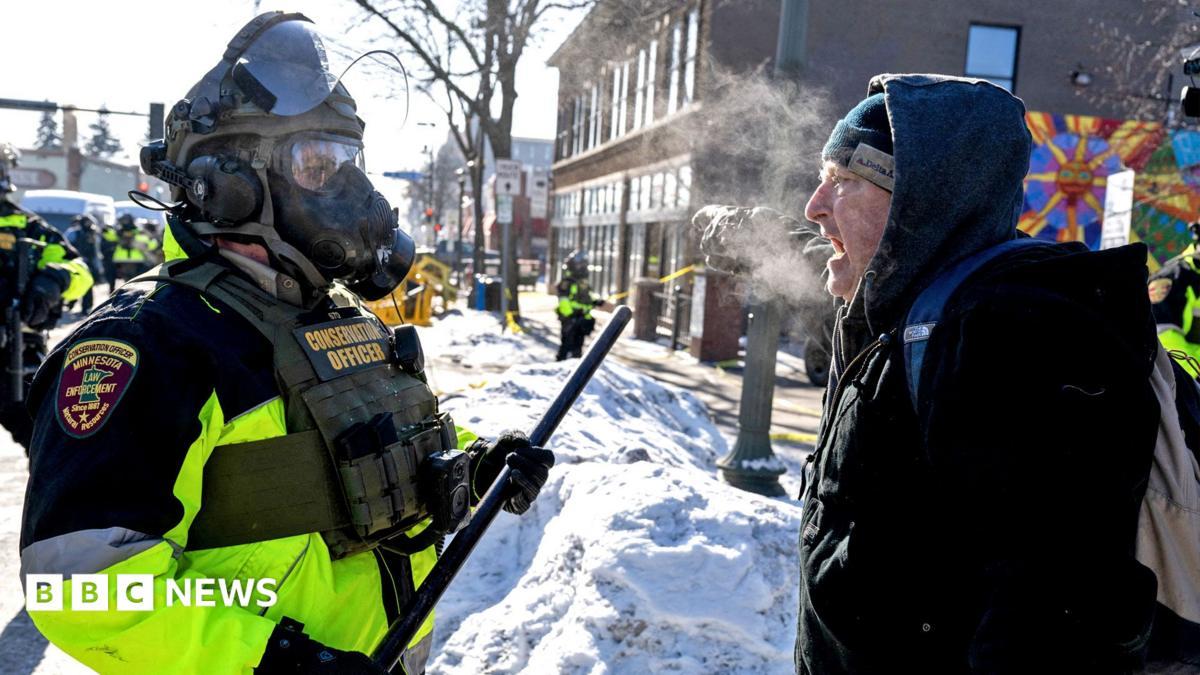
Local and international outlets (Novinite, BBC) document large street protests and symbolic demands to withdraw ICE and Border Patrol, whereas national policy pieces focus on hearings, injunctions and financial conditionality — different remedies that reflect divergent priorities in coverage.
Emotional/ethical framing versus procedural framing
Some outlets and commentators use strong moral language and condemnations (e.g., Le Monde quoting former presidents), while other reporting is careful to list procedural next steps — investigations, TROs, FOIA requests — reflecting a split between ethical outrage and bureaucratic response.