Trump Sends U.S. Negotiators to Islamabad as Iran Shuts Strait of Hormuz Again
Key Takeaways
- Iran says no date yet for next round of talks with the United States.
- Iran closes the Strait of Hormuz again amid US-Iran tensions.
- US negotiators head to Islamabad for a second round of talks with Iran.
Strait of Hormuz Standoff
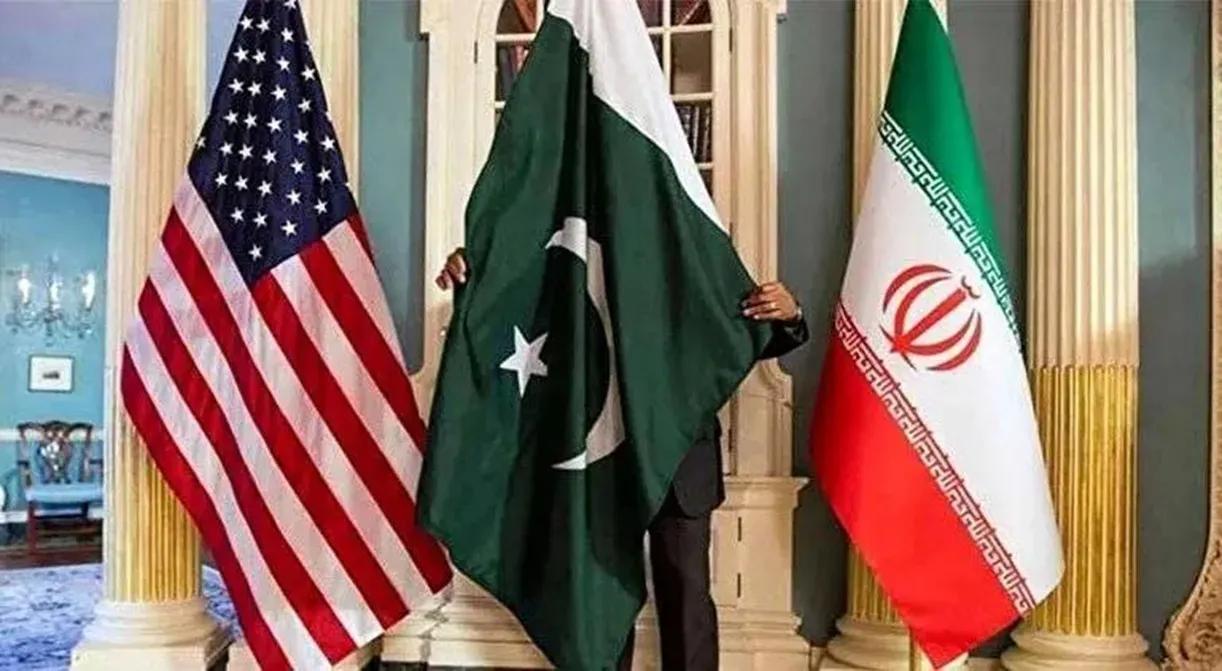
Iran and the United States entered another round of escalation around the Strait of Hormuz as Washington prepared for talks in Pakistan and Tehran signaled it would not ease pressure on shipping.
The AP reported that President Donald Trump said U.S. negotiators would be in Pakistan on Monday for “round two of talks with Iran,” while “Iran did not immediately confirm the talks.”

The BBC described Trump’s posture as he acknowledged “an Israeli attack on Iran is plausible” but said he opposed it because “the deal is close,” adding, “I don’t want them to act because it would upend the deal.”
In parallel, the CNN live account said Iran announced it was “once again shutting down the Strait of Hormuz,” blaming the US for “breaches of trust” during the ongoing ceasefire.
NPR likewise framed the diplomatic push as U.S. negotiators “prepare for more peace talks as Trump repeats threats to Iran,” with the talks set for Islamabad, Pakistan.
The AP also stated that “The Strait of Hormuz is closed to shipping due to threats from Iran as the U.S. blockades Iranian ports,” and that “The fragile ceasefire between the United States and Iran is due to expire by Wednesday.”
The standoff left shipping in limbo: the AP said “hundreds of vessels” were waiting in both directions, and NPR added that “More than 20,000 seafarers have been stuck on hundreds of ships in the Gulf since the war began in late February.”
Threats, Negotiators, and Timing
While diplomacy moved toward Islamabad, Trump’s warnings sharpened around Iran’s infrastructure and the Strait’s status.
NPR reported that U.S. officials heading to Pakistan were “Vice President Vance, U.S. special envoy Steve Witkoff and Jared Kushner,” and said Iran “has yet to confirm they are attending.”

In the same NPR account, Trump wrote on Truth Social: “We’re offering a very fair and reasonable DEAL, and I hope they take it because, if they don’t, the United States is going to knock out every single Power Plant, and every single Bridge, in Iran. NO MORE MR. NICE GUY!”
The Guardian likewise quoted Trump on Truth Social, saying, “if they don’t, the United States is going to knock out every single Power Plant, and every single Bridge, in Iran,” and it added that Iran had not decided on a delegation “as long as there is a naval blockade,” citing Tasnim.
France 24 reported that Trump said a U.S. delegation would be in Pakistan on Monday for talks with Iran, while also noting Iran’s Tasnim position that there was “no immediate confirmation” “as long as there is a naval blockade” in the strait.
AP’s live updates said Trump threatened to “destroy civilian infrastructure in Iran if it doesn’t take the deal that the U.S. is offering,” and it noted the ceasefire’s expiration by Wednesday.
CNN added another layer by describing how Iran’s announcement was followed by immediate maritime action: “Iranian gunboats fired on a tanker trying to pass through the Strait of Hormuz after Iran’s announcement,” and “a second vessel was hit by a projectile.”
Iran’s Position and Retaliatory Logic
Iran’s leadership and negotiators framed the Strait crisis as a response to U.S. actions and as leverage within the ceasefire framework.
PressTV quoted Iranian President Masoud Pezeshkian saying Iran “does not seek to expand war,” arguing that “the continuation of conflicts will not be beneficial to any country,” and calling for “wisdom and dialogue and avoid more destruction.”
PressTV also tied the current confrontation to what it described as an “unprovoked war waged by the United States and the Israeli regime that began late in February,” and it said the “illegal war on Iran began on February 28.”
In the CNN account, Iran’s parliament speaker Mohammad Bagher Ghalibaf told state television that Washington and Tehran “have a long way to go before reaching an agreement,” and he said, “It is impossible for others to pass through the Strait of Hormuz while we cannot.”
CNN further reported that Iran announced it would close the Strait again on Saturday, citing “repeated breaches of trust” as the U.S. maintained a naval blockade on Iranian ports.
The Guardian and NPR both described Iran’s stance that the U.S. blockade violated the ceasefire, with NPR quoting Iran’s National Security Council that Iran is “determined to exercise supervision and control over traffic through the Strait of Hormuz until the war is definitively ended and lasting peace is achieved in the region.”
PressTV also asserted that Iran’s Armed Forces responded with “100 waves of retaliatory strikes under Operation True Promise 4,” launching “hundreds of ballistic and hypersonic missiles, as well as drones.”
War-Crime Debate and Civilian Infrastructure
The dispute over what counts as legitimate targets intensified as U.S. officials threatened strikes on Iran’s infrastructure and as Iran accused the blockade of unlawful conduct.
AP reported that Trump renewed his threat to “knock out” every Iranian power plant and bridge if Tehran didn’t accept U.S. terms, and it added that “Some experts in military law have said targeting civilian infrastructure can be a war crime.”

AP also quoted Mike Waltz, telling ABC’s “This Week” that “that would be an escalatory ladder,” and it included Waltz’s claim that Iran “have a long history of actually deliberately hiding military infrastructure in hospitals, schools, neighborhoods and … and other civilian assets.”
On the Iranian side, the Guardian quoted Esmaeil Baqaei, a spokesman for Iran’s foreign ministry, saying the U.S. blockade of Iran’s ports is “both unlawful and criminal,” and it added that Baqaei said it “amounts to war crime and crime against humanity.”
The Guardian also stated that Baqaei posted on X that the blockade was “a violation of Pakistani-mediated ceasefire” and “in violation of the UN Charter.”
NPR echoed Trump’s framing of the blockade’s cost, reporting that Trump praised the U.S. blockade of the Strait of Hormuz, saying it was costing Iran “$500 Million Dollars a day” while the United States “loses nothing.”
BBC added a separate strand of escalation risk by reporting that the IAEA Board of Governors adopted a resolution against Iran and that Tehran responded with claims about “a significant increase in uranium enrichment.”
International Ripples and Next Steps
The Iran crisis also spilled into other diplomatic and security channels, including European and Gulf actions and additional reporting on maritime incidents.
“Live updates: Trump says talks will resume as standoff escalates over Strait of Hormuz Major developments we’re following: - President Donald Trump said U”
The AP reported that UK police were investigating whether Iranian proxies were responsible for arson attacks on Jewish sites, with Deputy Assistant Commissioner Vicki Evans saying the attacks had been claimed online by a group calling itself Harakat Ashab al-Yamin al-Islamia.
The AP added that Israel’s government described the group as recently founded with suspected links to “an Iranian proxy” that has also claimed responsibility for synagogue attacks in Belgium and the Netherlands.
The Times reported that Kuwaiti authorities detained an American-Kuwaiti journalist, Ahmed Shihab-Eldin, who “has not been seen for six weeks,” and it said the Committee to Protect Journalists reported he had been charged with spreading false information, harming national security and misusing his mobile phone.
Maritime consequences continued to be tracked: NPR said the U.S. military “forced 23 ships to turn around as part of its blockade of Iranian ports,” while AP said “at least three vessels were attacked by Iran Saturday while attempting to cross the strait.”
CNN described the immediate tactical response as “Approaching the Strait of Hormuz will be considered cooperation with the enemy, and any offending vessel will be targeted,” quoting the IRGC statement.
Looking ahead, AP said the ceasefire was due to expire by Wednesday, while France 24 and NPR both emphasized that the next round of talks was scheduled for Monday in Islamabad, Pakistan, with Iran’s Tasnim condition tied to “as long as there is a naval blockade.”
More on Iran

Donald Trump Threatens Iran Infrastructure Strike Over Strait Of Hormuz Ceasefire Violations
23 sources compared

Trump Threatens Strikes as Iran Fires on Ships in Strait of Hormuz
11 sources compared
Donald Trump Sends U.S. Delegation to Pakistan for Iran Talks, Threatens Power Plants and Bridges
47 sources compared

Iran Rejects Trump Claims It Will Transfer Enriched Uranium to the United States
21 sources compared