Full Analysis Summary
2024 heat, fires and politics
The Guardian reports that 2024 was the hottest year on record, with global temperatures 1.6°C above preindustrial levels (EU Copernicus data).
The sources link that warming to a surge of major fires in California, particularly around Los Angeles.
The Guardian explicitly ties the record heat and the devastating Los Angeles fires together and warns that political moves, notably by Donald Trump, are undermining climate efforts.
Le Monde does not frame national politics the same way and instead offers climate tools for individuals.
Coverage Differences
Narrative Framing
The Guardian (Western Mainstream) frames the story as urgent and political — linking record heat, destructive fires and explicit political setbacks (“political moves (notably by Donald Trump) are undermining climate efforts”). Le Monde (Western Mainstream) provides practical tools for personal assessment (a carbon and water footprint calculator) and broader newsroom features but does not foreground political responsibility in the same way, which is an omission rather than a contradiction.
Behavioural recommendations for individuals
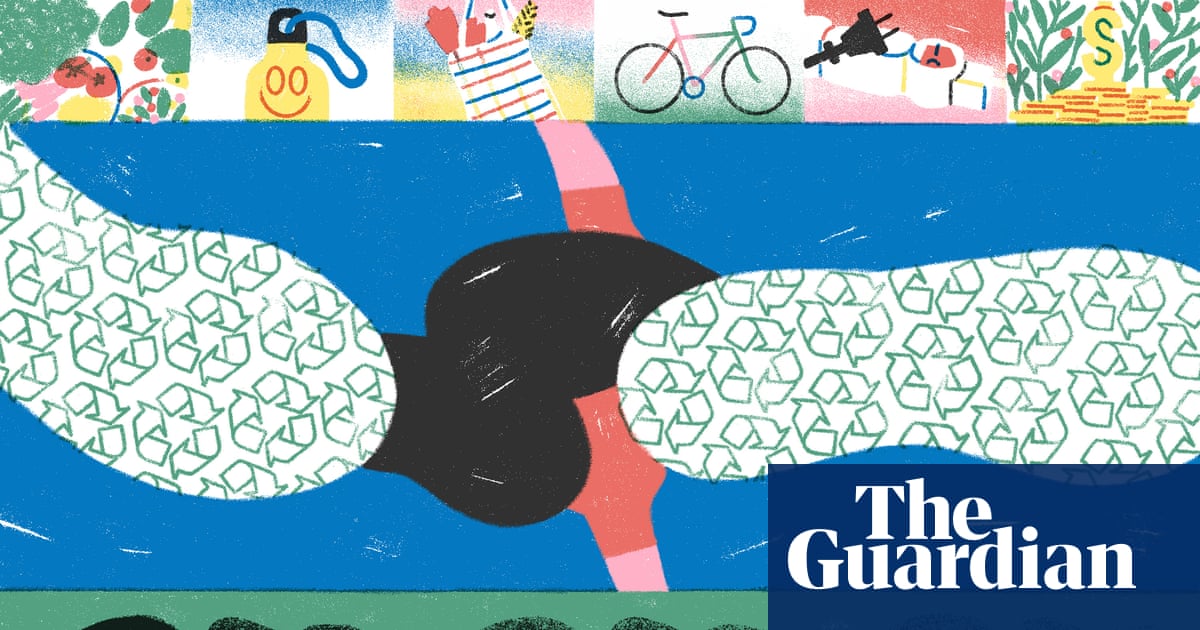
In response to the crisis, The Guardian presents a suite of practical behavioural recommendations aimed at individuals, from travel choices to consumption changes.
The paper lists actions including walking, biking or using transit instead of driving; reducing food waste; using carbon-footprint calculators to find the biggest impacts; and following the reduce, reuse, recycle hierarchy.
It also recommends longer-lived measures such as extending product lifespans, donating or recycling items rather than landfilling them, replacing single-use items (for example, water bottles and cutlery) with reusables, and cutting back on fast fashion by buying higher-quality or secondhand clothing.
Le Monde complements this by spotlighting a specific digital tool to measure and personalise such changes.
Coverage Differences
Tone
The Guardian’s coverage is prescriptive and urgent, offering a long list of actionable behaviours and explicitly counselling people not to be paralysed by perfectionism. Le Monde is more utilitarian in its approach: it highlights a specific carbon and water footprint calculator (from “Our Climate Actions”) that assesses lifestyle impacts in “about 10 minutes” and offers personalised suggestions — a tool-focused rather than a broad-behaviour checklist framing.
Media framing of climate
The Guardian explicitly highlights the role of political actors in weakening climate policy and acknowledges 'legitimate climate despair' while urging practical action.
The Guardian quotes experts saying, 'Experts acknowledge legitimate climate despair but stress that individuals still matter: corporations and governments are made up of people and action is needed at every level.'
Le Monde’s material in this set does not engage with political leadership or the emotional framing and instead concentrates on measurement, such as carbon and water footprints, and broader magazine content, offering a less political, more instrument-focused perspective.
Coverage Differences
Missed Information
The Guardian names political responsibility (naming ‘Donald Trump’) and addresses psychological responses to climate change (acknowledging ‘legitimate climate despair’). Le Monde’s coverage — as provided here — does not discuss political actors or emotional framing, focusing instead on tools and entertainment/features. That is a notable omission in Le Monde relative to The Guardian.
Le Monde vs The Guardian
The two outlets also differ in broader editorial focus.
Le Monde’s edition for Saturday, February 14 foregrounds non-news content alongside the climate tool, promoting Le Monde’s games section (mini 5x5 crosswords, daily crossword by Philippe Dupuis, word searches, sudoku, mahjong and a 2,000+ archive) and highlighting features such as 'The World Review 2026' and 'The Africas in maps / Africa Unmasked (40 maps to understand new rulers)', plus a piece on the life and work of Arthur Rimbaud.
The Guardian’s piece stays tightly on climate context and practical responses, without the magazine or puzzles framing apparent in Le Monde.
Coverage Differences
Unique Coverage
Le Monde includes lifestyle and cultural takeaways (games, crosswords, special features on geopolitics and Africa, and a Rimbaud piece) that are unrelated to the immediate climate-political emergency described by The Guardian. This difference shows Le Monde offering broader weekend-paper content, while The Guardian’s extract concentrates on climate urgency and behavioural advice.
Household climate responses
Both pieces present individual-level actions as part of the response.
The Guardian argues that small changes can influence broader change and warns against perfectionism.
Le Monde supplies a concrete assessment tool to identify where reductions are practical.
Together, the sources leave gaps: neither provides quantified estimates of how much the recommended household actions would cut emissions, nor detailed policy pathways to counter the political setbacks The Guardian names.
That ambiguity, and the different emphases of each outlet, should be borne in mind by readers seeking a full picture.
Coverage Differences
Narrative Gap
Both outlets support individual action but differ in emphasis: The Guardian stresses urgent, politically contextualised behavioural change and emotional guidance; Le Monde offers a practical measurement tool and broader weekend features. Crucially, neither source in the provided extracts gives quantified impacts of the suggested household measures or detailed policy solutions to the political interference The Guardian reports — an information gap across both outlets.