South America14 November, 20253 min read
Trump Signals Decision to Authorize Strikes in Venezuela as U.S. Deploys Warships and Airpower
Trump signaled a decision to authorize military strikes against Venezuela U.S. deployed warships and airpower near Venezuela, conducting strikes on suspected drug-smuggling boats

11 outlets told this the same way.
Outlets did split on Alexandre de Moraes Orders Eduardo Bolsonaro Arrest, Cancels Passport, Enforces Four-Year Sentence →
U.S. deliberations on Venezuela
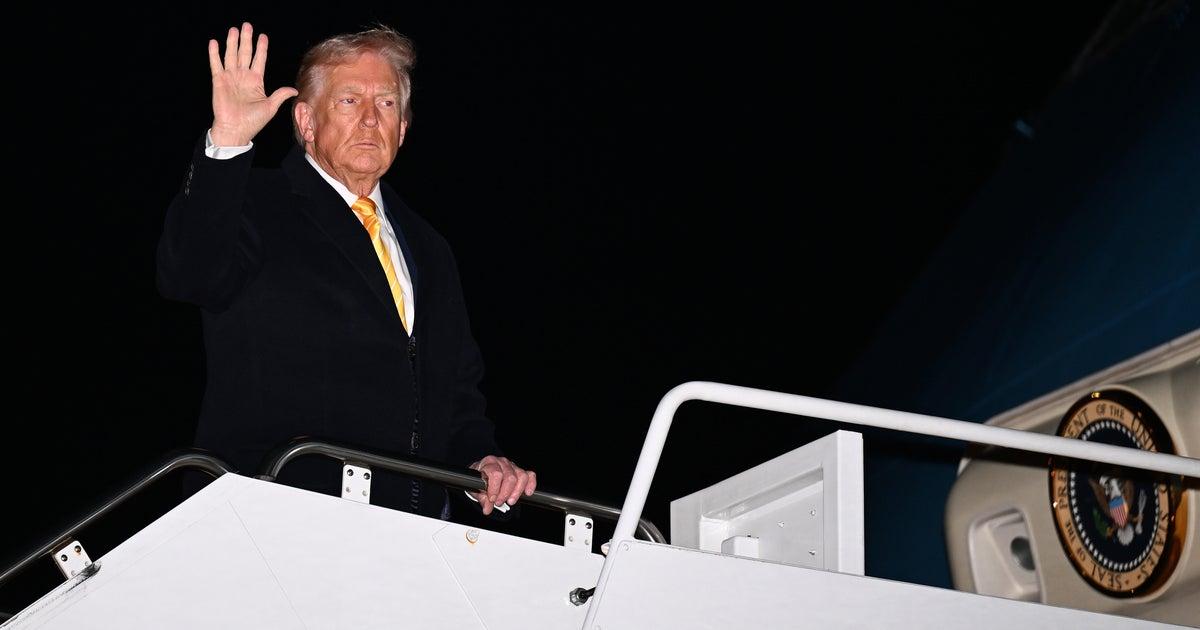
President Trump told reporters and aides he had 'sort of made up my mind' about possible military action in Venezuela after multiple days of White House deliberations. The remark was picked up across U.S. outlets and regional reporting, and officials and media say top advisers and military leaders presented a range of force options to the president during successive briefings. CBS News reported the remark and listed attendees including Vice President JD Vance and senior cabinet members, while The Washington Post echoed the 'sort of made up my mind' line and said high-level discussions examined a range of military options.
“On Nov. 14, 2025, President Trump told CBS News he had ‘sort of made up my mind’ about next steps on Venezuela but declined to give details, as senior administration and military officials met at the White House for at least a third consecutive day to weigh potential operations.”
CNN noted that Trump warned Venezuelan President Nicolás Maduro his 'days are numbered' and said strikes inside Venezuela are possible. Mainstream outlets framed the president's statement as an immediate signal of potential action and summarized the ongoing deliberations.
Southern Caribbean deployments
U.S. forces have concentrated a large naval and air presence in the southern Caribbean.
Reports list the carrier USS Gerald R. Ford and its strike group, F-35s deployed to Puerto Rico, multiple destroyers and cruisers, and amphibious ships carrying thousands of Marines.

The operation has been described as 'Operation Southern Spear' and involves roughly 15,000-16,000 personnel.
Media outlets provided detailed force numbers and platform descriptions: the Miami Herald detailed the carrier-centered tasking, amphibious forces and the 22nd MEU; lnginnorthernbc.ca noted the Ford group 'carrying more than 75 aircraft and roughly 5,000 personnel'; and CBS and CNN cited Pentagon movement of more than a dozen warships and about 15,000 troops.
This summary compiles the deployments and platforms cited across outlets.
U.S. maritime strikes controversy
U.S. officials say parts of the posture are justified as counter-narcotics operations. They have said U.S. forces struck suspected drug-smuggling vessels in recent months. Multiple outlets report strikes on roughly 21 vessels that Washington says killed about 80 people.
“The U.S. has not briefed allies on precise intentions and accuses Venezuelan President Nicolás Maduro of being complicit with drug-smuggling gangs...Over the past two months U.S. forces say they struck at least 21 vessels carrying drugs to the U.S., killing at least 80 people; some Western European governments say they lack direct evidence linking Maduro and France’s foreign minister, Jean-Noël Barrot, criticized the U.S. strikes as violating international law and the law of the sea.”
Some European officials and analysts question direct evidence tying Nicolás Maduro to trafficking. CBS and kurdistan24 report the strikes and casualty estimates, while Ilke Haber Ajansı notes U.S. pressure measures including a reported $50 million bounty.
Critics cite internal U.S. documents they say stretch legal rationales for the use of force. France's foreign minister is cited in CBS as criticizing the U.S. strikes as violating international law.
Venezuelan regional responses
Venezuela mobilized large numbers of troops and militias under a nationally announced plan, bolstered coastal defenses, and publicly denounced U.S. actions as a threat or a pretext for regime change. Regional capitals responded with changes in force posture, diplomatic alarm, and reported suspensions of intelligence sharing and diplomatic confrontations. Media outlets including the Miami Herald and Kurdistan24 described Venezuela's 'Plan Independencia 200' and nationwide military deployments.
İlke Haber Ajansı and CBS cited regional fallout, noting reactions from countries such as Colombia and Mexico and concerns about U.S. intentions. This paragraph focuses on the Venezuelan and regional political-military response.

Risks and legal concerns
Analysts and mainstream outlets warn that forcing Maduro from power would be risky and could trigger broader instability. Legal and diplomatic objections complicate U.S. options, and CNN and other outlets caution that the opposition is fractured while the armed forces could either resist or install another hardline leader.
“Experts warn that removing Maduro by force would be fraught: Venezuela’s opposition is fractured, the armed forces could resist or install another hardline Chavista leader, and rival civilian and military factions — plus criminal and insurgent groups — could plunge the country into chaos or civil war.”
İlke Haber Ajansı and CBS report that internal U.S. documents and some allies question the legal rationales and the lack of allied briefings. Observers argue any viable transition would be complex and likely require sustained political and diplomatic engagement beyond air or naval strikes.
