Full Analysis Summary
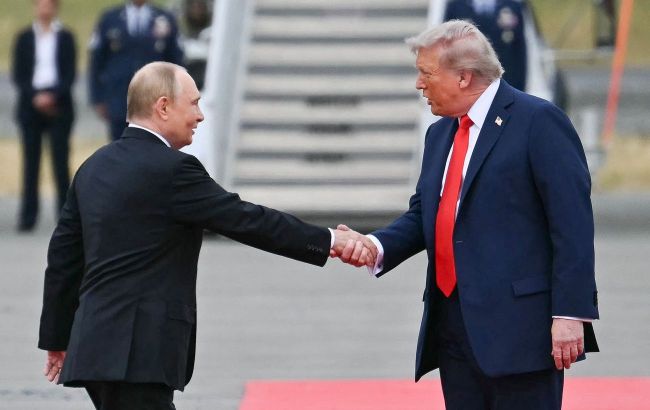
Trump's Potential Putin Meeting
Trump indicated there is still a strong possibility of meeting Vladimir Putin in Budapest despite last month’s cancellation.
He stressed his preference for the venue and left the door open if talks could be productive.
Anadolu Ajansı reports he expressed hope for a future meeting after a planned summit in Budapest was canceled last month.
The report added there is still a chance for the meeting to happen, preferably in Budapest.
Espreso.tv, citing the Guardian, notes Trump said there is a very good chance of such a meeting but currently sees no reason for it.
He also expressed a preference for holding any meeting with Putin in Budapest.
RBC-Ukraine emphasizes the conditionality, reporting Trump is open to a new meeting with Putin if it results in ending the conflict.
Coverage Differences
tone
Anadolu Ajansı (West Asian) presents a forward-looking, venue-focused optimism, noting Trump “expressed hope… [and] still a chance… preferably in Budapest.” Espreso.tv (Other) underscores Trump’s mixed signals, quoting a “very good chance” while he “currently sees no reason for it.” RBC-Ukraine (Local Western) frames the meeting as contingent on war-ending outcomes, stating Trump is open to a meeting only “if it results in ending the conflict.”
contradiction
Sources differ on Trump’s status: Anadolu Ajansı (West Asian) calls him “US President,” while Espreso.tv (Other) and RBC-Ukraine (Local Western) call him “former U.S. President,” reflecting a factual inconsistency in how outlets describe him.
Budapest Summit Cancellation Reasons
Accounts differ on why the Budapest summit was canceled and how feasible a new meeting might be.
Anadolu Ajansı reports the cancellation was linked to Russia’s reluctance to stop certain actions.
It also states that Trump felt the situation had taken a significant toll on both countries.
Additionally, Trump initially did not want the Budapest meeting because he doubted it would produce significant results.
RBC-Ukraine attributes the delay to Russia’s refusal to moderate its maximalist demands.
They add that Trump was reluctant to engage unless a genuine agreement was possible.
Espreso.tv focuses more on optics and logistics, emphasizing Trump’s preference for Budapest.
This source highlights the mixed message that there is a very good chance for the meeting while Trump currently sees no reason for it.
Coverage Differences
narrative
Anadolu Ajansı (West Asian) emphasizes Russia’s behavior and bilateral costs (“reluctance to stop certain actions” and “significant toll on both countries”) and Trump’s earlier skepticism about results. RBC-Ukraine (Local Western) frames the impasse as Russia’s “maximalist demands” and portrays Trump’s engagement as contingent on a “genuine agreement.” Espreso.tv (Other) largely omits the detailed cause of cancellation and instead highlights venue preference and the paradox of a “very good chance” with “no reason for it.”
missed information
Espreso.tv (Other) does not detail why the earlier summit was canceled, unlike Anadolu Ajansı (West Asian) and RBC-Ukraine (Local Western), which give concrete reasons tied to Russia’s actions and demands.
Energy Politics and Sanctions
Energy politics and sanctions loom over the prospective summit.
Espreso.tv reports that, when pressed on Hungary’s purchases of Russian oil, Trump first praised Orbán as a “very good leader.”
Trump then indicated that the U.S. might consider exempting Hungary from sanctions on Russian oil and gas, citing the country’s landlocked constraints.
By contrast, RBC-Ukraine highlights a harder line, noting that on October 23, Trump imposed sanctions on Russian oil companies Rosneft and Lukoil.
The US Treasury also urged Moscow to agree to a ceasefire.
Anadolu Ajansı focuses on the meeting dynamics with Orbán and the Budapest venue, without detailing sanctions policy.
Coverage Differences
contradiction
There is a policy tension between Espreso.tv’s (Other) report that Trump “might consider exempting Hungary from sanctions on Russian oil and gas,” and RBC-Ukraine’s (Local Western) report of Trump’s prior imposition of sanctions on Rosneft and Lukoil, signaling differing emphases—potential exemptions versus punitive measures.
missed information
Anadolu Ajansı (West Asian) does not discuss sanctions or energy exemptions, unlike Espreso.tv (Other) and RBC-Ukraine (Local Western), which foreground sanctions policy and energy constraints.
Budapest Summit Negotiation Views
Regional stakeholders’ positions influence the feasibility and objectives of a Budapest summit.
RBC-Ukraine reports that the Kremlin is not opposed to negotiations, although no summit date has been set.
Ukraine is willing to support a Trump-Putin summit in Budapest, provided it results in a ceasefire and the end of the war.
Anadolu Ajansı highlights Trump’s perspective on the costs and incentives, noting the situation has taken a significant toll on both countries.
Trump also shows a preference for Budapest as the summit location.
Espreso.tv focuses on Trump-Orbán interactions and venue preference, noting Trump expressed a preference for holding any meeting with Putin in Budapest.
Coverage Differences
narrative
RBC-Ukraine (Local Western) centers the war context and third-party stances (Kremlin openness, Ukraine’s conditional support), while Anadolu Ajansı (West Asian) emphasizes Trump’s framing of mutual costs and venue preference. Espreso.tv (Other) emphasizes optics and the Budapest setting tied to Orbán, not the Ukrainian or Kremlin conditions.
Divergent Views on Budapest Meeting
Overall, the coverage converges on a plausible but conditional Budapest meeting.
However, the sources diverge on drivers, tone, and priorities.
Espreso.tv stresses Trump’s ambiguity, noting there is a “very good chance” of the meeting yet “no reason for it.”
The same source also highlights praise for Orbán and possible energy exemptions for Hungary.
Anadolu Ajansı highlights Trump’s initial skepticism about the Budapest meeting’s utility.
It attributes the prior cancellation to Russia’s reluctance to stop certain actions.
RBC-Ukraine underscores conditions tied to ending the war and Trump’s reluctance to engage unless a genuine agreement is possible.
This source also notes the absence of a date and prior sanctions against major Russian oil firms.
Coverage Differences
tone
Espreso.tv (Other) portrays ambivalence and political optics (Orbán praise, exemptions), Anadolu Ajansı (West Asian) emphasizes pragmatic skepticism and bilateral costs, and RBC-Ukraine (Local Western) foregrounds conflict-termination criteria and sanctions.
missed information
Only RBC-Ukraine (Local Western) mentions prior sanctions on Rosneft and Lukoil and the US Treasury urging a ceasefire, which are absent from Anadolu Ajansı (West Asian) and Espreso.tv (Other).