USA03 February, 20263 min read
Trump Signs Consolidated Appropriations Act Reopening U.S. Government
This article is an automated aggregation of coverage from news outlets. Our editorials offer in-depth analysis curated by the NewsCord team.
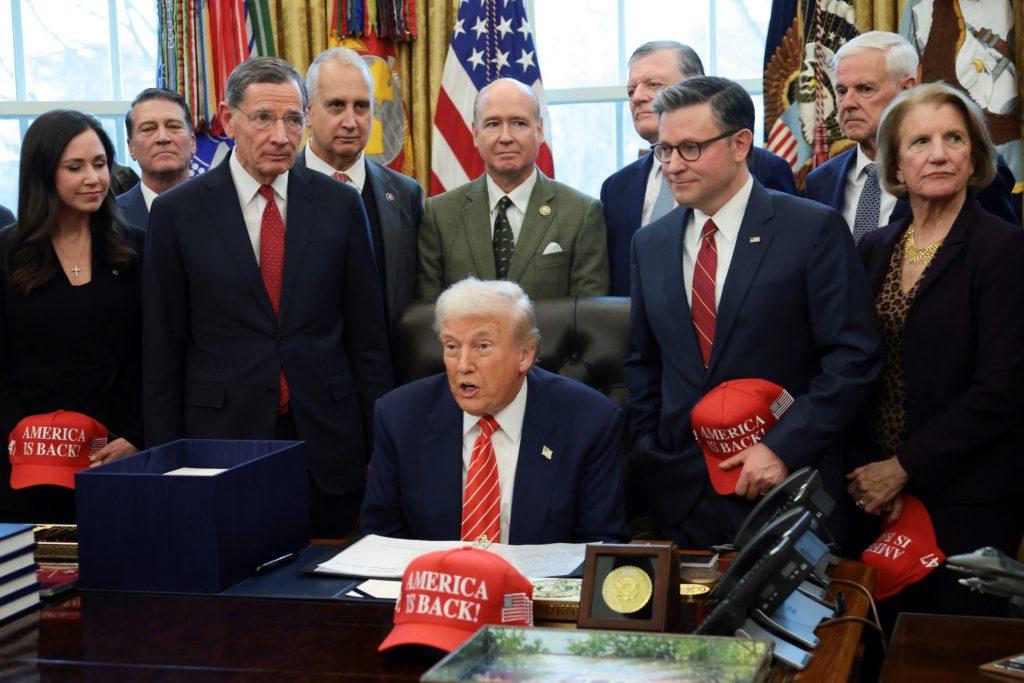
President Trump signed the spending package, ending the partial government shutdown. House passed the funding bill narrowly, 217-214, after Senate approval.
9 outlets told this the same way.
Government funding and reopening
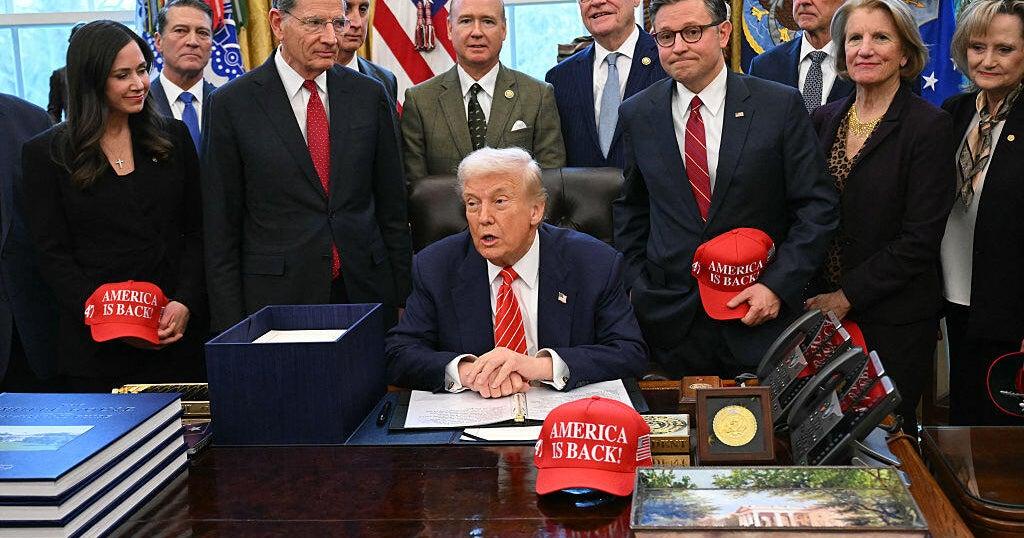
President Trump signed H.R. 7148, the Consolidated Appropriations Act of 2026, officially reopening the federal government after a short, three-day partial shutdown.
“President Trump signed H.R. 7148, the Consolidated Appropriations Act, 2026, ending a partial federal shutdown that began the previous Saturday.”
The House approved the package by a narrow 217–214 margin, and the bill funds most agencies through September while funding the Department of Homeland Security only through Feb. 13 to allow further talks on immigration-enforcement changes.
An OMB memo from Director Russ Vought instructed agencies to reopen, told furloughed employees they may resume remote work immediately, and directed staff to return to duty stations on Feb. 4.
The bill’s quick passage followed a Senate-approved measure and was sent promptly to the president, who moved to sign it.
DHS funding and reforms
The package funds core departments — Pentagon, State, Education and Treasury — through September.
It provides only short-term funding for DHS through Feb. 13, creating a looming deadline that could trigger another partial shutdown unless lawmakers agree on immigration and enforcement reforms.

Democrats have publicly said they will press for changes at ICE and CBP, including limits on roving patrols, stricter warrant rules, use-of-force parity, and body cameras.
Senate Democrats plan a detailed DHS-reform proposal, and Republicans signaled some willingness on measures but warned that DHS funding could remain a flashpoint.
The short DHS extension was explicitly designed to give Congress additional time to debate those reforms.
Media accounts of vote
Scripps News reported that 21 Democrats crossed party lines to vote for the bill while about 21 Republicans opposed it, highlighting bipartisan dissent that cut across the parties.
“Twenty-one Democrats crossed party lines to vote for the bill while about 21 Republicans opposed it.”
UPI reported that no House Democrats supported the measure and that Rep. Thomas Massie (R-Ky.) was the lone Republican opposed, presenting a different accounting of party-line support.
CBS characterized the House approval as a largely party-line vote with several cross-aisle defections, indicating both partisan alignment and specific defections.
Those differences reflect how outlets prioritized and interpreted roll-call dynamics and who counted as supporting or opposing at different procedural moments.
Media framing of president's role
Beyond the procedural and policy details, outlets differ in what they spotlight about the president’s role and surrounding context. WBZ highlights Trump’s public urging to Republicans and his Truth Social post that he would 'sign it into Law, IMMEDIATELY,' while CBS focuses on administrative follow-up via the OMB memo instructing agencies to reopen and return to work. CNN places the government reopening within a broader White House news summary that also includes Trump’s meeting with Colombian President Gustavo Petro and U.S.–Iran tensions, showing that some outlets weave the signing into wider national-security and diplomatic coverage rather than treating it as a standalone funding story.
Appropriations coverage and deadline
One source—the CNBC snippet included in the provided material—did not offer substantive reporting on the signing; it consisted mainly of boilerplate copyright and data-disclaimer language and was incomplete, illustrating that outlet coverage ranged from full reporting to non-substantive placeholders.
“If lawmakers cannot agree on DHS reforms by Feb. 13, another partial shutdown remains possible.”
All sources that provided substantive details agree on the central facts: the president signed the consolidated appropriations measure, DHS funding was extended only briefly to Feb. 13, and that deadline creates a realistic possibility of another partial shutdown if Congress does not reach an agreement.