Britain16 December, 20252 min read
Trump Sues BBC for $10 Billion Over Edited January 6 Speech
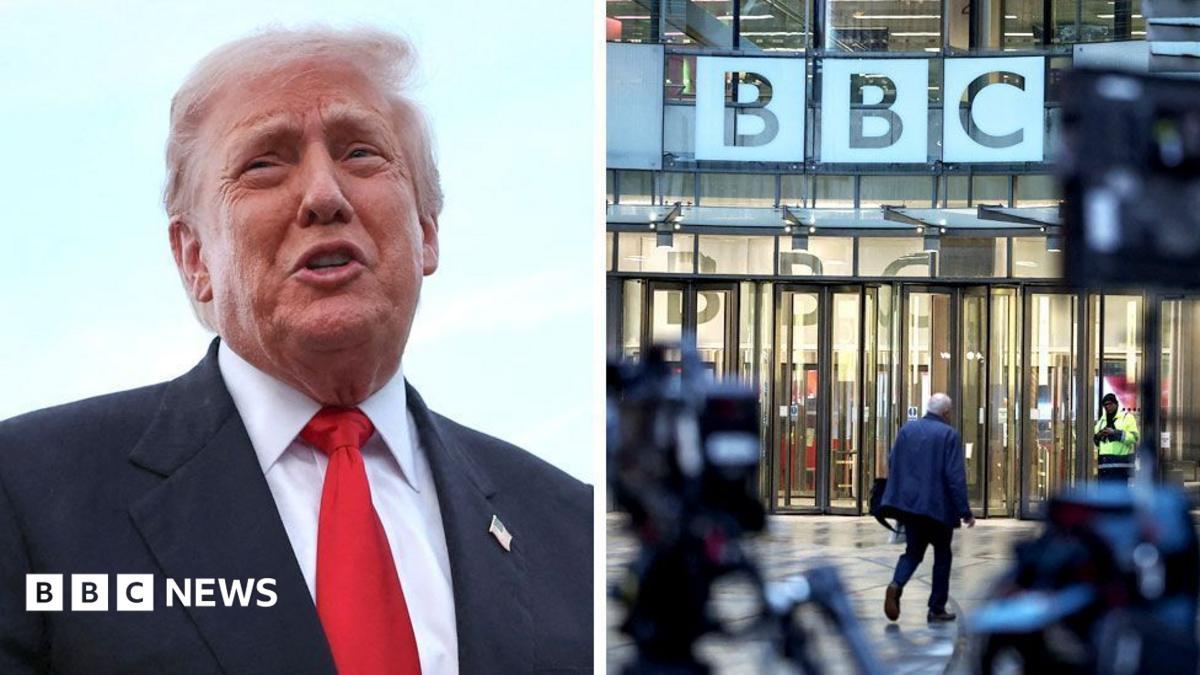
Donald Trump sued the BBC in Florida seeking $10 billion ($5bn defamation, $5bn trade-practices) Lawsuit alleges Panorama deceptively spliced his Jan. 6 remarks, omitting peaceful appeals, implying he urged violence

65 outlets told this the same way.
Outlets did split on UK Police Charge Teddy Young With Spying For Foreign Power, Royal Navy Member →
Trump sues BBC documentary
Former President Donald Trump filed a 33-page lawsuit in the U.S. District Court for the Southern District of Florida on Dec. 15 seeking at least $10 billion in damages.
“Donald Trump sued the BBC in Florida for $10 billion, accusing a Panorama documentary of misediting his Jan. 6 speech to make him sound like he urged violence; the BBC apologized and its top executives resigned but denies defamation and says it will defend the case, while legal experts note jurisdictional and timing hurdles.”
The complaint seeks $5 billion on each of two counts alleging defamation and violations of Florida's Deceptive and Unfair Trade Practices Act.

The suit targets a BBC Panorama documentary about his Jan. 6, 2021 speech.
The complaint accuses the BBC's program, "Trump: A Second Chance?", of deceptively editing clips to create a false impression that he urged supporters to violence.
The filing demands a jury trial and characterizes the segment as an attempt to interfere in the 2024 election.
Trump's team has framed the suit as part of a broader pattern of legal action against major media organizations.

Alleged editorial splicing
The core allegation centers on editorial splicing: Trump's complaint says the Panorama episode combined separate parts of his Jan. 6 speech that were spoken nearly an hour apart.
The complaint says this editing created the impression he said in sequence "We're going to walk down to the Capitol ... and we fight. We fight like hell," while omitting nearby passages urging peaceful protest.

Coverage across outlets repeats that claim, describing the footage as "spliced together," "stitched," or "doctored," and several reports say the contested clip ran only briefly within a longer programme.
BBC apology and fallout
The BBC has publicly acknowledged an editorial error and issued an apology while saying it will defend the legal challenge. Internal and external fallout has been steep: several senior BBC figures resigned after the controversy, and the corporation said it will not rebroadcast the programme in its current form. Coverage stresses both the apology and the BBC's insistence that there is no legal basis for defamation.
“The BBC has apologized, called the edit an 'error of judgment,' and its top executive and head of news resigned; the broadcaster says it will defend the lawsuit and denies defamation.”
Defamation proof and jurisdiction
Legal analysts cited in reporting say Trump faces steep hurdles under U.S. defamation law because, as a public figure, he must prove actual malice — that the BBC knew the broadcast was false or acted recklessly. Some observers argue U.S. courts may have limited jurisdiction since the Panorama episode was not broadcast in the United States. Trump's complaint tries to meet these challenges by pointing to online availability and business ties, including BritBox, bbc.com and alleged distribution, to establish U.S. contacts.
Media and legal context
The filing sits within a broader political and media context. Multiple outlets note that Trump has pursued other high‑profile suits or settlements with U.S. media and that his team framed the BBC edit as election interference. He has also publicly suggested the possibility of AI manipulation.
“Former president Donald Trump has sued the BBC in federal court in Miami, alleging a Panorama documentary improperly edited his January 6, 2021 speech... The BBC has apologized, admitted an error of judgment... but it says it will defend the lawsuit.”
Coverage tone diverges by source type: international and mainstream outlets (Al Jazeera, AP, CNN) focus on legal mechanics and public reaction, conservative or alternative outlets (Washington Examiner, LiveNOW from FOX) emphasize alleged bias and malice, and some regional outlets (Dhaka Tribune, Khaama Press) highlight the accusation that the edit was intended to influence the 2024 vote. Observers say the case could test cross‑border defamation law and editorial standards in the streaming era.