USA30 January, 20262 min read
Trump Sues IRS and Treasury Department for $10 Billion, Accuses Agencies of Leaking His Tax Returns
Trump, his sons Donald Jr. and Eric, and the Trump Organization sued in Miami federal court. They seek $10 billion, alleging IRS and Treasury failed to stop 2019–2020 tax-return disclosures.

44 outlets told this the same way.
Outlets did split on Trump Interrupted by Protesters at San Antonio Rally for Ken Paxton →
Trump sues over tax leak
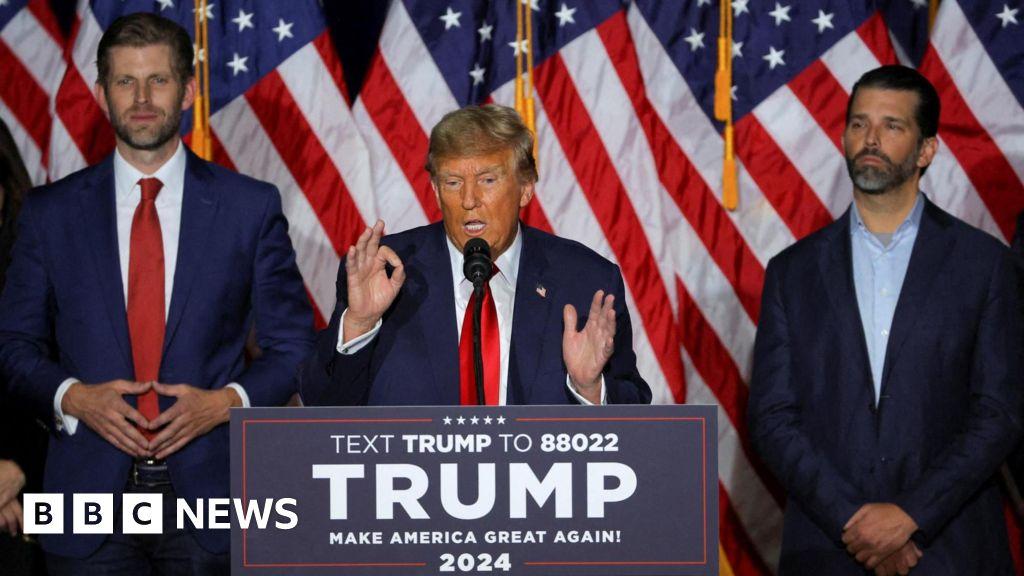
Former President Donald Trump, joined by his sons Donald Jr. and Eric and the Trump Organization, filed a federal civil suit in Miami federal court on Jan. 29 seeking $10 billion from the Internal Revenue Service and the U.S. Treasury Department.
“President Donald Trump sued the IRS and Treasury Department in Miami federal court Thursday for $10 billion, alleging the agencies failed to prevent a former IRS contractor, Charles Littlejohn, from leaking his tax returns to media outlets in 2019 and 2020.”
The complaint alleges that the agencies failed to prevent a leak of his confidential tax returns in 2019–2020 by former IRS contractor Charles Littlejohn and that those disclosures caused "significant and irreparable" reputational and financial harm.

The filing names The Times and ProPublica among outlets that reported on material allegedly obtained from the breach, and the plaintiffs say punitive damages may be sought for willful misconduct or gross negligence.
Tax-records leak overview
The complaint centers on former IRS contractor Charles "Chaz" Littlejohn, whom prosecutors say unlawfully accessed and disclosed tax-return information. Multiple outlets report Littlejohn pleaded guilty and received a multi-year sentence.
Reporting across West Asian, Western mainstream, and alternative outlets says he admitted providing Trump-related material to The New York Times and that he stole records for thousands of other wealthy taxpayers. Coverage consistently cites Littlejohn's conviction and criminal consequences as the factual underpinning for the civil claim.
Suit over leaked tax returns
Legally, the plaintiffs say the Treasury and IRS breached statutory duties and failed to implement adequate technical safeguards, employee screening, monitoring and internal controls that would have prevented the unauthorized disclosures. The complaint alleges agencies did not take mandatory precautions and accuses them of gross negligence, seeking compensatory and possible punitive damages for willful misconduct. Some outlets note the suit stops short of suing the New York Times or ProPublica directly, instead focusing on government failures to protect confidential tax returns.
“Plaintiffs include Trump, his adult sons Donald Jr. and Eric, and the Trump Organization; they say the leaks caused ‘significant and irreparable harm’ to their reputations and finances and may seek punitive damages for willful misconduct or gross negligence.”
Presidential lawsuit context
Observers and outlets place the lawsuit in a broader political and legal context. Many note it is unusual for a sitting president to sue agencies within the executive branch and that the filing follows a string of high‑value lawsuits Trump has filed since his 2024 re‑election against media and other institutions.
The Treasury has taken administrative steps in response to the underlying breach, cancelling Booz Allen contracts. The White House and supporters have framed the complaint as a defense of taxpayer privacy and an attack on what they call institutional failures at the IRS.
Legal and fiscal consequences
The outcome and wider consequences are uncertain and debated. Some outlets note that, if successful, a multi‑billion award would create significant financial exposure and could ultimately fall on U.S. taxpayers. Others characterize the filing as part of a political strategy.
“If successful, the case could require a large federal payout, potentially making U.S. taxpayers liable.”
Several reports noted there was no immediate comment from the Treasury or the IRS at the time of filing. Many emphasize the case is developing and is likely to prompt further legal and factual disputes over what safeguards were in place and what damages, if any, are recoverable.