USA13 January, 20262 min read
Trump Threatens 25% Tariffs On Countries Trading With Iran
This article is an automated aggregation of coverage from news outlets. Our editorials offer in-depth analysis curated by the NewsCord team.
Trump imposed an immediate 25% tariff on countries doing business with Iran Announcement provided no legal framework or clarity on what 'doing business' means
45 outlets told this the same way.
Outlets did split on Trump Interrupted by Protesters at San Antonio Rally for Ken Paxton →
Tariff threat against Iran
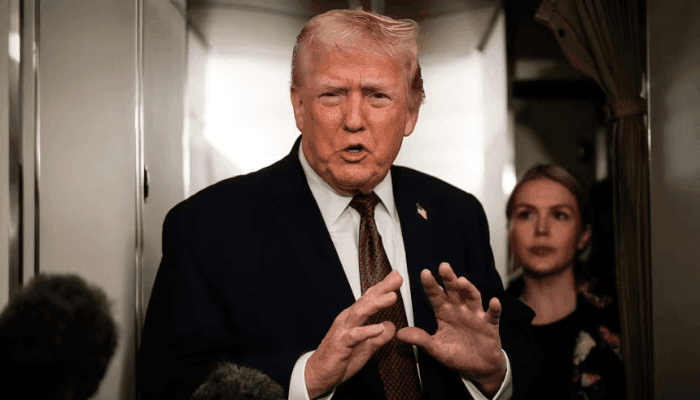
Former President Donald Trump announced on social media that any country 'doing business' with Iran would face a 25% U.S. tariff effective immediately, framing the move as pressure on Tehran amid a violent domestic crackdown. Multiple reports note the announcement was posted on Truth Social and described as 'final and conclusive', while the White House offered little supporting documentation.
“US President Donald Trump has threatened to impose an immediate 25% tariff on countries that continue to trade with Iran, saying the measure is intended to pressure Tehran over its lethal crackdown on anti-government protests that he says has killed nearly 600 people.”
Outlets across regions picked up the claim, describing it either as a threat or as an imposition. They emphasized the lack of implementation details and Trump's stated aim of punishing Iran for the crackdown on protesters.

Legal and implementation gaps
Almost every source highlighted a major legal and implementation gap: the announcement carried no published statute, executive order text, or enforcement guidance. Regional outlets noted practical ambiguities about who pays the duty, which transactions count as "doing business", and how exemptions would be granted. Analysts and several reports flagged prior use of emergency trade powers and ongoing legal challenges, noting that invoking broad executive authority to impose sweeping tariffs is contested and could face court review.
Tariff effects on trade
Reports agree the tariff would hit Iran's major trading partners hardest — especially China, India, the UAE, Turkey and Iraq — and could be layered on top of existing U.S. duties to create very high effective rates for some exporters. Analysts and regional coverage warn this could sharply raise costs for exporters, disrupt supply chains, and complicate strategic projects such as India’s Chabahar port link. Several sources quantify stacking effects, citing combined U.S. duties of roughly 45% for some Chinese goods up to 75% for certain Indian exports when layered on existing levies.
“Iran’s economy depends heavily on exports to China, Türkiye, Iraq, the UAE and India. China is by far Iran’s largest partner... Beijing strongly condemned the announcement.”
Iran protests and crackdown
The announcement landed squarely in the middle of a wider political and humanitarian crisis in Iran. Sources differ sharply on the size and character of that crisis. Coverage universally situates the tariff threat against mass anti-government protests and a harsh government crackdown.
Casualty and arrest figures vary widely between outlets, ranging from HRANA’s nearly 500 verified deaths reported in cotidianul.md to counts of hundreds or more reported by BusinessToday Malaysia and France 24, and to Middle East Eye’s far higher suspected tolls and thousands of arrests. Observers also point to internet shutdowns and state pro-government rallies that complicate independent verification.
International reactions and risks
International reactions were immediate and varied: Beijing condemned the move as coercive and warned against 'tariff wars'; the EU and some European outlets discussed sanctions and procedural responses, and analysts cautioned about trade and geopolitical fallout. Several sources reported that U.S. officials publicly kept military options on the table while the administration stated that diplomacy remained the first option. Commentators warned this could complicate a fragile U.S.–China trade truce, prompt legal challenges at home, and risk wider regional escalation if Tehran or its partners retaliate economically or politically.
“China’s embassy in Washington condemned the move on X as coercive, ineffective, an unlawful use of unilateral sanctions and long‑arm jurisdiction, and warned that indiscriminate tariffs and trade wars have no winners.”