Full Analysis Summary
President Trump: Warning and Build-up
President Trump warned that "bad things will happen" if Iran does not reach a deal, saying "over the next, probably, ten days" and that "10–15 days is 'enough time'".
World leaders and diplomats are watching for a breakthrough or escalation.
Washington has increased its military posture in the region by moving additional forces toward the Middle East, including the aircraft carrier USS Gerald R. Ford.
Officials say the Ford increases U.S. capacity to strike if ordered.
Local reporting notes the Ford's presence near the Mediterranean.
Those reports emphasize that, despite the build-up, President Trump has so far refrained from authorizing military action.
Coverage Differences
Tone
Associated Press (Western Mainstream) reports direct, forceful quotes from President Trump — “bad things will happen” and specific timing — framing the president’s remarks as a public warning. Harrison Daily (Local Western) focuses less on the quotes and more on the observable military posture, noting deployment of the USS Gerald R. Ford and stressing that Trump has not yet ordered strikes. AP thus foregrounds rhetoric and diplomatic pressure while Harrison Daily foregrounds deployments and the absence of an authorization for force.
White House and Israel warnings
The White House warnings were echoed by Israel's leadership.
Israeli Prime Minister Benjamin Netanyahu publicly pressed for tougher measures, warned Iran not to attack, and vowed an unprecedented response if Tehran strikes.
Diplomats describe stalled indirect talks with little progress, and sources report Iran refuses to address U.S. and Israeli demands on its missile program and its regional ties.
These statements come against a backdrop of increased regional military activity and strategic signaling.
Coverage Differences
Narrative Framing
Associated Press (Western Mainstream) pairs quotes from U.S. and Israeli leaders — including Prime Minister Netanyahu’s push for tougher measures — with reporting on stalled diplomacy and Iranian refusal to discuss missiles and regional ties. Harrison Daily does not reproduce Netanyahu’s statements or the diplomacy details in the available excerpt and instead concentrates on U.S. force posture, so AP gives a broader diplomatic and political frame while Harrison Daily narrows attention to military movements.
U.S. and regional maneuvers
Washington’s military movements are paired in the reporting with allied and regional maneuvers.
The AP documents joint Iranian-Russian drills and Iran’s live-fire exercises in the Strait of Hormuz, strategic demonstrations that heighten the risk calculus for Washington and its partners.
Local reporting reiterates the Ford’s proximity to the Mediterranean as one visible sign of U.S. readiness, which analysts say would increase strike capability if the president orders action.
Coverage Differences
Unique Coverage
Associated Press (Western Mainstream) includes detailed reporting on Iranian-Russian joint drills and Iran’s live-fire exercises in the Strait of Hormuz, giving context to Tehran’s military signaling. Harrison Daily (Local Western) highlights the U.S. carrier’s location and the U.S. capability to strike if ordered but in the provided excerpt does not report on Iran’s exercises; this means AP supplies regional operational detail that Harrison Daily omits in its excerpt.
Tehran's response and vulnerability
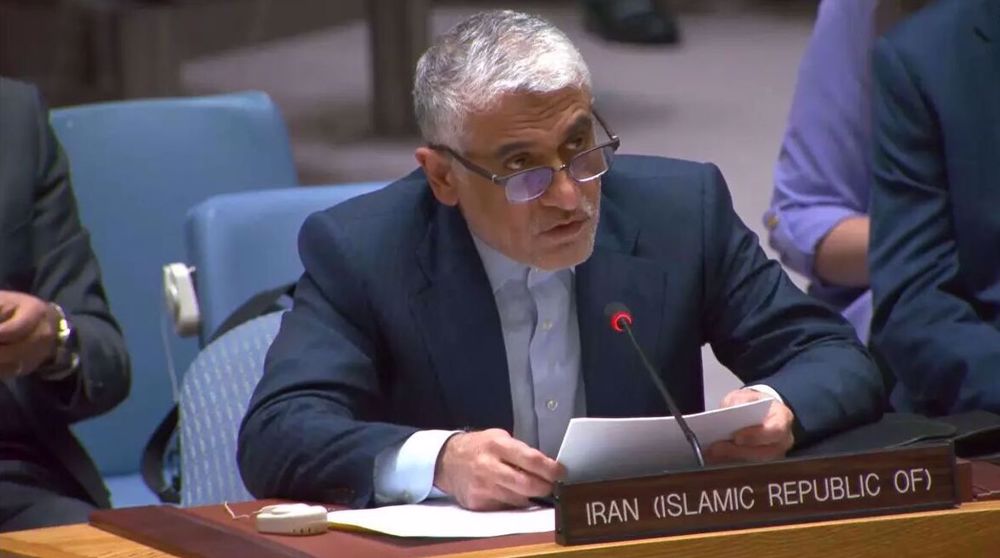
As reported by the AP, Iran’s U.N. ambassador said Tehran "does not seek or will not initiate war" but would respond "decisively and proportionately" to U.S. aggression.
The report says Tehran claims it has not been enriching uranium since last year’s strikes and that it has barred international inspectors.
AP also noted Iran’s increased vulnerability following strikes on its nuclear and military sites and domestic unrest linked to commemorations for slain protesters.
Coverage Differences
Tone
Associated Press (Western Mainstream) emphasizes Iran’s stated restraint and its warnings of proportionate retaliation, while also reporting vulnerabilities and domestic unrest; Harrison Daily’s excerpt does not include Tehran’s statements or the inspector/enrichment claims in the available text, so AP alone establishes Iran’s declared posture and internal strains in this set of excerpts.
Rising tensions and responses
Overall, the two pieces together show a mix of pointed rhetorical warning, visible military repositioning and a fragile diplomatic track.
The Associated Press supplies fuller diplomatic context, quotes from U.S. and Israeli leaders, and reporting on Iranian drills and internal strains.
Harrison Daily supplies a concise local-focused note on U.S. force posture and the fact that President Trump has not yet ordered military strikes.
The sources are consistent that tensions are rising but leave open whether President Trump will authorize kinetic action, with reporting showing heightened capability and public warnings while also stating that no authorization has been given so far.
Coverage Differences
Contradiction
There is no direct factual contradiction in these excerpts: both AP (Western Mainstream) and Harrison Daily (Local Western) report increased U.S. forces and U.S. warnings. The practical difference is emphasis: AP includes diplomatic exchanges, Iranian drills, and direct quotes from leaders, while Harrison Daily focuses on the deployment and notes that Trump "has so far refrained from authorizing military action." That difference in emphasis could shape reader perception of imminence and the sources’ tones.