Iran-Israel05 January, 20263 min read
Trump Threatens Military Intervention Against Iran
Trump threatened military intervention if Iran shoots and kills peaceful protesters Nationwide protests over a collapsing rial and soaring inflation spread across most provinces

53 outlets told this the same way.
Outlets did split on U.S. Intercepts Iran Message Activating Sleeper Cells After U.S.-Israel Strike Kills Khamenei →
Trump warns on Iran unrest
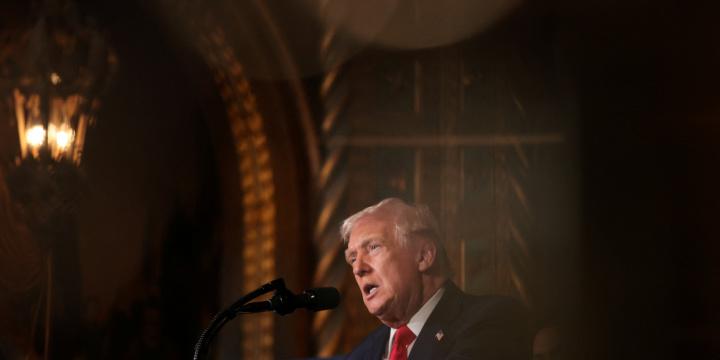
Former U.S. president Donald Trump publicly warned on social media that the United States would intervene if Iranian authorities shoot and violently kill peaceful protesters, saying "we are locked and loaded and ready to go" and that the U.S. would "come to their rescue." The warning came as nationwide protests erupted over a sharp depreciation of the rial, soaring inflation and economic hardship.
“State TV reports a volunteer member of Iran’s security forces was killed overnight in protests in Kouhdasht, and at least six civilians have died in clashes with security forces elsewhere.”
France 24 reported state TV saying at least six civilians and a volunteer security force member were killed in clashes, while Anadolu Ajansı described protests beginning at Tehran’s Grand Bazaar amid worsening economic conditions. Several outlets noted the unrest has been large and rapidly spreading amid deep economic pain in Iran.

Threats and media coverage
Trump's language ranged from pledges to "come to their rescue" and being "locked and loaded". Earlier reports quoted more expansive threats that he would "knock the hell out of" Iran if it renewed nuclear or military activities. Several outlets emphasized the ambiguity of his remarks: The Guardian and ABC said he "did not specify what action he meant," while Middle East Eye and CNN highlighted the bellicose phrasing, such as "knock the hell out of," when discussing potential strikes on nuclear sites.
Iranian diplomatic response
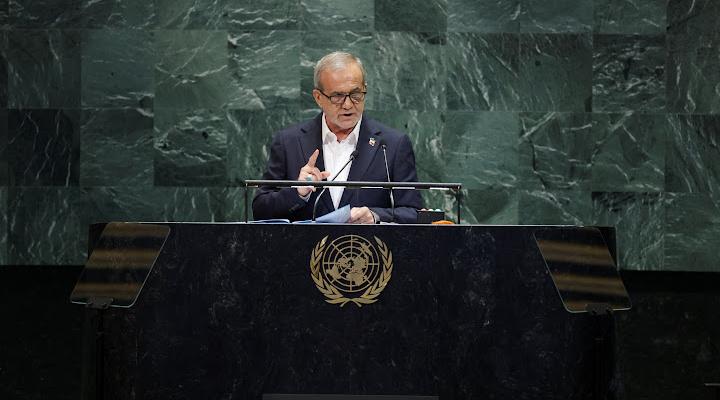
Iranian officials and diplomats responded with sharp warnings and diplomatic counter-moves. Al Jazeera quoted health minister-turned-president Masoud Pezeshkian saying any aggression would be met with a "harsh and discouraging" response, and Iran's U.N. ambassador Amir Saeid Iravani formally asked the UN to condemn "foreign rhetoric" and to hold Washington responsible "for any consequences," according to K8 News.
“Pezeshkian warned that Iran would respond 'severely' to any acts of aggression.”
Senior adviser Ali Shamkhani rejected the U.S. warning as a "red line" and said interference would have "regrettable consequences." Parliament Speaker Mohammad Bagher Ghalibaf said U.S. bases and forces would be legitimate targets if Washington acted.
U.S. reactions and analysis
Reactions inside the United States were mixed and highlighted legal and political constraints. TRT World reported that Republican Representatives Thomas Massie and Marjorie Taylor Greene publicly criticized reports of threats, with Massie arguing that strikes would need congressional authorization and Greene saying the stance betrayed a voter mandate. Jewish Insider reported that voices such as Ben Shapiro cautioned against military intervention and warned of the risks of threats the U.S. might not follow through on.
Analysts on PBS emphasized uncertainty about the administration's intentions and warned that empty threats could recreate past 'red line' failures. UPI also noted earlier moves to posture U.S. warplanes near Iranian sites in June, underscoring how past unilateral actions can make policy unpredictable.
Media reactions to Tehran warnings
Analysts and commentators stressed risks of escalation and the persistent ambiguity between rhetoric and action. Newsweek and CNN reported that Tehran warned any foreign aggression would be met with a 'harsh and discouraging' response.
“Tehran warned that any foreign aggression would be met with a 'harsh and discouraging' response.”
Iran International noted scholars who viewed President Trump's 'locked and loaded' comment as an explicit threat but cautioned that verbal threats do not necessarily lead to military strikes, highlighting a gap between rhetoric and the political decision to launch a direct attack. Other outlets flagged unconfirmed or politically charged claims — for example, National News Desk noted some reports remain unverified — underscoring how competing outlets present both potential consequences and considerable uncertainty.