Iran-Israel03 January, 20263 min read
Trump Threatens Military Intervention If Iran Kills Peaceful Protesters
Trump warned on Truth Social the U.S. would intervene if Iran kills peaceful protesters. Iran's leaders condemned Trump's threat and warned U.S. interference would be met with retaliation.

45 outlets told this the same way.
Outlets did split on U.S. Intercepts Iran Message Activating Sleeper Cells After U.S.-Israel Strike Kills Khamenei →
Trump warning on Iran
Former U.S. President Donald Trump posted on Truth Social that the United States would 'come to [Iran's] rescue' and was 'locked and loaded' to intervene if Iranian security forces 'shoot' or 'violently kill[] peaceful protesters'.
“President Donald Trump used an early-morning Truth Social post to warn that the United States would intervene if Iran ‘shot and violently kills peaceful protesters,’ calling U.S. forces ‘locked and loaded.’”
Major U.S. outlets described the message as an explicit threat of military action amid nationwide unrest in Iran.

CNN reported the post as an early-morning Truth Social message warning the U.S. would intervene if Iran 'shot and violently kills peaceful protesters'.
NBC News said Trump vowed on Truth Social that the United States would 'come to [Iran's] rescue' and was 'locked and loaded' to intervene.
Middle East Eye similarly quoted Trump writing that the U.S. could intervene to 'rescue' Iranians and that 'we are locked and loaded and ready to go'.
Democracy Now! also reproduced Trump’s formulation, quoting him: 'If Iran shoots and violently kills peaceful protesters... we are locked and loaded and ready to go'.
Anti-government protests overview
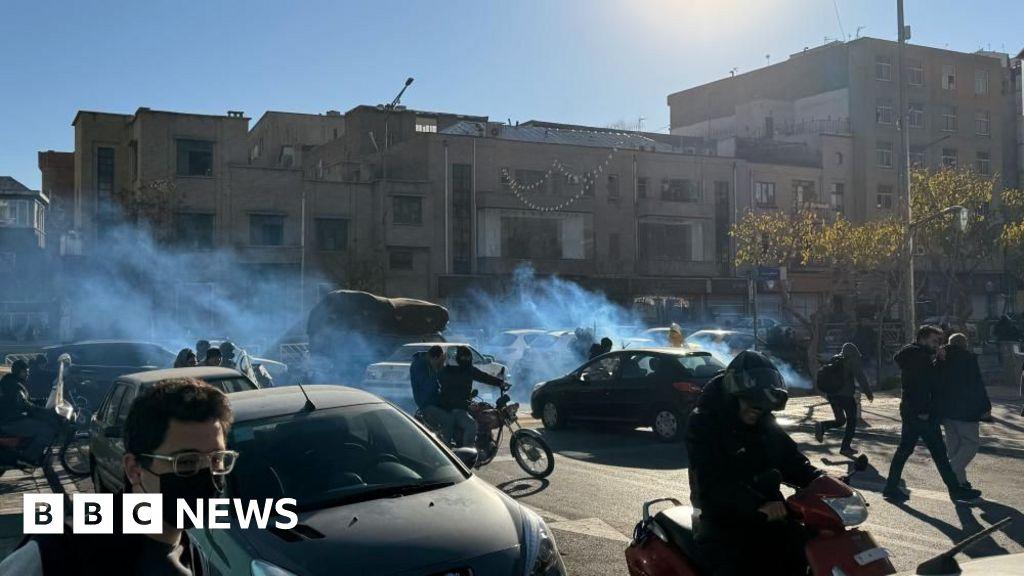
The warning came against the backdrop of widespread anti-government demonstrations sparked by a cost-of-living crisis, with outlets reporting multiple deaths and large public unrest. Al Jazeera reported that the protests began over "the cost of living and strikes by Tehran shopkeepers," noting at least nine dead and dozens arrested. Middle East Eye and New York Post said the unrest followed a rial collapse that left at least seven dead.
DW and CNN described the protests as the largest since 2022, with human rights groups saying "several people have been killed." NBC News tied the unrest to a plunging currency, soaring prices, a water crisis, sanctions and fallout from last June's conflict with Israel as causes for the spread and escalation of protests.

Iranian diplomatic pushback
Iran’s political and diplomatic classes pushed back forcefully. State and official channels framed Trump’s post as dangerous interference that could justify retaliation or wider conflict. KTVH reported Iranian officials called Trump’s comments 'reckless and dangerous' and named Ali Larijani warning that U.S. intervention 'would destabilize the region and hurt American interests.'
“President Trump told reporters he could strike Iran if it rebuilt its missile or nuclear programs and said he might back Israel, remarks made during a meeting with Israeli Prime Minister Benjamin Netanyahu at Mar-a-Lago. Iranian officials quickly pushed back: Foreign Minister Abbas Araghchi called the comments ‘reckless and dangerous’ and rejected interference; Ali Larijani warned U.S. intervention would destabilize the region and hurt American interests; Parliament Speaker Mohammad Bagher Ghalibaf said U.S. bases and forces in the region would be legitimate targets in response to any adventurism.”
NBC News and Politico.eu quoted Iranian figures saying U.S. bases could become 'legitimate targets' and that any intervention would cross red lines. Al Jazeera reported Iran’s UN ambassador wrote to the UN secretary‑general calling the threats 'reckless and provocative,' saying they violate the UN Charter and risk giving a pretext for foreign intervention.
U.S. and analyst reactions
Reactions inside the United States and among analysts were mixed.
Some Republican figures praised toughness while others warned against military escalation without congressional authorization.

Evrim Ağacı noted a split between critics like Rep. Marjorie Taylor Greene and supporters like Sen. Lindsey Graham.
TRT World reported House Republicans such as Rep. Thomas Massie argued strikes would require explicit congressional approval.
CNN and DW noted U.S. officials called the post a strong warning but reported no visible troop movements.
Analysts cautioned that military escalation could backfire and harm protesters' aims rather than help them.
Debate over U.S. response
Observers and international voices warned about legal, diplomatic and humanitarian risks if Washington acted militarily, while some analysts and commentators sketched non-kinetic options. Iran's UN ambassador called the remarks reckless and provocative, said they violated the UN Charter, and warned the U.S. would bear responsibility for the consequences, according to Al Jazeera. Editorial and analysis pieces, reported by Evrim Ağacı and others, cautioned against repeating costly past interventions and urged diplomacy, sanctions, and support for protesters over military force.
“Iravani said such comments violate the UN Charter, risk justifying external pressure or military intervention, and warned the US would bear responsibility for any consequences; he also reiterated Iran’s right to defend its sovereignty.”
Conversely, some commentators cited by outlets such as the New York Post and Algemeiner outlined a menu of possible U.S. responses short of full invasion, ranging from sanctions and covert operations to targeted strikes or enabling allied action. Across the coverage there is clear disagreement about whether such a post helps protesters, risks escalation, or is merely rhetorical signaling.