South America05 January, 20262 min read
Trump Threatens Second Strike on Venezuela, Declares "We're In Charge"
United States forces captured Nicolás Maduro and brought him to face U.S. federal charges. Trump warned Delcy Rodríguez she would 'pay a very big price,' likely bigger than Maduro.

37 outlets told this the same way.
Outlets did split on Alexandre de Moraes Orders Eduardo Bolsonaro Arrest, Cancels Passport, Enforces Four-Year Sentence →
U.S. operation in Venezuela
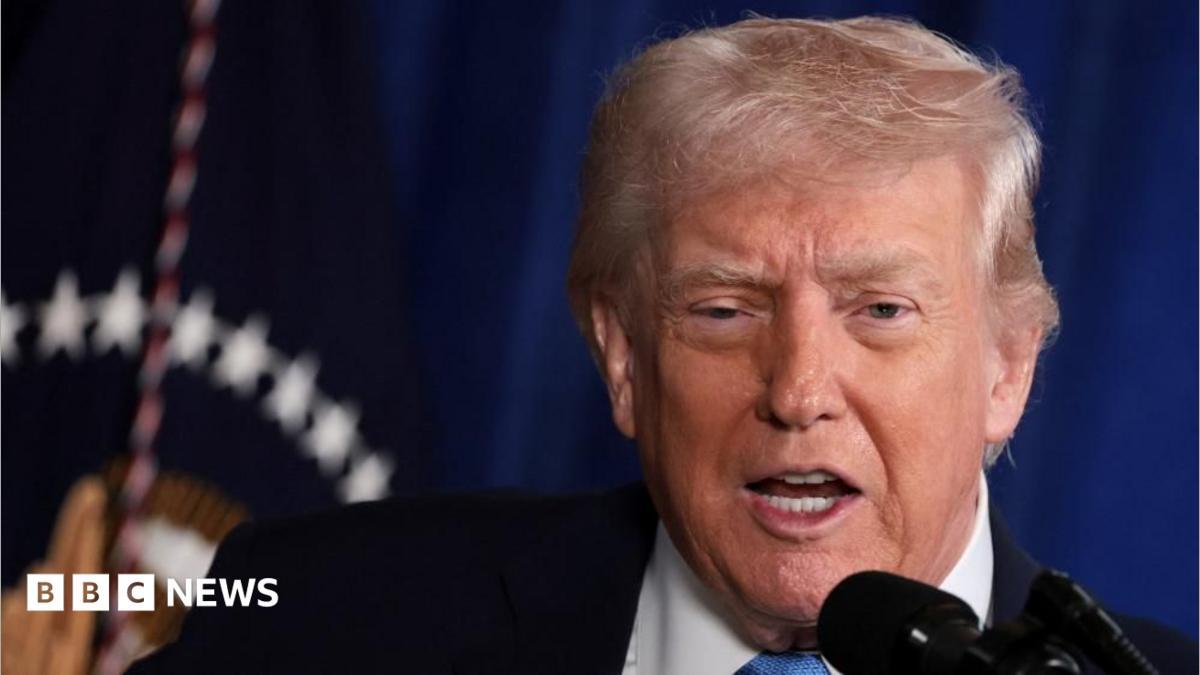
A U.S. special-forces operation in early January reportedly captured Venezuelan President Nicolás Maduro and his wife. On Air Force One, President Donald Trump warned the U.S. was "prepared to do a second strike" if Venezuelan leaders "do not behave." Trump said the U.S. was "dealing with the people that just got sworn in" and added, "It means we're in charge."
“President Donald Trump warned on Air Force One that the U.S. is ‘prepared to do a second strike’ against Venezuela...”
He repeatedly framed the action as part of a broader effort to control Venezuela's transition. Multiple outlets described the operation as quick and decisive and emphasized Washington's assertive posture toward the interim authorities in Caracas.
Conflicting raid accounts
Accounts of the raid's conduct and human cost diverge sharply. U.S.-facing reports describe a high-tempo, short operation with no American casualties, while Venezuelan and allied sources accuse U.S. forces of killing bodyguards, military personnel and civilians.
Havana reported 32 Cuban nationals killed, and Caracas described the action as a 'cowardly kidnapping' that left unspecified casualties among its security forces and civilians. Videos and U.S. footage circulated in some reports showing Maduro blindfolded and in U.S. custody, intensifying disputes over what happened during the operation.

Contested leadership in Caracas
Political continuity in Caracas was immediately contested. Venezuela's Supreme Court moved to name former vice-president Delcy Rodríguez acting president, saying the step was prompted by Maduro's 'forced absence'. The military publicly declared support for her.
“Venezuela’s Supreme Court, citing the president’s ‘forced absence,’ ordered Vice‑President Delcy Rodríguez to act as president...”
The U.S. administration signaled it would work with whoever was in place and said it was dealing with officials who had been sworn in. However, Washington's claim to 'be in charge' sat uneasily alongside Caracas's assertions of illegality and calls for calm.
International and Domestic Reactions
The international fallout was swift and polarized.
China, Russia, and Iran strongly condemned the U.S. operation.
Latin American leaders called it an 'assault on the sovereignty' of the region.
Some U.S. allies expressed concern, while a smaller set of leaders reacted more favorably.
Domestically, leading U.S. Democrats warned against further unilateral action without congressional approval, calling it a dangerous precedent with costs in blood and treasure.
Strategic motives and reactions
Beyond the immediate crisis, analysts and some outlets linked the operation to wider strategic and resource motives. U.S. officials and President Trump signaled control over Venezuelan oil assets and suggested U.S. companies would play a role in rebuilding and exploiting resources, while commentators such as The Atlantic raised concerns the raid shows an American willingness to use force to secure strategic objectives, even prompting speculative comparisons to past U.S. interest in Greenland. Supporters framed the action as targeting narcotics networks, while critics saw it as a resource-driven power grab that sets a dangerous international precedent.
“US Secretary of State and Senator Marco Rubio defended the operation in TV interviews, calling it a law‑enforcement action against drug trafficking rather than a war with Venezuela...”