Canada10 February, 20262 min read
Trump Threatens To Block Gordie Howe Bridge Opening, Demands Full Compensation From Canada
Trump threatened to block the bridge opening unless the United States is 'fully compensated'. He demanded the US own 'at least half' of the bridge.
53 outlets told this the same way.
Trump demands bridge compensation
Former U.S. president Donald Trump posted on Truth Social that he would block the opening of the nearly-complete Gordie Howe International Bridge between Windsor, Ontario, and Detroit, Michigan unless the United States is 'fully compensated'. He demanded immediate negotiations and suggested the U.S. should own 'perhaps, at least one half' of the asset. Multiple outlets report Trump framed the demand as redress for long-running trade grievances and complained the project used 'virtually no U.S. content', while some accounts note he also misidentified ownership of the bridge.
“U.S. President Donald Trump threatened to block the opening of the near‑complete Gordie Howe International Bridge ... unless the United States is 'fully compensated' and possibly given partial ownership, citing Canada’s ownership of the bridge, its refusal to stock some U.S. alcoholic beverages, dairy tariffs and its trade engagement with China.”
Bridge description and ownership
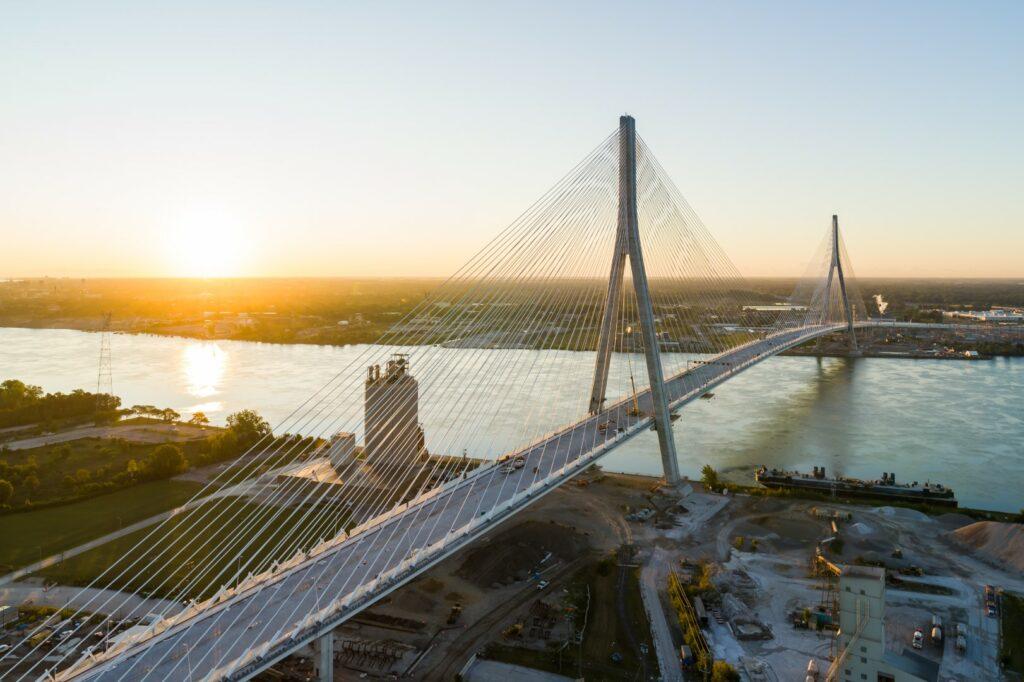
The Gordie Howe International Bridge is widely described as a Canada-funded, Canadian-built, large cross-border project intended to ease commercial congestion at the Ambassador Bridge. Reporting on financing and ownership is broadly consistent, with the Windsor-Detroit Bridge Authority and multiple news outlets stating that Canada financed construction and that ownership and operation arrangements will give the state of Michigan a legal role. Under a 2012 agreement the bridge will be jointly owned and operated by Canadian and Michigan authorities, and reported costs are presented in both CAD and USD with outlets using slightly different figures.
Legal authority to block bridge
Multiple outlets underscore that it is unclear what legal authority the president would have to block the bridge’s opening. Western Alternative (WION) and UPI report plainly that "it is unclear" what legal steps could stop the project. The Irish Times and other outlets note speculative options officials have floated — from invoking emergency powers to seeking toll revenue or partial ownership — but emphasize these are conjecture rather than established legal pathways.
“It is unclear how the U.S. could legally prevent the bridge’s opening.”
Reactions to bridge project
U.S. and Canadian officials, business groups, and local leaders have largely reacted with criticism or alarm in many reports.
Michigan officials and U.S. Democrats warned that blocking the bridge would harm workers and disrupt supply chains.

NOTUS quoted state leaders calling such a move 'economic sabotage,' and Michigan's governor said the bridge 'is going to open one way or another.'
Representatives including Rep. Debbie Dingell defended the project's jobs and security benefits, while business groups such as the Canadian Chamber of Commerce called any attempt to block the bridge 'self-defeating.'
White House trade pressure
Observers place the threat within a wider pattern of trade pressure by the White House: several outlets report Trump coupled the bridge threat with warnings about tariffs and criticized Canada’s growing ties with China. CNN and DW note threats of steep tariffs, including a reported 100% tariff threat; Mathrubhumi and UPI emphasize his linkage of the dispute to Canada–China engagement; and Business Insider situates the move as part of sustained pressure on Canada that also included earlier threats on Canadian-made aircraft. Those sources present Trump’s comments as part of a larger policy stance rather than an isolated outburst, while also reporting official pushback and questioning enforceability.
“President Trump publicly suggested he could block the opening ... and warned of severe retaliation — including a reported threat of 100% tariffs — if Canada signs a trade deal with China.”