Trump Threatens To Destroy Iran Infrastructure As U.S.-Iran Talks Resume In Islamabad
Key Takeaways
- Trump threatened to destroy Iran's infrastructure and power plants if terms aren't met.
- Trump canceled Witkoff and Kushner's trip to Pakistan for Iran talks.
- Oil prices rose amid stalled US-Iran talks and Strait of Hormuz stalemate.
Talks in Islamabad, threats
U.S. President Donald Trump said on Sunday that American officials would travel to Pakistan's capital Islamabad on Monday to continue negotiations with Iran, while also threatening to destroy Iran's infrastructure and power plants if Tehran does not accept his terms.
“Skip to main content 13 hours ago - Politics & Policy Iran offers U”
The first round of negotiations between Iran and the United States, held in Islamabad late last weekend, ended without tangible progress on the main points of disagreement, primarily Iran's nuclear and missile ambitions and the movement of shipping through the Strait of Hormuz.

The second round is scheduled for Monday, but the report described uncertainty about whether both delegations would attend.
On the American side, Trump said the American delegation would travel to Islamabad tomorrow, Monday, while reports conflicted about JD Vance's participation as the deputy head of the negotiating team.
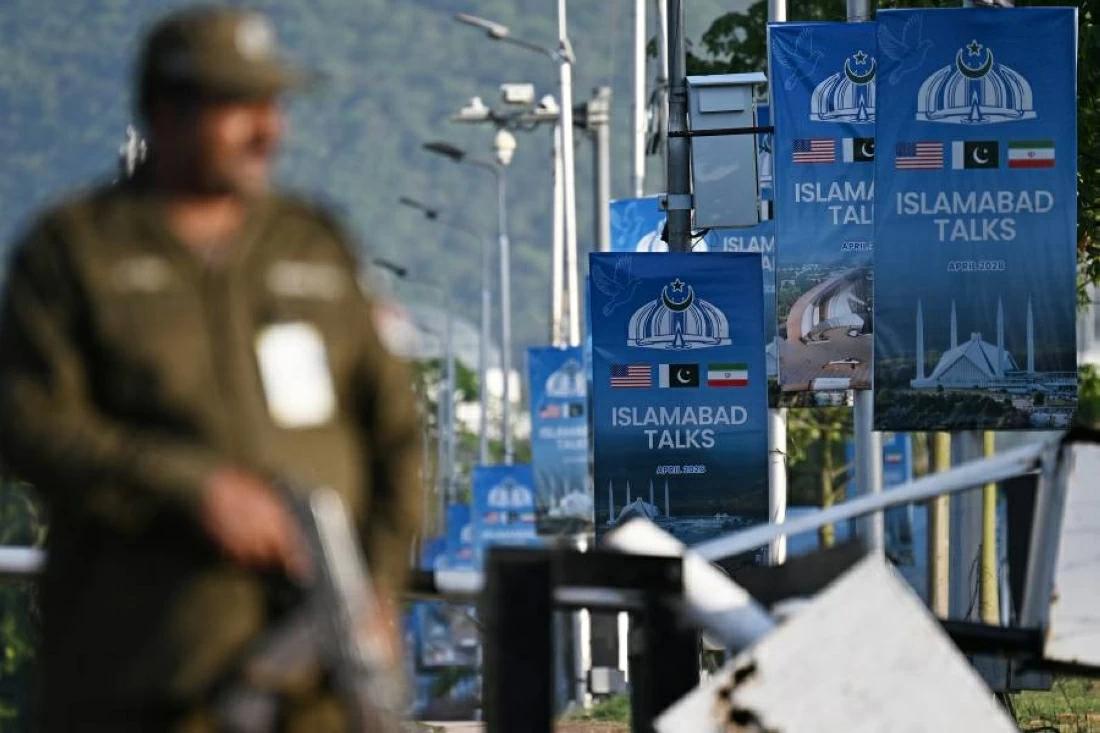
Pakistani sources reported that two aircraft landed in Islamabad carrying the 'preparatory delegation' from Washington, and Pakistani police said they were taking heightened security measures in the capital ahead of the talks.
On the Iranian side, IRNA said that the exaggeration of United States demands, presenting unrealistic and unfeasible demands, repeatedly changing positions, and continuing the so-called naval blockade that violates the ceasefire understanding, along with threatening rhetoric, are all factors that have thus far prevented progress in the negotiations.
The same report said official Iranian media, including Tasnim and Fars News Agencies, reported that Tehran has not yet decided to send a negotiating delegation to Islamabad as long as President Trump’s statements about imposing a naval blockade on Iran remain.
Ceasefire, blockade, and nuclear leverage
The negotiations are unfolding against a ceasefire backdrop that both sides accuse each other of violating, with the dispute centered on Iran's nuclear and missile ambitions and the movement of shipping through the Strait of Hormuz.
The Al Jazeera report said differences between Washington and Tehran cast a shadow over the second round of talks brokered by the Pakistani mediator, with doubts about the possibility of reaching an agreement to end the war waged by the United States and Israel on February 28 of last February, before the current ceasefire expires next Wednesday.
It also said Iran accused the United States of violating the ceasefire and imposing an illegal blockade, while Trump accused Iran of a 'full' violation of the ceasefire and accused Tehran of firing on ships near the Strait of Hormuz.
Trump wrote in a post on his Truth Social platform: 'We are offering a very fair and reasonable deal, and I hope they will accept it, because if they do not, the United States will destroy every power plant and every bridge in Iran.'
The New York Times Chinese-language report described the broader dynamic as an awkward standstill that is neither peace nor war, saying both sides are hoping to outlast the other in a confrontation over interests of major global economic significance.
It quoted Sasan Karimi, a former Iranian vice president and political scientist at Tehran University, saying, 'The current situation is somewhat like the state we saw at the end of the war on the 12th—the war is over, but there are no durable arrangements,' and it cited an Iranian conservative newspaper Khorasan describing the situation as a strategic stalemate with risks not to be taken lightly.
In that same New York Times report, it said Iranian officials insist they will not engage in direct talks until Trump lifts the maritime blockade the United States imposed on Iranian ports following the cease-fire.
New proposals and canceled envoys
While the Islamabad talks were being prepared, the diplomatic channel also shifted through cancellations and alternative tracks.
“Oil prices rise as Strait of Hormuz stalemate persists Oil prices rose again on Monday morning as no solution has yet been found to restore shipping through the Strait of Hormuz, a key corridor for global oil supply”
The New York Times Chinese-language report said that on Saturday, President Trump canceled plans to dispatch special envoy Steve Vitkov and his son-in-law Jared Kushner to Islamabad for the second round of cease-fire talks, and it quoted Trump’s rationale that the Iranians would only waste the negotiators' time.
Forbes and Axios both described the cancellation and linked it to stalled efforts to bring the U.S. and Iran to the negotiating table, with Forbes saying Iran’s foreign minister Abbas Araghchi left talks with Pakistan in Islamabad on Saturday and that Trump said his envoys Steve Witkoff and Jared Kushner’s trip to Pakistan had been called off.
Axios reported that Trump told Axios the Iranian position led him to cancel that trip, saying, "I see no point of sending them on an 18-hour flight in the current situation. It's too long. We can do it just as well by telephone. The Iranians can call us if they want. We are not gonna travel just to sit there," and it said Trump expected to hold a Situation Room meeting on Iran on Monday.
Axios also said Iran gave the U.S. a new proposal to reopen the Strait of Hormuz and end the war, with nuclear negotiations postponed for a later stage, according to a U.S. official and two sources with knowledge.
The Axios report said the Iranian proposal would bypass the nuclear issue en route to a faster deal, and it described how lifting the blockade and ending the war would remove Trump’s leverage in any future talks to remove Iran's stockpile of enriched uranium and convince Tehran to suspend enrichment.
The New York Times report added that Iranian Foreign Minister Abbas Araghchi traveled to Oman on Saturday for a meeting after Friday’s visit to Pakistan ended in a cease-fire, and it said he returned to Pakistan on Sunday and was expected to meet with Russian President Vladimir Putin after traveling to Moscow.
Markets react to the stalemate
As diplomacy stalled, oil markets moved in ways multiple outlets tied directly to the Strait of Hormuz disruption and the lack of progress in U.S.-Iran talks.
Forbes reported that oil prices rose again on Monday on stalled negotiations between the U.S. and Iran, and it gave specific trading figures at 7:19am EDT on Monday: the Brent front month contract was up 1.06% or $1.01 to $100.18 per barrel, while WTI traded at $95.16 per barrel, up 1.01% or $0.76.

It said expectations of oil prices trending higher took hold and were realized in Monday trading in Tokyo, and it quoted commodities analyst Bjarne Schieldrop saying alarm bells will ring loudly if the Strait doesn't reopen during May.
The same Forbes report said JPMorgan noted that commercial inventories in OECD countries may hit “operational minimums” at some point between May 9 and May 30, and it added that increases in oil prices may “become exponential rather than linear.”
Another outlet, belganewsagency.eu, reported that oil prices rose again on Monday morning as no solution has yet been found to restore shipping through the Strait of Hormuz, and it gave Brent June delivery rising 2.5 per cent to 107.97 USD and WTI rising by more than 1.5 per cent to around 97 USD per barrel.
The ING commodities analysis said oil is trading stronger after attempts to get US-Iran peace talks back on track broke down, erasing hopes for a resumption of energy flows through the Strait of Hormuz anytime soon, and it said ICE Brent was up around 2% in early-morning trading after rallying almost 17% over the course of last week.
It also described a tightening market that requires oil prices to reprice at higher levels and referenced a roughly 13m b/d shortfall, while adding that there’s little alternative to fill it.
Stakes: attrition, inflation, and next steps
The stakes described across the reports extend beyond the immediate talks, with multiple outlets portraying a prolonged confrontation that could deepen economic strain and shape the next phase of diplomacy.
The New York Times Chinese-language report said Tehran and Washington have fallen into an awkward stalemate that is neither peace nor war, with both sides hoping to outlast the other in a confrontation over interests of major global economic significance, and it said analysts believe Iranian officials appear confident they can endure the economic pain of war better than President Trump.
It also said Iranian officials remain worried that without momentum in the negotiations, they will be under threat of attack by the United States and Israel, and it quoted Khorasan’s warning that the state 'may be more dangerous than the war itself in the short term.'
The ynetnews report tied the stalemate to Iran’s inability to rebuild and said the naval blockade is weighing heavily on it economically, quoting Iranian President Masoud Pezeshkian appealing to the Iranian people Saturday: “Reduce electricity and energy consumption. The enemies are destroying our infrastructure and placing us under siege, and we need to control consumption.”
It also cited Donya-e Eqtesad’s forecast that inflation would jump by 49% even in the “most optimistic scenario” of reaching an agreement, and it said a state of “neither war nor peace” could send inflation soaring by nearly 70% in the coming months.
The same ynetnews report said a return to war would make things far worse, with hyperinflation of more than 120%.
On the diplomatic side, Axios said Trump is expected to hold a Situation Room meeting on Iran on Monday with his top national security and foreign policy team, and it said the White House spokesperson Olivia Wales told Axios, "These are sensitive diplomatic discussions and the U.S. will not negotiate through the press."
More on Iran

Iran Offers U.S. Deal To Reopen Strait of Hormuz, End War, Postpone Nuclear Talks
11 sources compared
Oil Prices Rise as US-Iran Peace Talks Stall, Strait of Hormuz Tensions Grow
13 sources compared

King Charles III and Queen Camilla Begin Four-Day US State Visit With Trump Tea
10 sources compared

Oil Prices Rise as US-Iran Peace Talks Stall and Strait of Hormuz Remains Constrained
14 sources compared