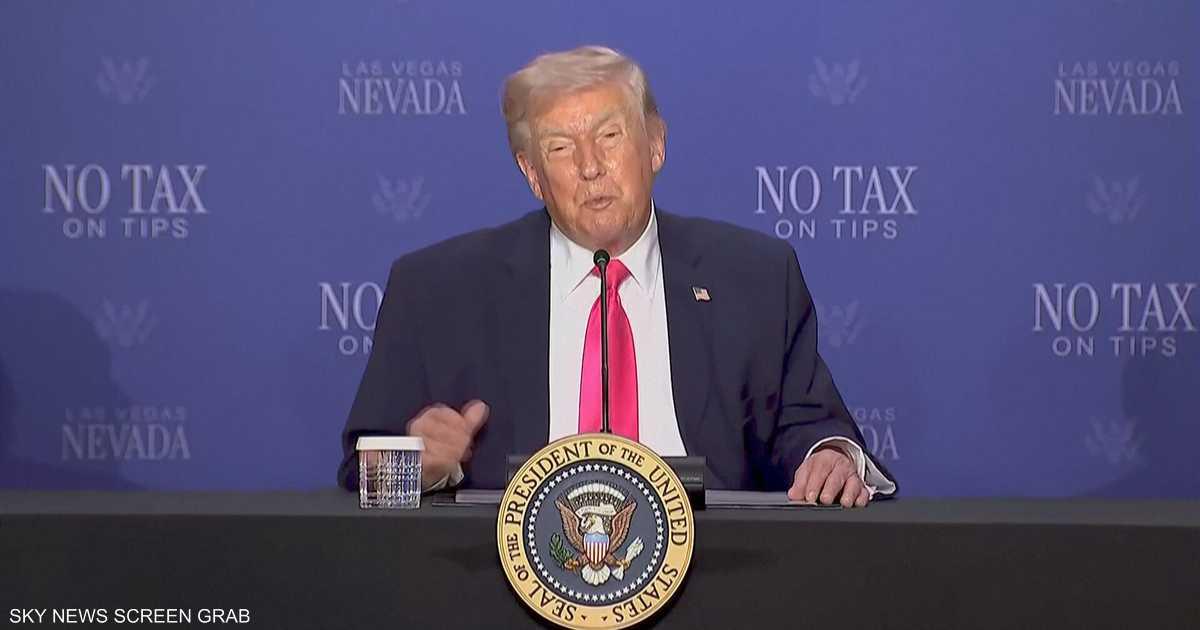
Trump Threatens To End Iran Ceasefire, Keep Blockade, Start Dropping Bombs Again
Key Takeaways
- Trump may not extend the Iran ceasefire if negotiations fail by next Wednesday.
- The blockade would remain in place and bombing could resume without a deal.
- Negotiations with Iran are ongoing, with meetings planned and a potential deal soon.
Ceasefire deadline looms
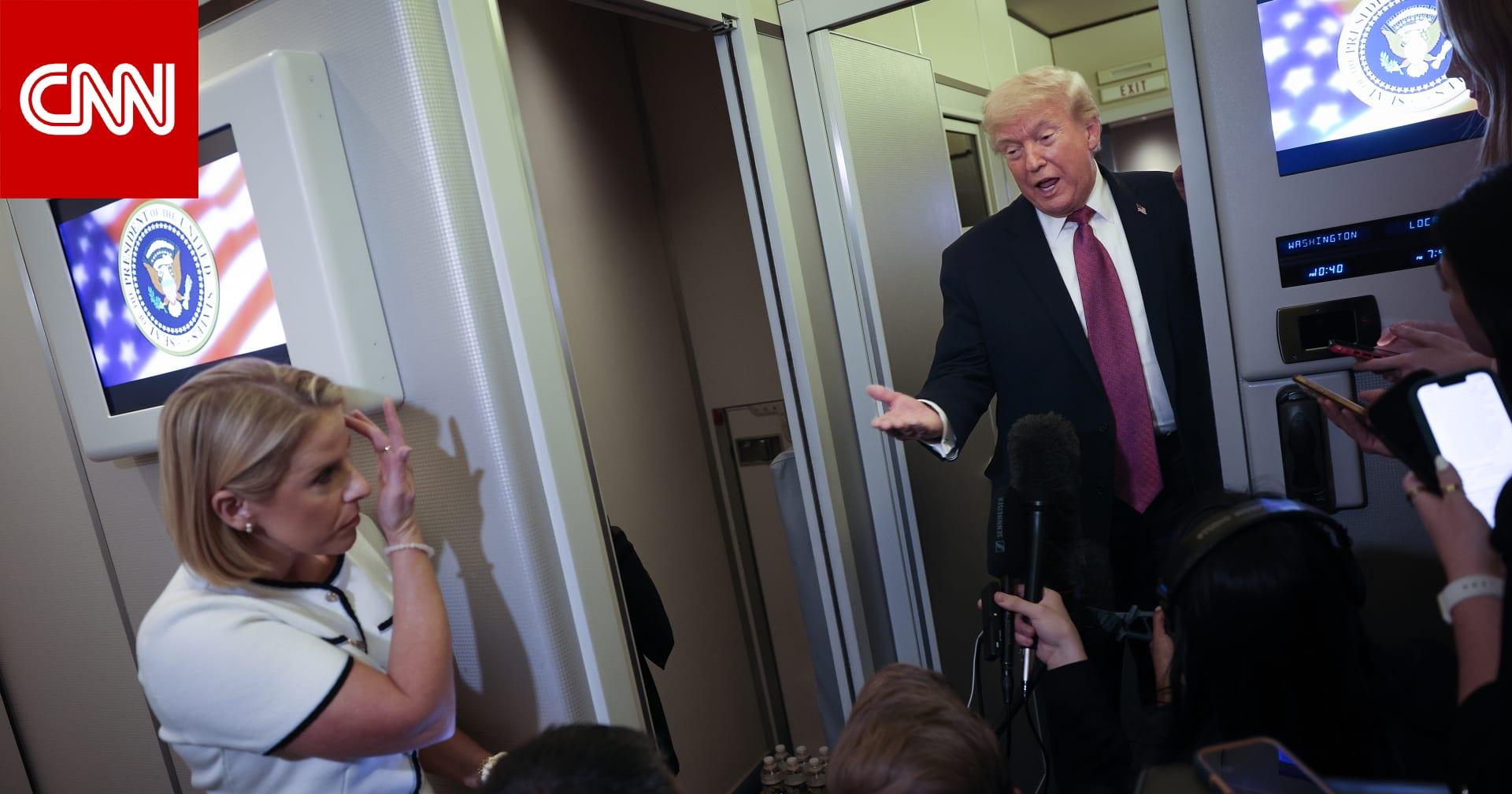
U.S. President Donald Trump said on Friday that he could end the ceasefire with Iran if there is no lasting agreement by next Wednesday, the 22nd, and he told journalists aboard Air Force One that even if the truce is interrupted, the blockade of Iranian ports would be maintained.
“• Fragile truce: US President Donald Trump says he may not extend the ceasefire with Iran if negotiations fail”
Trump said, "Maybe I won't extend it, but the blockade will continue. So you have a blockade, and, unfortunately, we'll have to start dropping bombs again," as he spoke during the return to Washington after a trip to Phoenix, Arizona.

The Hill reported that Trump warned late Friday that the U.S. could strike Iran again if Middle Eastern leaders do not agree to his terms before the temporary ceasefire ends next week, adding that if no deal is reached by Wednesday’s deadline, "we'll have to start dropping bombs again."
CNN Arabic reported Trump said: "perhaps I won’t extend it. The president added: perhaps I won’t extend it, and then you will have to impose a blockade, and unfortunately we would have to start dropping bombs again."
NBC News reported that Iran declared the Strait of Hormuz "completely open" for commercial vessels for the remaining period of the ceasefire, while Trump said the U.S. blockade of Iranian ports "will remain in full force" until the two sides reach a peace deal.
The Hill also tied the deadline to ongoing mediation, saying Pakistan has been mediating negotiations between the two sides and quoting Pakistan’s foreign minister, Mohammad Ishaq Dar, saying he is "very hopeful" about the negotiations.
Blockade and Hormuz routing
While Trump tied the ceasefire to a potential return to strikes, multiple outlets described a parallel fight over maritime access in the Strait of Hormuz and the U.S. naval blockade of Iranian ports.
NBC News said Iran’s foreign minister Abbas Araghchi declared the crucial waterway "completely open" for commercial vessels for the remaining period of the ceasefire, and it reported that Trump hailed the news and said the U.S. blockade of Iranian ports "will remain in full force" until the two sides reach a peace deal.
The Business Standard similarly said Trump warned the blockade would remain in place and that "Unfortunately, we may have to start dropping bombs again," while Iran had reopened the Strait of Hormuz to commercial shipping but warned it could shut it again if the U.S. continues its blockade.
CNN reported that only a handful of ships passed through the waterway Friday, despite Iran’s foreign minister saying it was open to commercial vessels, and it said the speaker of Iran’s parliament warned the strait will close again if the U.S. doesn’t lift its naval blockade.
CNN also quoted Trump rejecting any tolls or restrictions, saying, "Nope, no way" and later, "You can’t do the tolls. No, there are not going to be tolls."
DW described the shift from reopening to reimposition of control, saying the IRGC naval forces warned ships to stay away from the Strait of Hormuz, under penalty of "sinking the offending vessel," and it quoted the IRGC statement: "any attempt to approach the Strait of Hormuz will be considered cooperation with the enemy, and the offending vessel will be targeted."
Negotiations via Pakistan
The ceasefire deadline and the Hormuz dispute are unfolding alongside mediation efforts centered on Pakistan, with multiple outlets describing both the diplomatic process and the uncertainty about whether talks will produce a final agreement.
“All you need to know - Iran's Revolutionary Guard (IRGC) threatens to strike any ship approaching the Strait of Hormuz - The Israeli army speaks of a bare yellow line separating southern Lebanon - A French soldier from UNIFIL was killed in a deliberately carried attack in southern Lebanon - Two tankers were fired upon in the Strait of Hormuz after it was reopened/closed again - Iran denies setting a date to resume negotiations and to deliver the enriched uranium - Iran announces re-imposing 'strict control' over the Strait of Hormuz - Beginning of ships crossing the Strait of Hormuz and Iran reopens its airspace - Trump: the blockade of Iran's ports will continue until a peace agreement ends the war - Trump and Iran announce opening of the Strait of Hormuz with Lebanon's truce holding The IRGC naval forces warned ships to stay away from the Strait of Hormuz, under penalty of 'sinking the offending vessel', after Tehran resumed closing the vital energy and global trade corridor”
The Hill said Pakistan has been mediating the negotiations and quoted Pakistan’s foreign minister, Mohammad Ishaq Dar, saying, "We were very close to stitching a deal, but because of the timeline. the delegations had to go back on the 11th, so we are hoping and still working in the background that we should bridge the gap of certain couple of things, which are pending and one of the issues was also Lebanon."
Dar added, "Lebanon, we have good news that there’s a ceasefire," linking the regional ceasefire to the broader negotiation environment.
The Hill also reported that Vice President Vance and several other U.S. diplomats traveled to Pakistan last Saturday to begin direct talks with Iranian officials, and it said Pakistani Prime Minister Shehbaz Sharif led the mediating efforts.
It further stated that Vance announced after lengthy discussions that day that the two sides had "not reached an agreement," quoting Vance: "I think that’s bad news for Iran much more than it’s bad news for the United States of America. So, we go back to the United States having not come to an agreement."
CNN said U.S. and Iranian delegations are set to hold negotiations Monday, citing Iranian sources, while also noting the U.S. had not confirmed talks are scheduled.
Nuclear material and leverage
Beyond the ceasefire and shipping corridor, the sources describe a nuclear-material dispute that Trump says could be handled differently depending on whether a deal is reached.
Folha de S.Paulo reported that Trump told Reuters that the 441 kg of enriched uranium belonging to the theocracy would be sent to the United States, while also noting that the Islamic Republic indicated this had not yet been decided.
CNN said Trump warned the U.S. would secure Iran’s nuclear material "in a much more unfriendly form" if no deal is reached for its peaceful transfer, and it described his use of the term "nuclear dust" for Iran’s stockpile of highly enriched uranium.
CNN also quoted Trump saying, "we will get it in a different form, in a much more unfriendly form," and it quoted him describing a timeline only after an agreement is signed.
Sky News Arabia described the nuclear ambitions dispute in the talks held in Islamabad, saying the United States proposed suspending all Iranian nuclear activities for 20 years, while Iran proposed a suspension for between 3 and 5 years.
Newsweek’s live blog said one proposal under discussion was releasing $20 billion in frozen Iranian funds in exchange for Iran surrendering its enriched-uranium stockpile and accepting an enrichment moratorium.
Escalation risks and casualties
The sources also lay out the broader stakes of the Iran conflict, including casualty figures and the risk of renewed attacks if the ceasefire expires without a deal.
“A Wednesday deadline could decide whether the temporary ceasefire holds”
NBC News reported a death toll that included Iran’s forensics chief saying more than 3,300 people had been killed in the country since U.S.-Israeli strikes began Feb. 28, and it added that more than 2,100 people have been killed in Lebanon, 32 have been killed in Gulf states, and 23 have died in Israel.

NBC News also said thirteen U.S. service members have been killed, and two more died of noncombat causes, while it described U.S. Central Command saying 21 ships have been turned back to Iran since the start of the naval blockade of Iranian ports Monday.
The Business Standard said the development came as a 10-day ceasefire between Israel and the Iran-backed Hezbollah group in Lebanon appeared to be holding, and it cited recent conflict totals including at least 3,000 people in Iran, nearly 2,300 in Lebanon, 23 in Israel and more than a dozen in Gulf Arab countries, plus thirteen U.S. service members killed.
DW added operational escalation details, saying the IRGC Navy threatened to target vessels approaching the Strait of Hormuz and that two tankers were fired upon after the strait was reopened/closed again.
The AP-linked report in الاتحاد للأخبار said Trump told reporters at the White House after Tehran again closed the Strait of Hormuz that "they cannot extort us," and it said American officials were preparing to raid oil tankers linked to Iran.
More on Iran
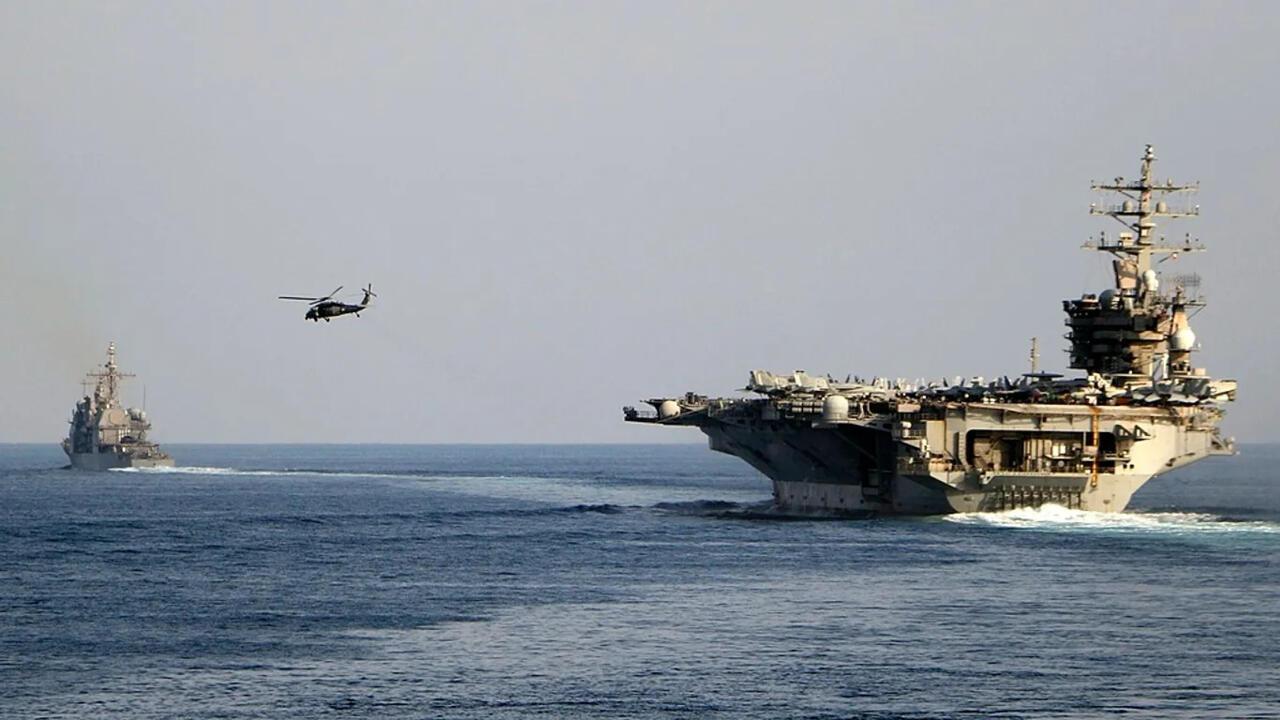
Iran Closes Strait of Hormuz Again, IRGC Fires on Tanker Near Oman
16 sources compared

Trump Convened Situation Room as Iran Closed Strait of Hormuz and Fired on Ships
12 sources compared
Iran’s Navy Fires on Ships as It Reimposes Strait of Hormuz Restrictions
19 sources compared

Iran Reimposes Strict Control Over Strait of Hormuz, Fires on Ships as U.S. Blockade Continues
24 sources compared