USA17 January, 20262 min read
Trump Threatens to Seize Greenland by Force After Nobel Prize Snub
Trump said Nobel Prize denial ended his obligation to 'think purely of peace' Trump suggested the United States could seize Greenland and declined to rule out using force
32 outlets told this the same way.
Outlets did split on Trump Interrupted by Protesters at San Antonio Rally for Ken Paxton →
Trump's Greenland demands and threats
Former President Donald Trump sent private messages and a widely reported letter to Norway's prime minister after being passed over for the Nobel Peace Prize. He linked his grievance to a demand that the United States be allowed to acquire Greenland. He warned of economic and military pressure on allies that objected.
“US President Donald Trump sent a text to Norway’s prime minister after not receiving the Nobel Peace Prize, saying he ‘no longer feel[s] an obligation to think purely of peace’ and can now put ‘what is good and proper’ for the US first.”
The communications included lines saying he no longer felt obliged to think purely of peace and explicitly called for complete and total control of Greenland. His public posts and statements threatened tariffs on multiple European countries if a deal was not reached. Some outlets also reported the White House did not rule out using force to take possession of Greenland.

International reactions to tariff threat
European capitals and NATO partners reacted strongly, warning that coordinated economic retaliation was possible if tariffs were imposed. Several countries moved to demonstrate solidarity with Denmark and Greenland, and a bipartisan U.S. congressional delegation traveled to Copenhagen to try to calm tensions.
Reports said the EU might target more than $100 billion in U.S. goods in retaliation. Britain, France, Germany, the Netherlands, Norway, Sweden, Finland and others announced small deployments or exercises in Greenland to underscore sovereignty and deterrence.

Greenland protests and opinion
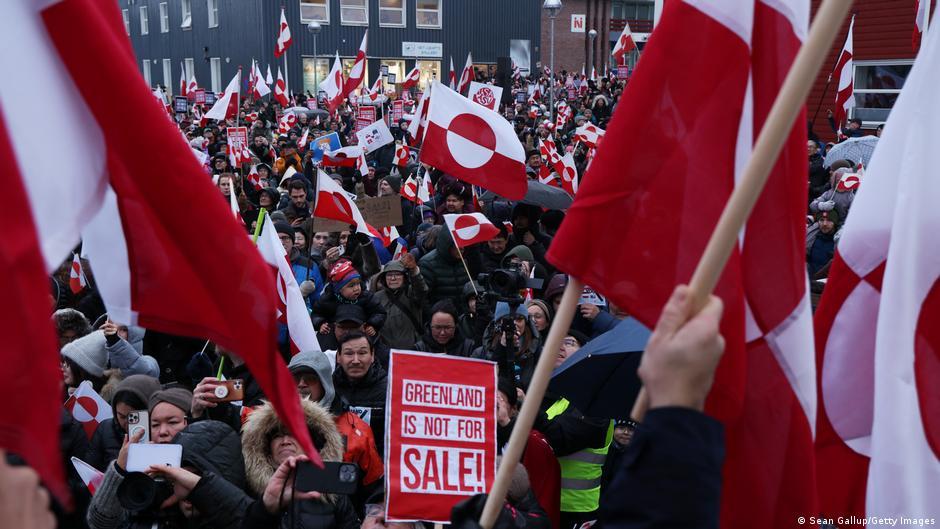
In Denmark and Greenland, mass protests and a strong public backlash framed the episode as an attack on self-determination. Organizers in Copenhagen and other Danish cities, joined by thousands in Nuuk, marched under banners reading 'Hands off Greenland' and chanted 'Greenland is not for sale' and 'Kalaallit Nunaat!'.
“Thousands of Danes and Greenlanders marched Saturday in Denmark and Greenland to protest U.S. President Donald Trump’s repeated suggestions that the United States should acquire Greenland ... chanting ‘Greenland is not for sale’ and carrying ‘Hands off Greenland’ banners.”
Some reports estimated demonstrations of several thousand people and characterized Nuuk's turnout as one of the city's largest ever. Polling cited in coverage showed overwhelming Greenlandic opposition to joining the United States.
Diplomatic responses on Greenland
Norway’s prime minister reported receiving Trump’s text. He reminded Trump that the Nobel Peace Prize is decided by an independent committee, underscoring that the president’s grievance is tied to an external institution rather than a government-to-government matter. Copenhagen and Nuuk signalled that Greenland’s future is a matter for Denmark and Greenland.
Danish officials invited allies to talks on Arctic security and to join exercises. U.S. congressional visitors sought to reassure partners and to de-escalate tensions.
NATO cohesion and trade
The episode left analysts and politicians warning of broader consequences for NATO cohesion and transatlantic trade ties, while leaving some strategic questions unresolved. Critics warned that coercive bargaining and tariff threats risk undermining allied trust and alliance credibility. Supporters and friendly-leaning outlets presented the administration's national-security rationale, citing Chinese and Russian interest in Arctic resources.
“Sen. Chris Coons ... saying ‘None of them are for sale’ and that ‘there are no current security threats to Greenland.’”
Several accounts emphasized uncertainty, pointing to polling, protests, and allied deployments as signs of political cost. Senators and congressional delegations urged calm and dialogue to avoid lasting damage.