USA19 January, 20262 min read
Trump Threatens to Seize Greenland by Force After Nobel Prize Snub
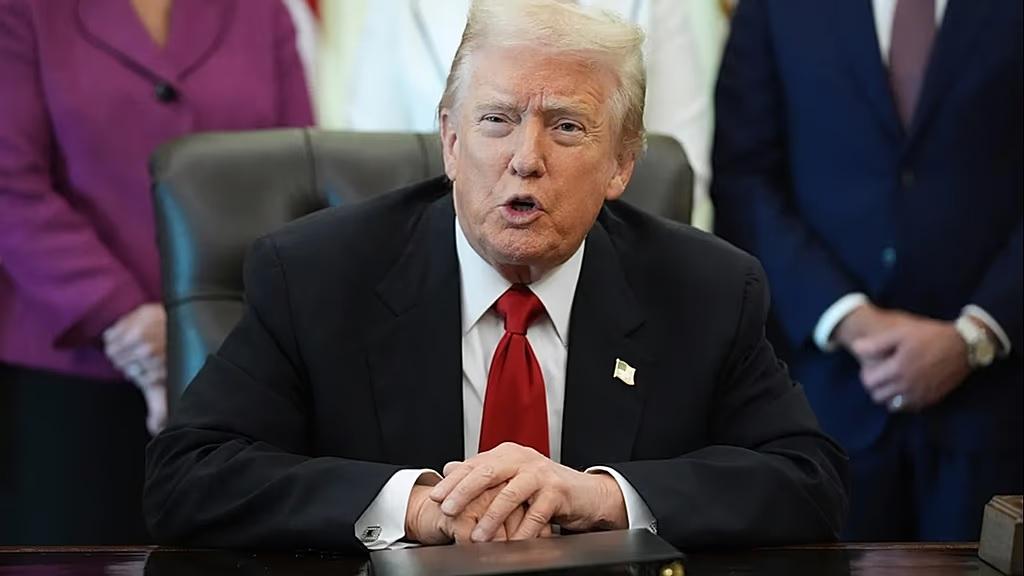
Trump said Nobel Prize denial frees him from obligation to 'think purely of peace'. Trump demanded U.S. control of Greenland and declined to rule out seizing it by force.
15 outlets told this the same way.
Outlets did split on Trump Interrupted by Protesters at San Antonio Rally for Ken Paxton →
Trump's Greenland demand
President Donald Trump sent a message to Norway's prime minister after being passed over for the Nobel Peace Prize. In the letter, he said he 'no longer feel[s] an obligation to think purely of Peace' and used the correspondence to reiterate his long-standing demand that the United States acquire Greenland. The letter, which reportedly circulated among U.S. diplomatic staff and was reported in multiple outlets, repeated the claim that Denmark cannot protect Greenland from Russia or China.
“I no longer feel an obligation to think purely of Peace.”
It also asserts the U.S. needs 'complete and total control of Greenland' and several reports say Trump threatened tariffs on European allies who resist the demand. Other reports say he refused to rule out using force to take the island.

European response to Greenland dispute
European leaders and NATO partners pushed back quickly. Denmark, Greenland and other allies reportedly increased military presence and exercises in the Arctic. National leaders warned that any U.S. military move would imperil NATO.
Several outlets quoted European leaders rejecting U.S. pressure and describing threatened tariffs on multiple European countries, initially 10% rising to 25%, if Greenland is not ceded. France, Germany and other NATO members signaled they would bolster Greenland's defenses and invoked legal and diplomatic instruments affirming Danish sovereignty.

U.S. policy and legal context
Several reports place the letter within a broader U.S. policy posture. The White House circulated the message among European ambassadors. The National Security Council reportedly shared it internally, signalling a coordinated, high-level push.
Commentators and outlets note longstanding legal and treaty context that complicates any U.S. claim. A 1951 U.S.-Denmark agreement already governs U.S. movements in Greenland.
Binding historical instruments underpin Danish sovereignty. Critics use those points to argue Trump's assertions about ownership and legal rights are misguided.
Media framing by outlet
Coverage tone varies sharply by outlet type. Western mainstream outlets such as The i Paper and El Mundo frame the episode as an alarming diplomatic misstep or display of ignorance, and The i Paper calls the letter evidence of impulsive, self-centered leadership while even using the phrase "mad king."
Western alternative and other outlets (The Daily Beast, Straight Arrow News) characterize the message as a blunt or personal ultimatum tied to Trump’s belief he deserved the Nobel. Some non-Western sources (GBC Ghana Online, SAN) emphasize the personal motive—the Nobel snub—as central to explaining the demand.
&w=1920&q=75)
Reports flag disputed claims
Some reports include unverified or disputed claims and explicitly flag this ambiguity. GBC Ghana Online notes an uncorroborated passage claiming U.S. forces removed Venezuela's Nicolás Maduro, a claim that does not align with the public record.
“It also contains an unverified/implausible passage about US forces removing Venezuela’s Nicolás Maduro that is not corroborated elsewhere and appears inconsistent with public record.”
LMFM and other outlets emphasize the Nobel Committee's independence and note that the prize was awarded to María Corina Machado. Other reports say Russia and China have dismissed claims they threaten Greenland, and White House officials have not fully commented, leaving key facts and intentions unclear.