USA05 January, 20263 min read
Trump Threatens to Seize Greenland, Refuses to Rule Out Military Force
This article is an automated aggregation of coverage from news outlets. Our editorials offer in-depth analysis curated by the NewsCord team.
Trump renewed demands to acquire Greenland for U.S. national-security reasons Trump and the White House refused to rule out using military force in Greenland

9 outlets told this the same way.
U.S. push for Greenland
President Donald Trump renewed a push to bring Greenland under U.S. control, calling the mineral-rich, self-governing Danish territory vital to U.S. national security and refusing to rule out military force; he even described the island as being 'surrounded by Russian and Chinese ships.' The remarks were presented as a strategic rationale — Trump said Greenland is needed 'for national security' and that he is 'very serious' though has 'no timeline' for action — while the White House confirmed it is 'discussing a range of options,' including possible military deployment. Reports tied the timing to a recent U.S. operation in Venezuela, with some coverage linking the two developments as part of a broader assertive posture.
“President Trump has escalated a push to bring Greenland under U.S. control, saying it is needed for ‘national security,’ refusing to rule out military force, and claiming the island is surrounded by Russian and Chinese ships.”
Responses to U.S. proposal
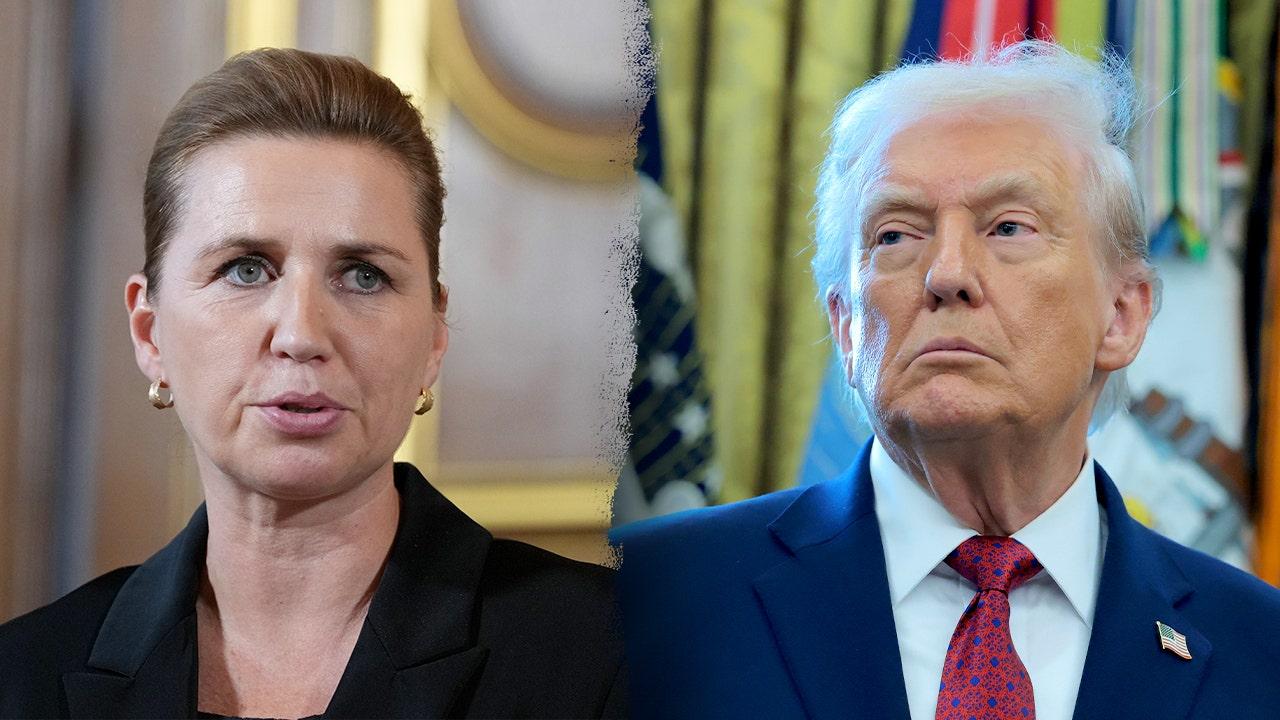
The proposed seizure provoked sharp pushback from Copenhagen and Nuuk. Denmark's prime minister, Mette Frederiksen, called the idea nonsensical and said the United States has no right to annex part of the Danish realm. She issued a stern public warning that any U.S. military action against a NATO partner would collapse the alliance's post-World War II security guarantees.
Greenland's premier, Jens-Frederik Nielsen, likewise firmly rejected the move, said Greenlanders will not be intimidated, and described the president's comments as very rude and disrespectful. Political leaders across Europe publicly backed Denmark and urged Washington to stop threatening a longtime ally.

NATO and Arctic tensions
Allied and expert warnings underscored the potential NATO fallout. Several outlets said partners issued the "strongest warnings yet" that any U.S. attack on NATO territory would "effectively end the alliance's post-World War II security framework." Analysts warned that U.S. action would pose a major risk to NATO and EU cohesion.
“Denmark warned that any US military action against Greenland would spell the end of NATO after President Donald Trump again said the United States 'needs' the Arctic territory, arguing it is important for US national security.”
European leaders from France, Germany, Italy, Poland, Spain, the UK and Denmark issued a joint statement stressing that Arctic security must be handled collectively under UN principles of sovereignty and territorial integrity. The dispute prompted high-level diplomatic activity, including mentions of France's president convening allied leaders in Paris.
Greenland and Arctic competition
Observers stressed Greenland's strategic value and the broader Arctic competition at play. Coverage noted Greenland is strategically important for its location, mineral resources, and Arctic shipping routes. Reports underlined that Copenhagen controls defense and foreign policy while Greenland is self-governing, and some pieces noted it could pursue independence under a 2009 agreement, but polls show most Greenlanders oppose becoming part of the U.S.
The episode was tied to broader geopolitical competition with China and Russia. Several accounts reported the president's remarks alongside a U.S. operation in Venezuela, with Fortune and Sky News linking the two events. Experts cited in some reporting pushed back on the president's assertion, saying those naval operations are far from Greenland.
Domestic politics and Arctic tensions
Beyond immediate diplomacy, some reporting recorded domestic and political maneuvers and warned of wider consequences. Sharecafe noted the naming of Louisiana Governor Jeff Landry as a special envoy and said aides posted provocative social-media images. Political-risk analysts warned Denmark was in 'full crisis mode' and that U.S. intervention would threaten NATO and EU cohesion.
“Trump has repeatedly pushed for US control of Greenland, named Louisiana Governor Jeff Landry as special envoy, and aides posted provocative social-media images — moves criticised by Denmark and Greenland.”
Fortune highlighted White House reticence, reporting that the White House declined to comment. Other outlets tracked cross-party and allied rebukes, including UK politicians and calls for collective handling of Arctic security. Coverage combined direct quotes from leaders with analysis that the dispute exposed intensifying Arctic competition and risks to long-standing alliances.
